Algeria
 Egypt
 Libya
 Morocco
 Sudan
 Tunisia
 Benin
 Burkina Faso
 Cabo Verde
 Côte d'Ivoire
 Ghana
 Guinea-Bissau
 Liberia
 Mali
 Mauritania
 Niger
 Nigeria
 Senegal
 Sierra Leone
 The Gambia
 Togo
 Cameroon
 Central African Republic
 Chad
 DR Congo
 Equatorial Guinea
 Gabon
 Republic of the Congo
 São Tomé and Príncipe
 Burundi
 Comoros
 Djibouti
 Eritrea
 Ethiopia
 Kenya
 Madagascar
 Malawi
 Mauritius
 Mozambique
 Rwanda
 Seychelles
 Somalia
 South Sudan
 Tanzania
 Uganda
 Angola
 Botswana
 Eswatini
 Lesotho
 Namibia
 South Africa
 Zambia
 Zimbabwe
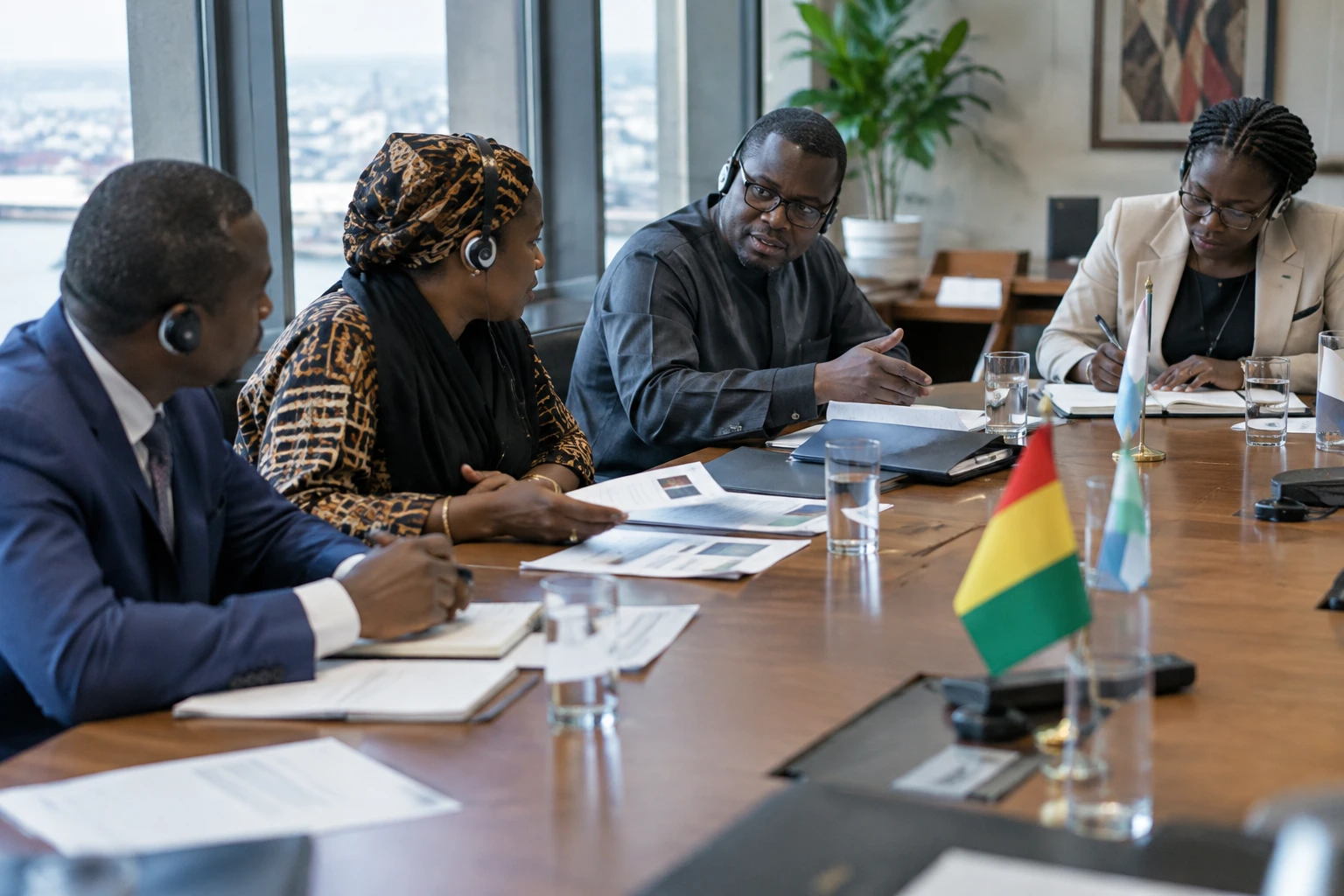
In Conakry, improving waste collection has become a matter of public health, safety and employment. The partnership signed with Ghanaian group JOSPONG promises to address all three. But the jobs announced and infrastructure planned remain targets: their delivery will depend on the concrete steps that follow.
A project for Greater Conakry
On 3 November 2026, Guinea’s Ministry of Sanitation, Hydraulics and Hydrocarbons signed an agreement with JOSPONG, a Ghanaian company specialising in waste management. It aims to strengthen collection across Greater Conakry and develop the processing of waste into marketable products.
The first phase provides for the deployment of more than 250 vehicles and pieces of equipment to collect, consolidate and transport waste. The government expects between 2,000 and 2,500 direct jobs in the first year, in collection, equipment operation, maintenance and recycling. This figure is an ambition for the project, not a record of hires already made.
A second phase provides for a 20-hectare processing complex at Kouriah, in Coyah prefecture. Products under consideration include fertilisers, bins, school desks and benches, and paving slabs. According to announcements reported by the authorities and Guinean media, JOSPONG would finance construction. Arrangements for sharing revenue between the state and the company are intended to contribute to operating costs.
Official information available on 5 November nevertheless calls for the different stages to be distinguished. The Prime Minister’s Office says the signing constitutes a first phase and refers to documents still being submitted to the Ministry of Finance, as well as the mobilisation of land. It mentions a projected three-month period to make the plots available and launch engineering studies. The location cited in this account is Barétodé, while other announcements refer to Kouriah: the precise scope and timetable for the complex therefore remain to be clarified.
After Dar es Salam, the question of safety
The project follows the deadly collapse at the Dar es Salam landfill in Conakry. The disaster occurred on the night of 22 to 23 August 2026. The death toll changed during rescue operations: the National Agency for the Management of Emergencies and Humanitarian Disasters reported 34 deaths as of 25 August, and Guinean media reported a toll of 36 deaths in early September.
The disaster is a reminder that sanitation is not simply a matter of removing waste from the streets. It also requires organising its transport and treatment and making sites safe, while protecting residents who live or work nearby. Closing or transforming a landfill can also displace risks and activities: waste pickers, neighbouring households and informal workers are directly affected by development decisions.
The government presents industrial processing as a way to reduce uncontrolled dumping and create jobs in the sector. For this promise to benefit Guineans, the number of jobs alone will not be enough. The qualifications required, wages, workplace safety and access to recruitment for young people and women will also shape the outcome.
Results to be measured beyond the announcements
Turning waste into goods that can be sold could generate revenue and give economic value to materials that have until now been discarded. But the model’s viability will depend on regular collection, product quality, real markets and sustainable operating costs. The agreement announces revenue-sharing, but the public information consulted does not yet detail the formula or oversight mechanisms.
The partnership is part of a trajectory in which Guinean authorities link major economic projects, including the Simandou 2040 programme, with job creation. Urban sanitation addresses a different but equally tangible issue: the quality of everyday services in the capital and its outskirts. The benefits will not be the same for everyone. Neighbourhoods served will gain more regular collection, while areas near future sites will need guarantees on nuisances, water and safety.
The regional dimension also matters. Guinea is a member of the Economic Community of West African States (ECOWAS), which brings neighbouring countries together around economic co-operation. The participation of a Ghanaian group in a Guinean project illustrates the potential to mobilise African expertise across national borders. It does not absolve the authorities of publishing the contract’s obligations, construction milestones and verifiable results.
The next milestones will be clarification of the industrial site, land availability, the effective start of construction and the commissioning of equipment. These are the stages at which the jobs created, the share of waste processed and improvements to services in Greater Conakry can be verified. For now, the partnership sets a direction; its impact will depend on implementation and transparent monitoring.