Algeria
 Egypt
 Libya
 Morocco
 Sudan
 Tunisia
 Benin
 Burkina Faso
 Cabo Verde
 Côte d'Ivoire
 Ghana
 Guinea
 Liberia
 Mali
 Mauritania
 Niger
 Nigeria
 Senegal
 Sierra Leone
 The Gambia
 Togo
 Cameroon
 Central African Republic
 Chad
 DR Congo
 Equatorial Guinea
 Gabon
 Republic of the Congo
 São Tomé and Príncipe
 Burundi
 Comoros
 Djibouti
 Eritrea
 Ethiopia
 Kenya
 Madagascar
 Malawi
 Mauritius
 Mozambique
 Rwanda
 Seychelles
 Somalia
 South Sudan
 Tanzania
 Uganda
 Angola
 Botswana
 Eswatini
 Lesotho
 Namibia
 South Africa
 Zambia
 Zimbabwe
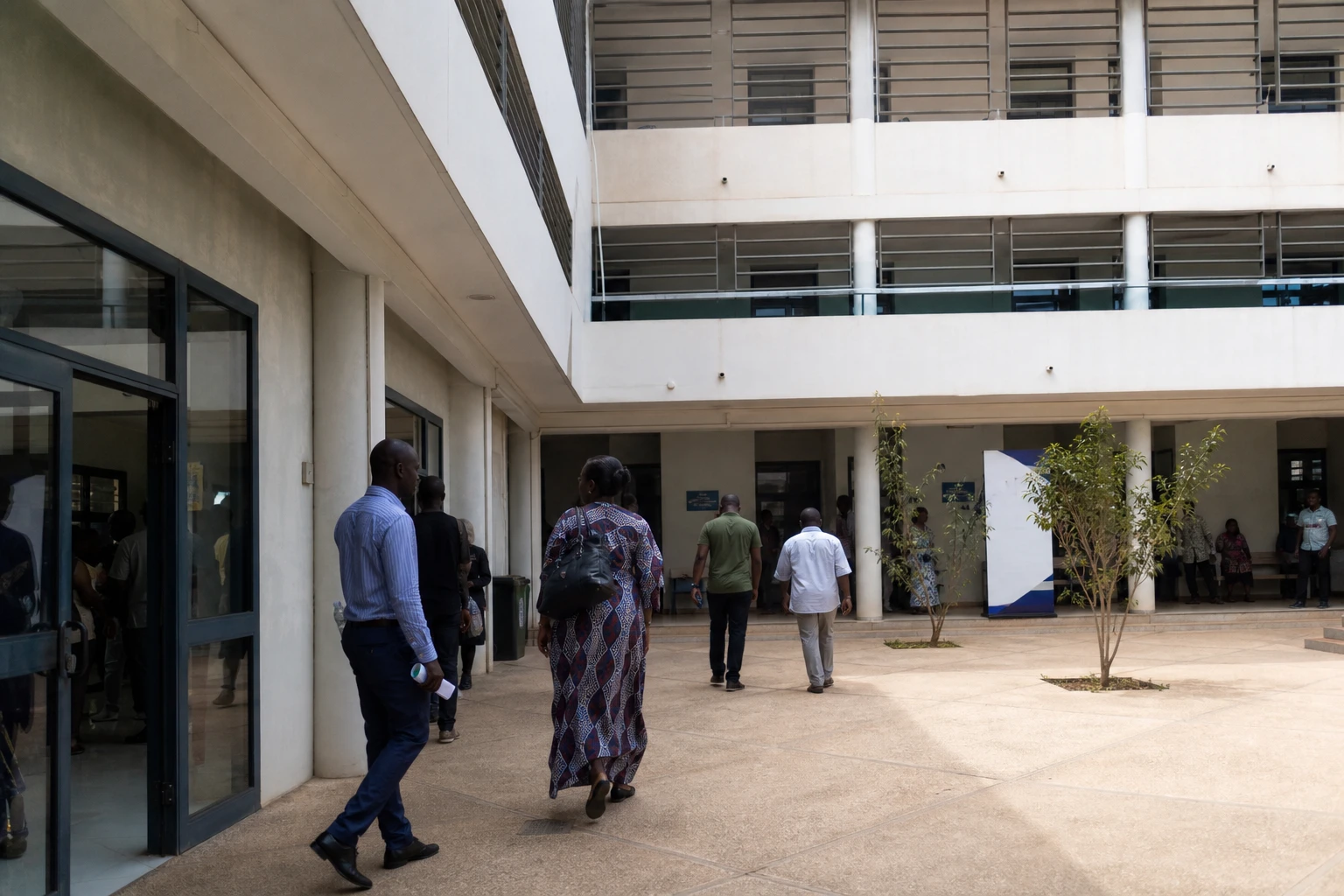
In Bissau, a vote that goes beyond the Constitution
In Bissau, the vote on 30 August 2026 is about more than a legal text. It will also show whether Guinea-Bissau wants to give the executive more powers during a still-fragile transition, as the country tries to close the chapter opened by the November 2025 coup. In a state accustomed to institutional ruptures, the question appears simple: strengthen authority to bring stability, or concentrate power at the risk of weakening checks and balances?
The issue concerns a West African country whose institutions have often been buffeted by rivalries between the presidency, parliament and army. ECOWAS, which is closely monitoring the return to constitutional order in the sub-region, has reiterated in recent months the importance of a credible electoral process in Guinea-Bissau. In this context, the referendum is also a test of approach: can the rules of the political game be rewritten under the authority of a military transition, and can the public then be convinced that a return to the ballot box will be lasting?
What the reform proposes
The text put to a vote changes the structure of the state. It strengthens the president’s position: the president could appoint and dismiss the prime minister, chair the Council of Ministers and, in certain cases, dissolve parliament. The vote also comes with an institutional redrawing: the National Assembly would shrink from 102 to 65 MPs and the country from 29 to 12 districts, with the stated aim of reducing public spending. A new requirement would also apply to presidential candidates: a deposit set at 50 million CFA francs, or about €76,000, as well as signatures to be collected by the parties supporting a candidacy.
The question put to voters is direct: do you accept the entry into force of the new Constitution approved by the National Transitional Council? The vote is scheduled across the country by direct, universal, secret and personal suffrage. The transitional authorities present the reform as a response to the country’s chronic instability and institutional deadlock. They also argue that a clearer executive would make the state work more effectively.
A political debate under constraint
The heart of the opposition lies in the legitimacy of the process. The opposition argues that an unelected transition should not set the rules for future power on its own. The PAIGC, the country’s historic party, has called for a boycott and denounced restrictions on civil liberties. The party says, in particular, that its offices have been closed and political parties excluded from the campaign. This criticism is not only about the content of the reform. It also targets the way it was prepared, in a narrow political space.
On substance, opponents of the text fear excessive presidentialisation. In a system where the head of state would appoint the head of government and could dissolve the National Assembly, parliament would lose even more capacity to scrutinise the executive. For a population already facing institutional instability, the risk is clear: if safeguards weaken, political arbitration could depend less on the ballot box than on the balance of power at any given moment. That is precisely what fuels the mistrust of many civil society actors.
Why the reform also matters to the region
Guinea-Bissau does not operate in isolation. In West Africa, ECOWAS remains a central framework for monitoring transitions, mediating political disputes and organising credible elections. Events in Guinea-Bissau therefore resonate beyond the country’s borders. They feed into a broader question about how to emerge from coups without installing, in another form, a power subject to little oversight. Several observers also point out that the country has experienced many upheavals since independence in 1974, making any institutional reform particularly sensitive.
The recent precedent weighs heavily. In November 2025, the military announced that it had taken power after a disputed presidential election, suspending the electoral process and installing a transition led by General Horta Inta-A, often referred to as Horta N’Tam. The transitional authorities subsequently announced a timetable for a return to civilian rule, with a constitutional referendum followed by general elections announced for 6 December 2026. Sunday’s vote is therefore part of a tightly packed sequence. It is intended to serve as a bridge between the military’s seizure of power and a return to the ballot box.
A major difficulty remains: trust. In the capital and the regions, voters must assess a dense text when public debate has been curtailed and parties denounce unfair campaign conditions. For the transitional executive, the result is meant to legitimise a new institutional structure. For opponents, a “yes” under these conditions risks endorsing a lasting imbalance. Between the two, the people of Guinea-Bissau will also decide another, more concrete question: what form of state can genuinely deliver stability in a country that has rarely known it?
The vote’s continental significance lies there. In Guinea-Bissau, this referendum is not merely a constitutional law moment. It says something about a broader African dilemma: how can fragile institutions be reorganised without shrinking the space for pluralism? The weeks that follow will be decisive, as they will show whether the country moves towards December’s general elections in a calmer climate, or enters a new phase of tensions over the legitimacy of the text and the transition itself.