Algeria
 Egypt
 Libya
 Morocco
 Sudan
 Tunisia
 Benin
 Burkina Faso
 Cabo Verde
 Côte d'Ivoire
 Ghana
 Guinea-Bissau
 Liberia
 Mali
 Mauritania
 Niger
 Nigeria
 Senegal
 Sierra Leone
 The Gambia
 Togo
 Cameroon
 Central African Republic
 Chad
 DR Congo
 Equatorial Guinea
 Gabon
 Republic of the Congo
 São Tomé and Príncipe
 Burundi
 Comoros
 Djibouti
 Eritrea
 Ethiopia
 Kenya
 Madagascar
 Malawi
 Mauritius
 Mozambique
 Rwanda
 Seychelles
 Somalia
 South Sudan
 Tanzania
 Uganda
 Angola
 Botswana
 Eswatini
 Lesotho
 Namibia
 South Africa
 Zambia
 Zimbabwe
In Conakry, a court case that goes beyond the courtroom
In Conakry, a simple exchange on social media can quickly become a matter of broader state concern, because it touches on public speech, religious authority and the influence of prominent figures in Guinean political life. The Bella Bah case falls into this sensitive space, where justice, digital media and the prominence of a religious leader intersect.
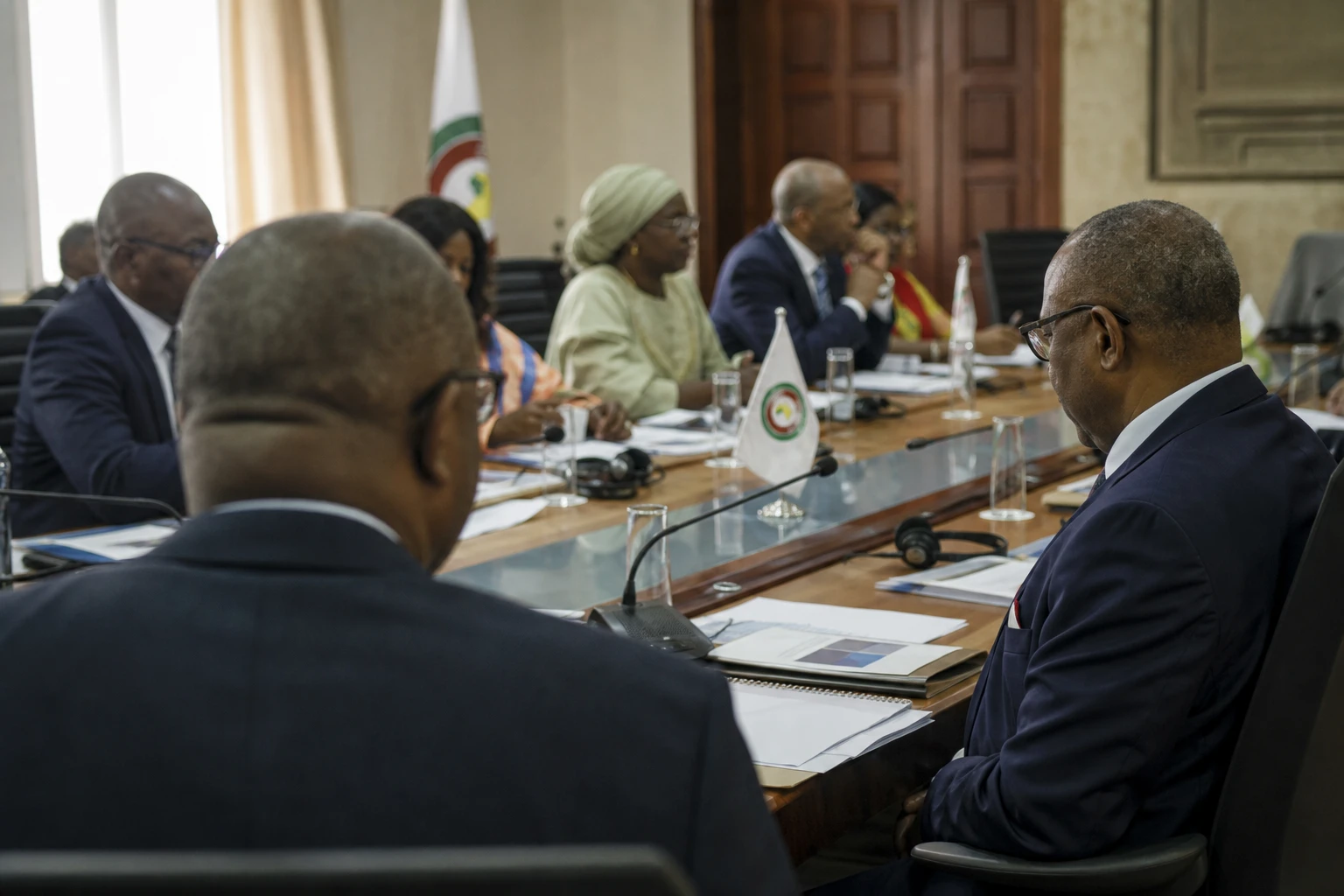
The trial opened at the Dixinn Court of First Instance, in the suburbs of Conakry, a court that regularly hears cases with significant political or media impact. Guinea, meanwhile, has been in an institutional transition since the September 2021 coup, in a context in which ECOWAS has long supported and overseen the return to constitutional order. A technical mission from the West African organisation has again visited Conakry to follow the process, while the Guinean authorities now say the transition has entered a consolidation phase. ECOWAS technical mission in Conakry ; Guinean government portal.
The facts: a complaint, a reported disappearance, then a closely watched trial
At the centre of the case is Bella Bah, a Guinean activist charged with “insult and defamation through a computer system” after a social media post was considered to target El-hadj Mamadou Saliou Camara, the chief imam of Conakry’s Fayçal Grand Mosque. The defendant appeared before the Dixinn court on Monday 17 August. He pleaded not guilty, saying he had never directly named the imam and that, in his view, he had been referring more broadly to the involvement of some religious figures in political affairs in Guinea.
The case also took on a human and political dimension because of the sequence of events. Bella Bah had been reported missing since 8 August before being charged and remanded in custody on 13 August. The timeline fuelled public interest in the case, particularly as the court hearing saw heated exchanges. In court, prosecutors called for a one-year prison sentence. The defence, for its part, disputed any intent to insult or defame and highlighted its client’s expressions of regret, his status as a father and his work as an educator.
The court ultimately reserved judgment. The ruling was due on Wednesday 19 August, keeping pressure on all parties at a time when public debate about the role of religious figures in political life remains heated in Guinea.
What the trial says about Guinean society
The case is about more than a hurtful exchange online. It first highlights the particular place of religious figures in Guinea’s public sphere. In Guinea, imams at major mosques often command an audience beyond the religious community. The chief imam of Fayçal in Conakry is one of the country’s most influential religious voices. His statements may be seen as moral guidance, but also as interventions in civic debate. This overlap explains the sensitivity of reactions when an activist challenges, even indirectly, the involvement of some religious figures in political affairs.
It also says something about how the justice system handles content posted online. The penal code and cybercrime legislation allow people to be prosecuted for statements made via a computer system. In practice, these cases put judges at the centre of a delicate balancing act: protecting reputation and public order without unduly restricting criticism. In Guinea, where social media has become a major forum for debate, this kind of case tests the boundary between activist speech, defamation and abuse.
Prosecutors, for their part, sought to send a firm message. The call for a prison sentence reflects a strict interpretation of the facts. The defence tried to shift attention to the accused’s background, family life and social role. The contrast is revealing: on one side, a judicial institution keen to reaffirm the rules; on the other, lawyers seeking to look beyond the defendant to the person, in a context where mitigating circumstances remain a familiar feature of criminal hearings.
A case with implications beyond its immediate facts
The case is part of a broader period in Guinea, where the political transition has also reopened questions about the balance between institutions, moral authorities and spaces for dissent. In Conakry and across the regions, statements about the place of religion, the military, political parties and community leaders are scrutinised particularly closely. The capital is where these tensions are concentrated, but their effects are felt much further afield, especially in working-class neighbourhoods, religious circles and digital spaces where part of public opinion is now shaped.
For ECOWAS, Guinea remains a closely watched case because it concerns the end of a military transition in a key West African country. For the Guinean authorities, the challenge is also domestic: to show that the justice system works and that disputes can be settled in court rather than through political confrontation or pressure from the streets. For citizens, the message is more tangible: what they write, share or allege online can now carry swift and visible legal consequences.
Beyond the Bella Bah case, what is at stake is control over public speech. In Guinea, this question has become central. It reflects both the vitality of debate and the fragility of its safeguards. And it is a reminder that, in a country where political and religious life often intersect, the justice system has become one of the last arenas in which the limits of what is possible are negotiated.