Algeria
 Egypt
 Libya
 Morocco
 Sudan
 Tunisia
 Benin
 Burkina Faso
 Cabo Verde
 Côte d'Ivoire
 Ghana
 Guinea-Bissau
 Liberia
 Mali
 Mauritania
 Niger
 Nigeria
 Senegal
 Sierra Leone
 The Gambia
 Togo
 Cameroon
 Central African Republic
 Chad
 DR Congo
 Equatorial Guinea
 Gabon
 Republic of the Congo
 São Tomé and Príncipe
 Burundi
 Comoros
 Djibouti
 Eritrea
 Ethiopia
 Kenya
 Madagascar
 Malawi
 Mauritius
 Mozambique
 Rwanda
 Seychelles
 Somalia
 South Sudan
 Tanzania
 Uganda
 Angola
 Botswana
 Eswatini
 Lesotho
 Namibia
 South Africa
 Zambia
 Zimbabwe
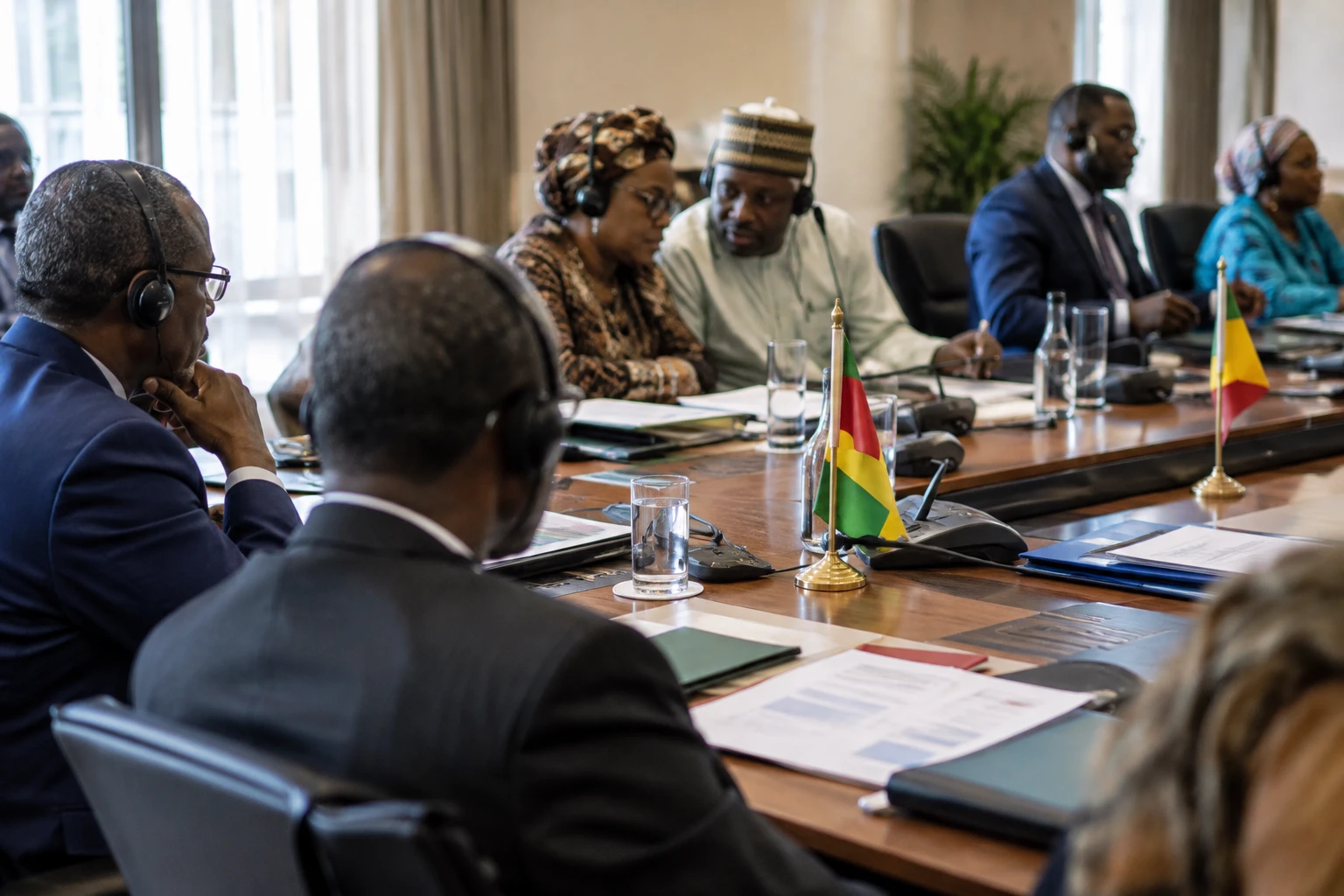
In Siguiri, the halt to artisanal gold mining affects far more than mining sites. It is testing Guinea’s justice system, the incomes of thousands of workers and cooperation between neighbours, as migration to Mali reaches unusual levels.
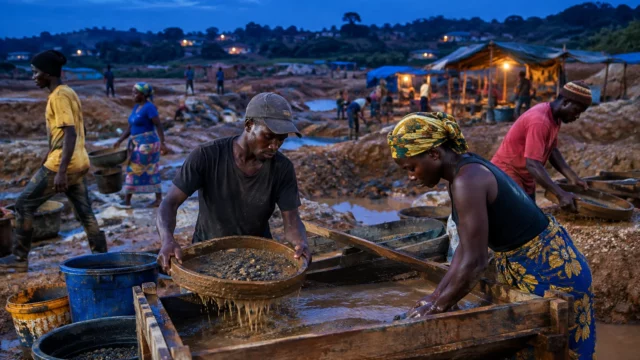
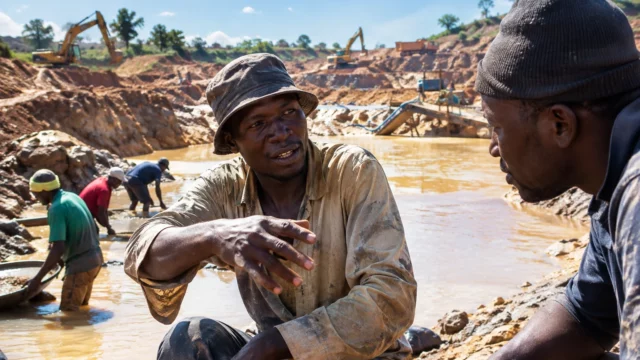
Siguiri prefecture, in north-eastern Guinea, is a major gold-producing area near the Malian border. Artisanal gold mining — the small-scale search for and extraction of gold — provides a livelihood for workers and supports local businesses. But the authorities also denounce unlicensed activities and their effects on land and waterways.
Ban followed by mass arrests
Local authorities suspended artisanal gold mining in Siguiri on 29 October. On 2 November, Guinea’s government extended the ban to gold mining deemed illegal in the region. Security forces subsequently carried out operations at the sites.
According to a joint statement by Guinea’s defence and security ministries, 1,263 people arrested in Siguiri were handed over to the justice system. The African Press Agency reports that their trial began on 10 November. The authorities also announced 149 further arrests in Kérouané and Siguiri on 7 and 8 November, bringing their tally to 1,412 arrests. This is a total of arrests reported by the state, not a number of people convicted.
The proceedings are being handled by several courts. In Conakry, the Court for the Repression of Economic and Financial Offences, which deals in particular with economic and financial crimes, examined cases related to mining, environmental degradation and water pollution. Hearings have also been reported in other courts. The cases must be examined individually: an arrest is not enough to establish guilt.
Guinean and foreign nationals are among those facing prosecution. In separate cases, the Dixinn court sentenced eight foreign defendants to two years in prison and a five-year ban on residence, according to a report published by Guinea’s embassy in Senegal. These rulings do not prejudge the outcome of the other proceedings.
Workers’ responsibility and that of the authorities
The defence disputes how responsibility is apportioned. Lawyers cited in reports from the hearing argue that the workers arrested are not necessarily the main beneficiaries of illegal mining. They also contest the idea that officials recently appointed to their posts can be held responsible for earlier practices. The courts have yet to examine these arguments.
The case also concerns the role of those who organise the sites, provide equipment and control marketing channels. Guinean authorities have announced measures against local officials accused of facilitating the banned activity. Here too, accusations do not amount to convictions. The courts will have to establish the facts and each person’s responsibility.
For households in Siguiri, the closure can quickly cut off a source of income. Day labourers are directly exposed, as are the sellers, transporters and small businesses that depend on mining. Environmental rules address a tangible concern: limiting damage to soil and water. Their implementation nevertheless raises an immediate question: what economic alternatives can take the place of this activity for residents who have lost their livelihoods?
Repercussions beyond the border
The operations have prompted foreign workers to leave for neighbouring countries, including Mali and Burkina Faso. Bamako has said it has received about 160,000 people since the operations began, according to figures reported by Deutsche Welle based on Malian authorities. This is an official Malian estimate, cited by several media outlets; it is not an independent count of people expelled. Malian authorities have also reported six deaths, although the circumstances have not been established in the information available.
Malian teams and the Malian Red Cross have organised food and healthcare assistance at reception sites. The reported scale of arrivals is, however, putting local services under pressure. Displaced families need accommodation and basic services, while their relatives and host communities must absorb the effects of a rapid movement of people.
This regional dimension matters in an area where workers move between countries in search of income. Guinea and Mali are neighbours and members of the Economic Community of West African States (ECOWAS), the regional organisation for political and economic cooperation. A national decision on mining can therefore have direct consequences for neighbouring countries, particularly if departures are not coordinated with them.
Next steps will play out in court and at the borders
For Conakry, the challenge is to enforce mining regulations and protect natural resources. But the operation’s credibility will also depend on how the justice system handles defendants, distinguishes between roles and examines accusations against any public officials. Rapid hearings do not remove the need for a fair examination of cases, particularly when many people are being prosecuted or are far from where they were arrested.
The Malian government has taken steps to organise the reception and return of its nationals. Guinean authorities, for their part, say operations are continuing and that those arrested are being treated in accordance with the law. Monitoring the hearings, the situation of displaced people and exchanges between Conakry, Bamako and Ouagadougou will show whether the fight against illegal gold mining is accompanied by a judicial and regional response commensurate with its impact.