Algeria
 Egypt
 Libya
 Morocco
 Sudan
 Tunisia
 Benin
 Burkina Faso
 Cabo Verde
 Côte d'Ivoire
 Ghana
 Guinea
 Guinea-Bissau
 Liberia
 Mali
 Mauritania
 Niger
 Nigeria
 Sierra Leone
 The Gambia
 Togo
 Cameroon
 Central African Republic
 Chad
 DR Congo
 Equatorial Guinea
 Gabon
 Republic of the Congo
 São Tomé and Príncipe
 Burundi
 Comoros
 Djibouti
 Eritrea
 Ethiopia
 Kenya
 Madagascar
 Malawi
 Mauritius
 Mozambique
 Rwanda
 Seychelles
 Somalia
 South Sudan
 Tanzania
 Uganda
 Angola
 Botswana
 Eswatini
 Lesotho
 Namibia
 South Africa
 Zambia
 Zimbabwe
On Gorée, memory looks beyond the past
A short boat ride from Dakar, Gorée Island still compels visitors to do what history rarely asks: look the past in the face. On this small stretch of Senegalese land, the House of Slaves welcomes visitors from the continent, the diaspora and elsewhere, all seeking to understand what the transatlantic slave trade took from African families over centuries. UNESCO describes Gorée as an exceptional testament to this tragedy and notes that the site remains a place of reconciliation.
On 23 August, the International Day for the Remembrance of the Slave Trade and its Abolition gives the visit particular significance. The United Nations says UNESCO chose the date in 1997 to honour the struggles against slavery and pass this history on to younger generations. In Senegal, the House of Slaves is also presented by cultural authorities as a place of remembrance and historical tourism, at the heart of the national heritage.
A Senegalese site, an African legacy, a global debate
Gorée lies off Dakar, in the urban and port area linking the Senegalese capital to the Atlantic. The island has been a UNESCO World Heritage Site since 1978. The organisation places it at the centre of European rivalries over the slave trade between the 15th and 19th centuries, and notes that its buildings, narrow streets and former detention sites still tell the story of the economy of deportation.
For years, Senegal has made Gorée a public place of remembrance. The Ministry of Culture describes it as a major historic site, while UNESCO points to restoration and protection programmes, particularly in response to coastal erosion. This policy matters because memorial heritage lives on beyond ceremonies. It also depends on maintaining buildings, public access and education in schools.
What lies beyond the Door of No Return
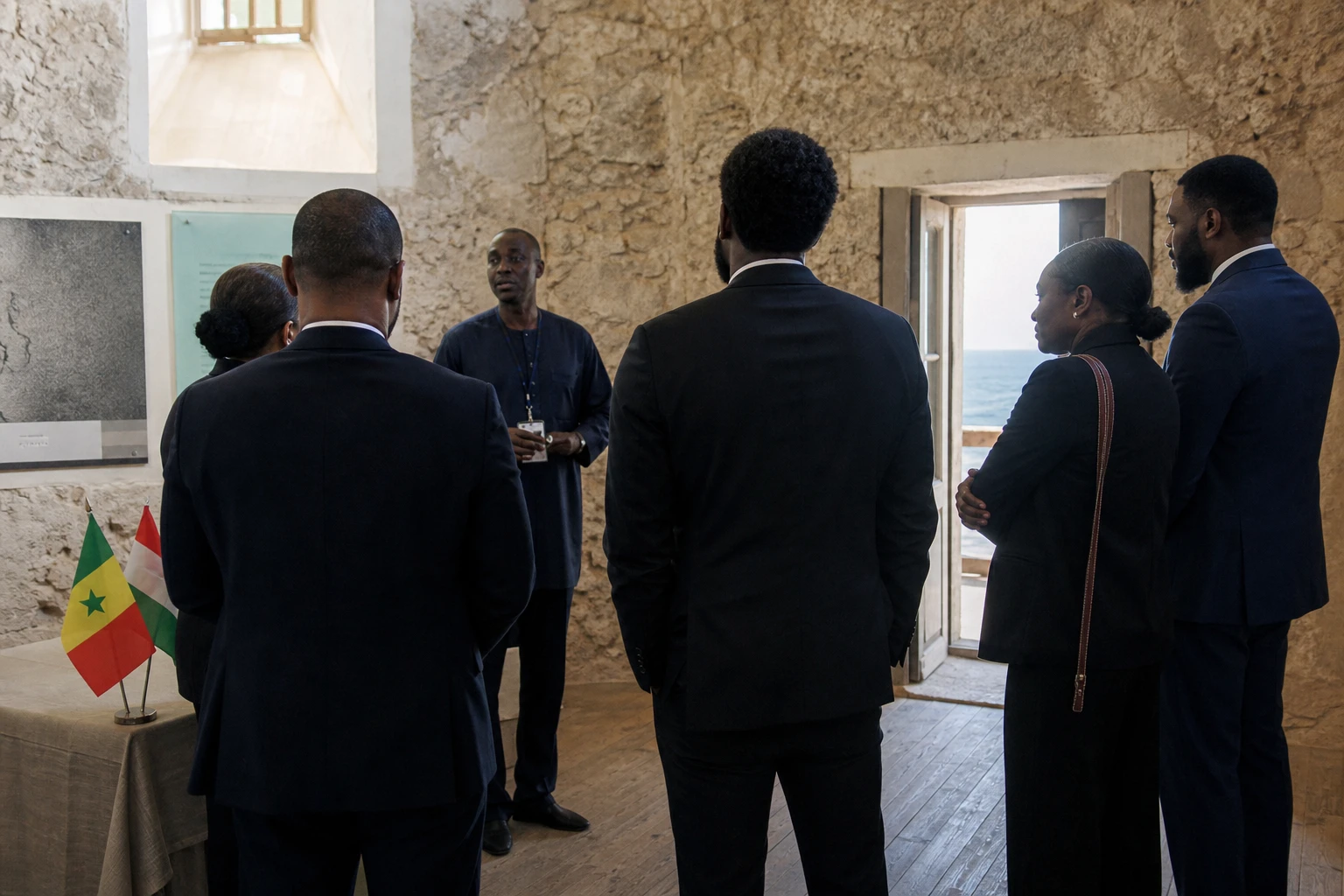
The House of Slaves on Gorée is now one of Senegal’s most visited sites. UNESCO refers to several hundred visitors a day, and Senegal’s Ministry of Culture makes it a major gateway to historical tourism in Dakar. On site, guides explain that the building, constructed in 1776 according to Senegalese cultural authorities, was used for storage and detention. The door opening on to the ocean, often called the Door of No Return, offers a glimpse of the brutality of a system that reduced human beings to merchandise.
But Gorée’s power lies not only in emotion. It comes from the encounter between memory, research and historical debate. UNESCO notes that the island’s central role in the transatlantic slave trade is debated among historians. This does not diminish the violence of the slave system; it simply requires a distinction between the universally recognised memorial symbol and debates about the precise scale of the flows that passed through the island.
Why this memory still speaks to Africa today
Visitors to Gorée do not come only in search of a closed chapter of the past. They come to measure what the slave trade left in families, languages, migrations and collective imagination. This memory speaks directly to Senegalese people, but also to West Africa, a region of former routes of capture, trade and forced movement that is now engaged in other efforts around sovereignty, mobility and integration within ECOWAS, the Economic Community of West African States.
The site also has a quiet but real political significance. In a region where states are seeking to strengthen school curricula, museums, archives and cultural industries, Gorée shows how a place of remembrance can become a tool for knowledge, education and cultural diplomacy. Senegal understood this long ago. Other African capitals now see it as a way to tell history from the continent, without relying solely on accounts from elsewhere.
So 23 August is a reminder of more than a commemorative date. It brings a simple question back to the fore: how can a painful history be passed on without being frozen in time or entrusted solely to museums? On Gorée, the answer lies in a specific place, facing Dakar, but its resonance extends far beyond Senegal. The memory of the slave trade remains alive there because it continues to raise questions about human dignity, Africa’s place in the global narrative and the responsibility of states to preserve their historical traces.