Algeria
 Egypt
 Libya
 Morocco
 Sudan
 Tunisia
 Benin
 Burkina Faso
 Cabo Verde
 Côte d'Ivoire
 Ghana
 Guinea
 Guinea-Bissau
 Liberia
 Mali
 Mauritania
 Niger
 Nigeria
 Senegal
 Sierra Leone
 The Gambia
 Togo
 Cameroon
 Central African Republic
 Chad
 Equatorial Guinea
 Gabon
 Republic of the Congo
 São Tomé and Príncipe
 Burundi
 Comoros
 Djibouti
 Eritrea
 Ethiopia
 Kenya
 Madagascar
 Malawi
 Mauritius
 Mozambique
 Rwanda
 Seychelles
 Somalia
 South Sudan
 Tanzania
 Uganda
 Angola
 Botswana
 Eswatini
 Lesotho
 Namibia
 South Africa
 Zambia
 Zimbabwe
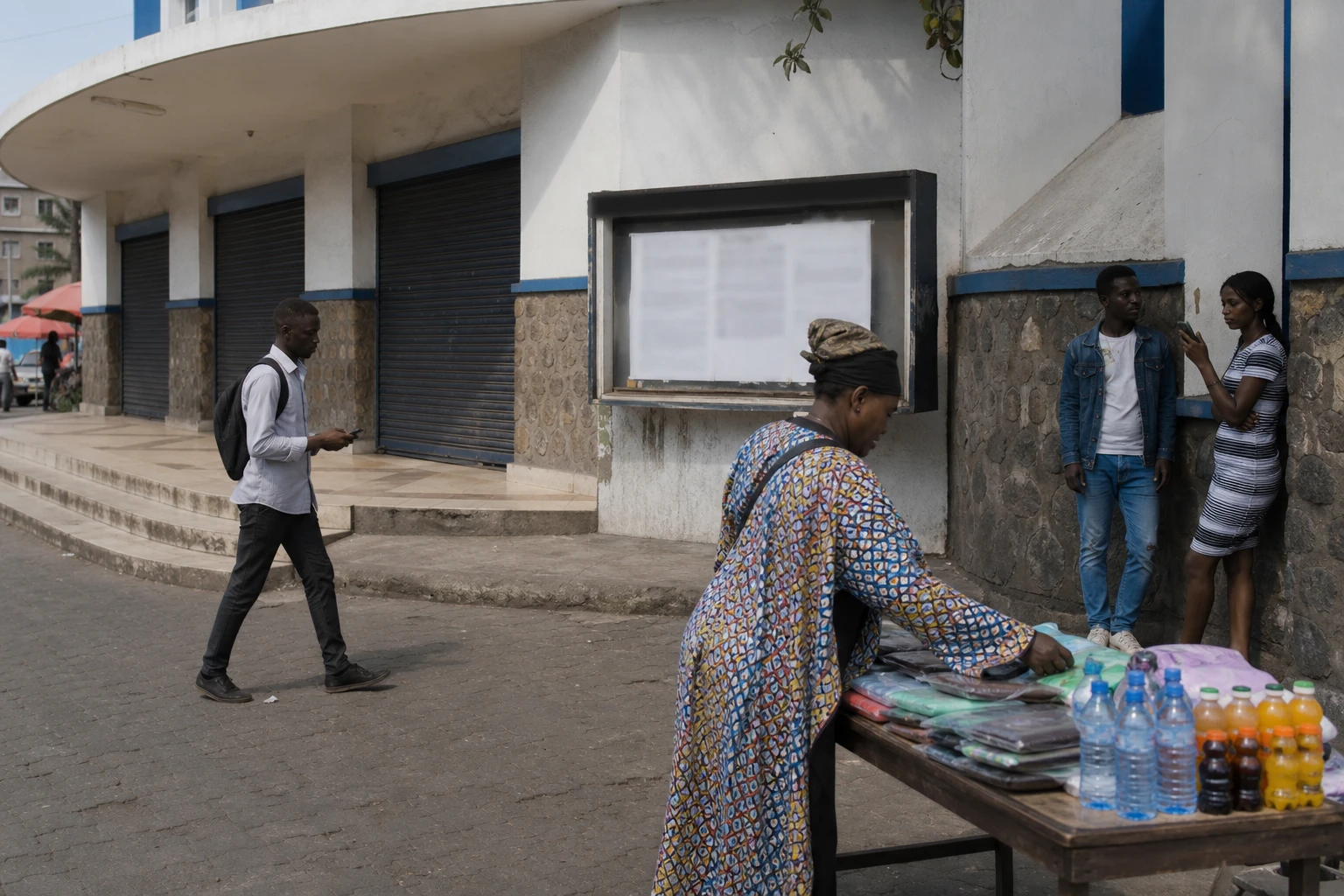
In Goma, the disease suspends more than a cultural calendar
When venues close, an entire neighbourhood often slows down. In Goma, in the east of the Democratic Republic of the Congo, the threat of Ebola affects more than healthcare workers. It is also hitting a place where music, dance, fashion and theatre have long provided social relief.
This city in North Kivu has always been one of the most active centres in French-speaking Central Africa. But since Goma was captured by the AFC/M23 in January 2025, cultural life has been under strain. Several venues have scaled back or suspended their activities, and landmark events have moved out of the city for security reasons. The relocation of the Amani Festival to Lubumbashi in March 2026 was a reminder that Goma remains a major cultural centre, but one under constant pressure.
The new Ebola outbreak, declared in September 2025 in Kasai, added another layer of caution to an already fragile daily life. The WHO confirmed the end of that outbreak in December 2025, after several weeks of a response coordinated by the Congolese authorities and their partners. But in spring 2026, a new outbreak linked to the Bundibugyo strain was confirmed in Ituri, with cases also reported in Goma. On 17 May 2026, the first confirmed case there was announced in the city.
A city where culture helps people carry on
In Goma, culture is not a luxury. It also serves as a social bond. After months of fighting, displacement and uncertainty, concerts, debates, fashion shows and arts events give residents a moment of respite. When these activities stop, the loss is as much psychological as economic.
This reality is well known in the city. As early as 2025, the local arts scene had already been severely shaken by the M23 occupation and the closure of many creative venues. A leading cultural centre had seen its classes, rehearsals and concerts almost grind to a halt. Artists interviewed at the time described a city where people played less, went out less and saw their incomes dwindle. 2026 has not erased that shock; it has prolonged it.
In this context, the ban on or restriction of public gatherings linked to Ebola is an additional brake. It is not aimed at culture, but culture is bearing the brunt. Every cancelled concert means lost work for musicians, dancers, technicians, presenters and producers, as well as hoteliers, vendors, printers and transport operators. In a city where much activity depends on daily footfall and the informal economy, just a few days of shutdown are enough to hit revenues.
The health risk extends beyond confirmed cases
The Ebola situation must be viewed in the context of the Congolese health system. In 2025, WHO Africa had already pointed out that conflict in eastern DRC made access to care, the movement of response teams and contact tracing more difficult. In 2026, the health response had to contend with population mobility, forced displacement and mistrust born of successive crises. The Bundibugyo outbreak, active from May 2026, also prompted heightened vigilance in several eastern cities, including Goma and Bukavu.
This situation is a reminder of an essential point: in eastern Congo, public health is also shaped in markets, schools, places of worship and cultural spaces. When a city is under strain, every gathering becomes a matter of prevention. That is why health authorities and response committees are stepping up community messaging, screening, monitoring of contacts and information campaigns. The approach is not solely medical. It is also social and territorial.
Closing or restricting cultural activities does not, on its own, guarantee that the disease will stop spreading. But it reduces opportunities for high-risk contact. It also helps spread prevention messages in neighbourhoods where artists are often trusted voices. In Goma, culture has long been a way to talk about peace, cohesion and health. During an outbreak, that role becomes even more visible.
What Goma says about the rest of the country
What is unfolding in Goma goes beyond North Kivu. The city embodies several of the DRC’s contemporary fault lines: armed conflict, a humanitarian crisis, an urban economy under strain, cross-border movement with Rwanda and now health pressures. In this context, every new alert can disrupt trade, travel and activities. Goma remains a regional hub for Central Africa and the Great Lakes, making it a sensitive point in any health response.
Politically, the episode is also a reminder that lasting solutions cannot be purely security-focused. The declaration of principles signed in Doha by Kinshasa and the AFC/M23 in July 2025 opened a period of negotiations, but the city continues to live with uncertainty. As long as state authority, the movement of goods and civilian security remain fragile, sectors such as culture and small-scale trade will remain exposed to the slightest shock.
Across the continent, Goma illustrates a familiar but often underestimated reality: public health, local peace and the urban economy move together. An epidemic can stop a festival. A conflict can empty a venue. A border closure can wipe out market incomes. In Central Africa, as elsewhere on the continent, resilience is built in hospitals as much as in neighbourhoods, schools and cultural spaces. In Goma, that equation remains central in the weeks ahead.