Algeria
 Egypt
 Libya
 Morocco
 Sudan
 Tunisia
 Benin
 Burkina Faso
 Cabo Verde
 Côte d'Ivoire
 Ghana
 Guinea
 Guinea-Bissau
 Liberia
 Mali
 Mauritania
 Niger
 Nigeria
 Senegal
 Sierra Leone
 The Gambia
 Togo
 Cameroon
 Central African Republic
 Chad
 DR Congo
 Equatorial Guinea
 Gabon
 São Tomé and Príncipe
 Burundi
 Comoros
 Djibouti
 Eritrea
 Ethiopia
 Kenya
 Madagascar
 Malawi
 Mauritius
 Mozambique
 Rwanda
 Seychelles
 Somalia
 South Sudan
 Tanzania
 Uganda
 Angola
 Botswana
 Eswatini
 Lesotho
 Namibia
 South Africa
 Zambia
 Zimbabwe
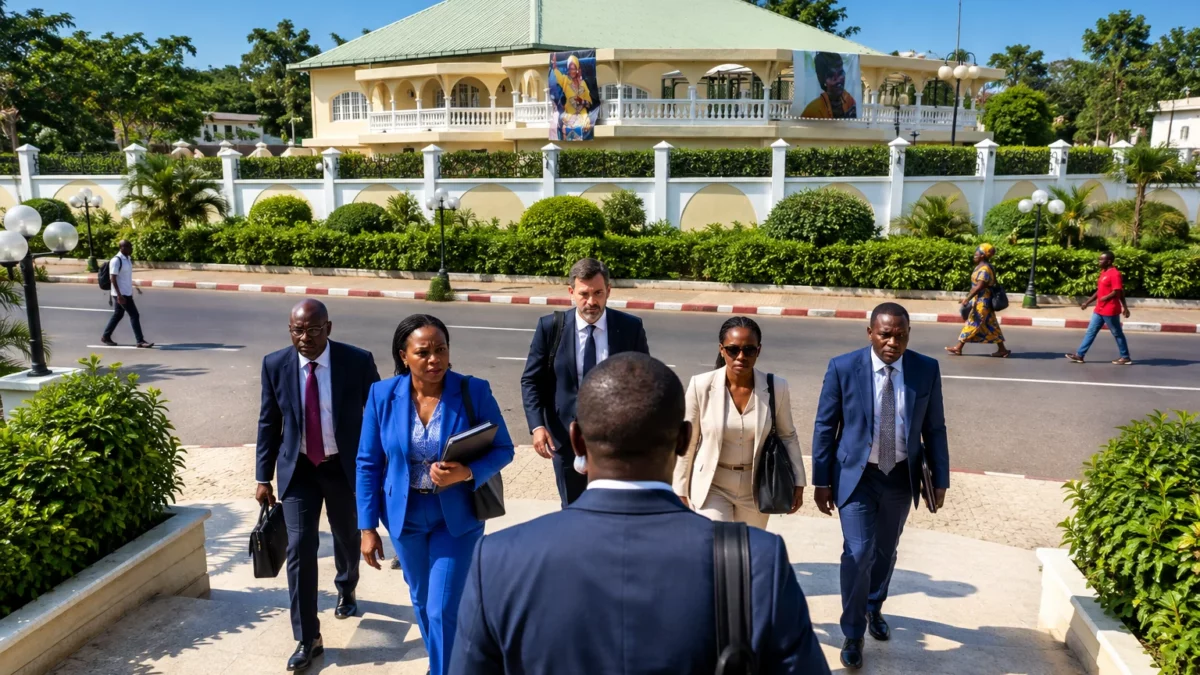
Mediation can bring leaders around the same table without erasing the disagreements that have driven them apart. The meeting announced for Sunday 22 November 2026 in Oyo, in the north of the Republic of the Congo, between Félix Tshisekedi and William Ruto should therefore be viewed on two levels: the crisis in the east of the Democratic Republic of the Congo and the strained relationship between Kinshasa and Nairobi.
A meeting between neighbours with intertwined interests
The Democratic Republic of the Congo and Kenya do not share a border, but their relations matter to the balance of power in East and Central Africa. Nairobi has hosted peace initiatives concerning eastern DR Congo. Kenya also took part in the East African Community (EAC) regional force, an organisation bringing together several countries in the region. These roles placed William Ruto at the heart of discussions on security in the Congo, while also fuelling mistrust in Kinshasa.
The meeting in Oyo is expected to bring together, under the auspices of the president of the Republic of the Congo, Denis Sassou-Nguesso, the leaders of the DRC, Kenya and Togo’s Faure Gnassingbé. The African Union has tasked Gnassingbé with a mediation mission concerning the crisis between the DRC and Rwanda. Congolese and regional media have announced this four-way format and its planned date of 22 November. Available information presents the leaders as expected in Oyo; on its own, it does not confirm the content of any eventual final agreement.
The choice of an African setting is notable. Oyo is neither Kinshasa nor Nairobi, and Sassou-Nguesso’s initiative offers a space for talks without placing either president in the other’s country. But the mediation will have to contend with two connected yet distinct issues: bilateral relations between the DRC and Kenya, and the search for a way to end violence in eastern DR Congo.
Disagreements building up since 2023
Mistrust between the two capitals intensified in December 2023. Corneille Nangaa, former president of the DRC’s Independent National Electoral Commission, announced from Nairobi the creation of the Congo River Alliance (AFC), a political and military coalition that includes the M23. Kinshasa called for his arrest. Nairobi did not hand him over to the Congolese authorities. The dispute undermined trust, even though Kenya had previously supported the Nairobi Process, a regional framework for dialogue with armed groups.
In 2024, Félix Tshisekedi accused William Ruto of taking Rwanda’s side. This is an accusation made by the Congolese president, not a fact established simply by the wording of the criticism. It nevertheless reflects a persistent concern in Kinshasa: that regional mediators risk losing credibility when they are seen as too close to one of the parties to the conflict.
A new episode reignited tensions in August 2025, when Nairobi announced the appointment of a consul general in Goma, a city in eastern DR Congo then controlled by the AFC/M23. Kinshasa contested the decision and said that diplomatic officials could take up their posts only with its agreement. Kenya later said that it would seek Congolese authorisation before any appointment took effect. The two governments thus publicly aired a disagreement over diplomatic representation and the status of a city whose control remains a major issue.
Mistrust also has a political dimension. In October 2025, Congolese opposition figures met in Nairobi around former president Joseph Kabila. Kinshasa may view the hosting of these figures as an additional source of political pressure. Nairobi, for its part, can defend its role as a venue for regional dialogue. The available evidence is insufficient to conclude that the meeting was an official initiative of the Kenyan government.
What a resumption of dialogue could change
A direct exchange between the presidents could reduce the risk of diplomatic incidents and clarify the rules of cooperation. It could also reopen useful channels on the peace process and economic relations. But no prior announcement guarantees a lasting rapprochement. The disputes touch on security, sovereignty, diplomacy and the role each state intends to play in the region.
The consequences extend beyond presidential palaces. For people in eastern DR Congo, the immediate issues remain security and the ability to access services, markets and transport routes. Relations between Kinshasa and Nairobi can influence regional initiatives, but a bilateral thaw would not, on its own, end the fighting or displacement. Traders and businesses, meanwhile, have an interest in predictable exchanges between the two countries, particularly because regional corridors link Congolese markets to East African ports.
The Congolese government may also be tempted to use economic levers to put pressure on Nairobi, according to reports published ahead of the meeting. No specific measure has been confirmed. Such an option would affect different actors in different ways: the authorities could project a firm stance, while businesses and consumers might face disruption. It is therefore important to distinguish possible pressure tactics from decisions actually taken.
A test for regional diplomacy
Oyo does not replace either the African Union’s mechanisms or the regional frameworks concerned with the crisis. The DRC is a member of the East African Community and the Southern African Development Community (SADC), two organisations involved in regional security arrangements. Kenya is a member of the EAC. This overlap of organisations can open several avenues for dialogue, but it can also complicate coordination if initiatives compete or the parties question their impartiality.
The announced meeting will above all show whether the presidents can separate their bilateral disputes from negotiations on eastern DR Congo. Follow-up should focus on any concrete steps: resumption of diplomatic exchanges, clarification of the Goma issue and coordination of mediation efforts. Without verifiable commitments, a handshake will not be enough to dispel several years of suspicion.