Algeria
 Egypt
 Libya
 Morocco
 Sudan
 Tunisia
 Benin
 Burkina Faso
 Cabo Verde
 Côte d'Ivoire
 Ghana
 Guinea
 Guinea-Bissau
 Liberia
 Mali
 Mauritania
 Niger
 Nigeria
 Senegal
 Sierra Leone
 The Gambia
 Togo
 Cameroon
 Central African Republic
 Chad
 Equatorial Guinea
 Gabon
 Republic of the Congo
 São Tomé and Príncipe
 Burundi
 Comoros
 Djibouti
 Eritrea
 Ethiopia
 Kenya
 Madagascar
 Malawi
 Mauritius
 Mozambique
 Rwanda
 Seychelles
 Somalia
 South Sudan
 Tanzania
 Uganda
 Angola
 Botswana
 Eswatini
 Lesotho
 Namibia
 South Africa
 Zambia
 Zimbabwe
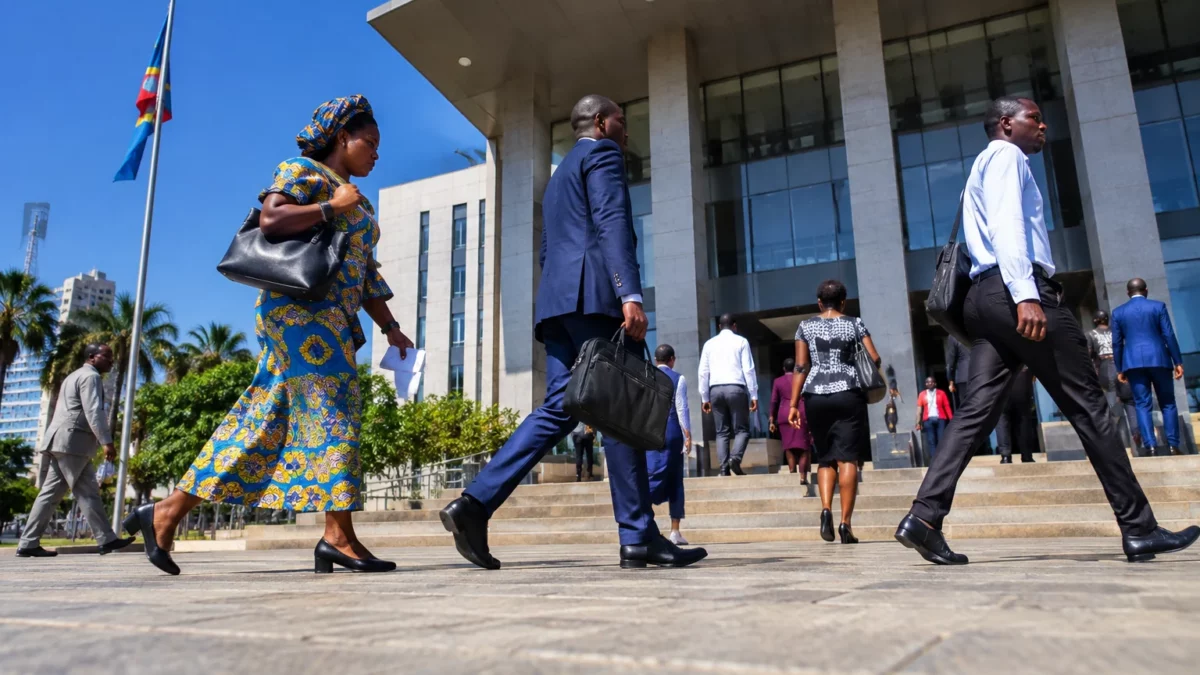
For the Democratic Republic of the Congo, diplomacy is not played out only in negotiating rooms. It is also measured by decisions that affect people: who holds positions of influence, who receives migrants sent back from Europe, and how to maintain exchanges between provinces when river transport comes to a halt. In Kinshasa, these issues converged this week amid tensions with Kigali.
A compromise in Phnom Penh, with no clear winner
The summit of the International Organisation of La Francophonie (OIF), held in Phnom Penh on 15 and 16 November 2026, did not name a successor to Louise Mushikiwabo. The Rwandan secretary-general will remain in office for a further 12 months, allowing discussions to resume and a new date to be set in 2027. The compromise avoids an immediate decision but does not resolve the disagreement over her succession.
For Kinshasa, the delay means the Rwandan leader does not immediately secure a new term. For Kigali, it preserves its presence at the head of the organisation for another year. Other member states also played a part in the search for consensus, so the outcome cannot be reduced to a stand-off between the two capitals. La Francophonie brings together countries with diverse interests and alliances, and its decisions are made by its member states.
The issue carries particular weight in the Great Lakes region, where relations between the DRC and Rwanda remain marked by the war in eastern Congo. In February 2025, UN Security Council Resolution 2773 condemned the M23 advances with the support of Rwandan forces, called on Kigali to withdraw its troops and urged the two countries to resume dialogue. These findings and calls are those of the Security Council; they do not override the specific issues involved in regional peace processes, notably those of Luanda and Nairobi.
European migration plan reignites diplomatic dispute
Another issue prompted a more direct response from Congolese diplomats. On 16 November, Germany, Austria, Denmark, Greece and the Netherlands announced plans for a centre in Rwanda for people whose asylum applications in Europe have been rejected. They could be transferred there as part of return procedures. The precise arrangements and applicable safeguards remain at the heart of the debate.
Kinshasa considers the initiative inconsistent with the position expressed by several of these states at the Security Council. Resolution 2773 called, among other things, for the withdrawal of Rwandan forces from Congolese territory. Foreign Minister Thérèse Kayikwamba Wagner urged European partners to ensure consistency between their diplomatic commitments and their agreements with Kigali.
European governments present the centre as a way to organise the return of people without the right to stay. Human Rights Watch and Amnesty International oppose the plan and warn of risks to the rights of people transferred there. The issue is therefore not limited to relations between Kinshasa and Kigali: it also concerns the responsibility of countries that move the management of their migration policies outside their own territory.
For Rwanda, such a partnership could strengthen ties with several European governments. For the DRC, it adds another point of friction to a relationship already strained by armed conflict. For those affected, the stakes are tangible: access to a fair process, their safety and the ability to challenge a return decision. These effects cannot be assessed without knowing the final rules of the scheme.
On the river, safety and supplies in tension
Inside the country, a strike by pirogue operators highlights how vital the Congo River and its tributaries remain for the movement of goods. The Ministry of Transport set 15 November as the date from which wooden pirogues would be banned from navigating. Operators announced a strike in freight transport from 16 November and called for more time to adapt their fleets.
The authorities cite navigational safety, following deadly accidents on the waterways. Industry professionals, meanwhile, denounce a rollout that is too rapid and fear disruption to supplies in riverside communities. Initial effects of the strike have been reported in Tshopo province. The measure thus pits two imperatives against each other: reducing risks to passengers and avoiding cutting communities off from their trade routes.
The consequences are not the same for everyone. Operators must finance or replace their boats; traders may face delays; and residents of areas served by river transport risk finding it harder to access goods. The government will therefore have to enforce the rule while engaging in dialogue on timeframes, alternatives and the needs of isolated provinces.
Proceedings reopened in Katumbi-Katebe dispute
On the judicial front, the Court of Cassation has agreed to reopen proceedings in the land dispute between Moïse Katumbi and Raphaël Katebe Katoto. Katumbi’s defence wants to submit a Belgian expert report concerning seven documents attributed to Katebe Katoto. Congolese media report that the case is due to resume in March 2027.
This step does not decide the substance of the dispute and is not a definitive victory for either party. The expert report cited comes from the defence; its conclusions will have to be examined as part of adversarial proceedings. In the absence of a final ruling, claims about the authenticity of the documents must remain attributed and must not be presented as judicially established fact.
Different issues, the same demand for consistency
These cases have different causes, but each tests the ability of institutions to honour their commitments. At regional level, the war in eastern DRC has brought the peace processes of the African Union, the East African Community and the Southern African Development Community into play. Resolution 2773 specifically calls for better coordination between the Luanda and Nairobi initiatives.
The next steps will be decisive: the resumption of the Francophonie issue in 2027, the practical implementation of the migration plan in Rwanda, the government’s response to the operators and the next hearing in the Katumbi-Katebe case. For Congolese people, these decisions will be shaped as much in diplomatic and judicial forums as in river ports and provinces where access to goods depends on transport by boat.