Algeria
 Egypt
 Libya
 Morocco
 Sudan
 Tunisia
 Benin
 Burkina Faso
 Cabo Verde
 Côte d'Ivoire
 Guinea
 Guinea-Bissau
 Liberia
 Mali
 Mauritania
 Niger
 Nigeria
 Senegal
 Sierra Leone
 The Gambia
 Togo
 Cameroon
 Central African Republic
 Chad
 DR Congo
 Equatorial Guinea
 Gabon
 Republic of the Congo
 São Tomé and Príncipe
 Burundi
 Comoros
 Djibouti
 Eritrea
 Ethiopia
 Kenya
 Madagascar
 Malawi
 Mauritius
 Mozambique
 Rwanda
 Seychelles
 Somalia
 South Sudan
 Tanzania
 Uganda
 Angola
 Botswana
 Eswatini
 Lesotho
 Namibia
 South Africa
 Zambia
 Zimbabwe
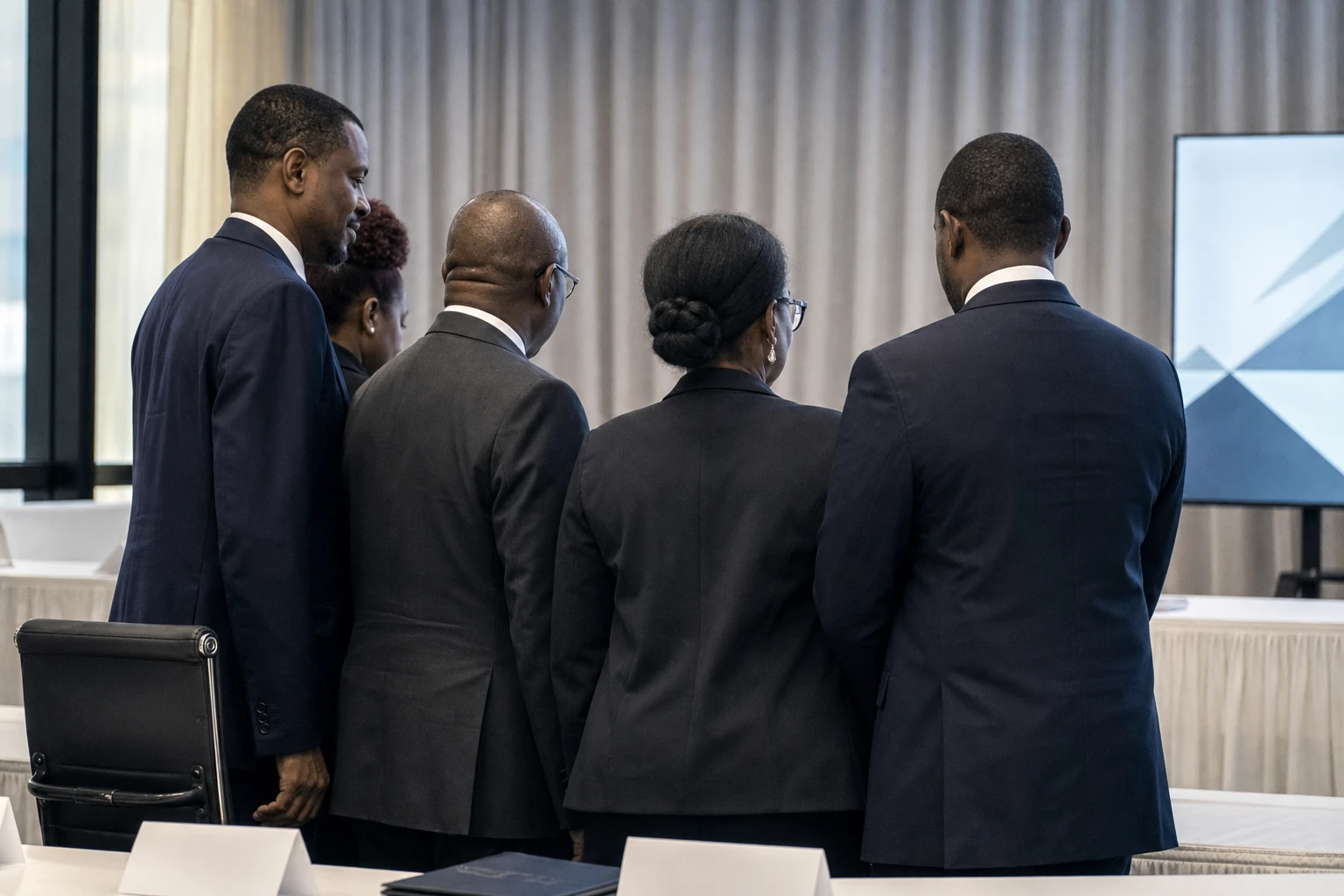
Accra wants to turn investor interest into factories, not just promises
In Ghana, the challenge is no longer to pile up announcements on paper. In Accra, the government now wants to turn a pipeline of nearly $11.48bn in announced investments into projects that are up and running, producing and creating jobs. The idea is simple: committed capital is worth little until it passes through the doors of a factory, workshop, warehouse or modernised farm.
The debate is all the more important because the country regained momentum in 2025. Provisional data published that year show $2.62bn in foreign direct investment, spread across 254 projects registered with the relevant public agencies. Manufacturing accounts for the largest number of projects, a sign that Ghana is seeking to move away from a reliance on easy imports and strengthen its productive base.
Reforms to move capital from the register into production
The message delivered by the Ministry of Trade, Agribusiness and Industry on 26 August 2026 is clear: the country no longer wants merely to attract commitments; it wants to speed up their implementation. According to the ministry, the roadmap rests on better public services, clearer rules and shorter timelines for investors. The administration also cites infrastructure, access to finance, a skilled workforce and regulatory predictability as decisive conditions for retaining capital.
This approach is part of a broader effort. In April 2026, Parliament passed the Ghana Investment Promotion Authority Bill, a measure intended to strengthen the role of the investment promotion agency and make it the national focal point for the investment protocol of the AfCFTA, the African Continental Free Trade Area. At the same time, the government is also preparing a reform of the Business Regulatory Reform Bill to clarify compliance obligations and strengthen consultation with the private sector.
For Ghanaian authorities, this institutional package matters as much as the figures. It is intended to narrow the familiar gap between investors’ stated interest and the actual delivery of projects. The Ghana Investment Promotion Centre describes its mission as one of facilitation, monitoring and support, with a stronger focus on bankable projects and aftercare.
What the figures say, and what they really tell us
The announced figures are encouraging, but they call for careful reading. According to 2025 data, Ghana recorded $2.62bn in FDI, up from about $617m in 2024. The recorded projects are numerous, and the expected jobs remain significant: some publications cite 18,748 potential jobs once projects are fully operational. Other monitoring figures refer to 253 projects, showing that there are still slight differences in consolidation between agencies and media reports. In this case, the safest conclusion is to focus on the shared trend: a sharp recovery in flows and a growing pipeline.
The government chiefly wants to direct this capital towards sectors that strengthen local production. Agribusiness, textiles and clothing, pharmaceuticals, automotive manufacturing and component production are among the stated priorities. This choice is no accident. It targets segments where value can remain in the country, local suppliers can join the supply chain, and urban employment can grow beyond services and informal trade alone.
The president has already placed several economic initiatives within this production-focused approach. In June 2026, the presidency announced $3.5bn in new commitments in oil and gas. In early August, further announcements set out a $10bn programme over four years in seven priority sectors. The signal is consistent: Ghana’s government is seeking to build a narrative of recovery centred on industry, energy, infrastructure and exports.
But implementation remains the decisive question. For large companies, decisions hinge on road quality, access to credit, stable rules and administrative speed. For Ghanaian small and medium-sized enterprises, the issue is even more tangible: securing contracts, joining supply chains, meeting standards and avoiding being squeezed out by project promises that never reach local suppliers.
A Ghanaian perspective, with West African and continental implications
Ghana’s case extends beyond its borders. The country is a pivotal ECOWAS economy—the Economic Community of West African States—and, above all, an anchor for the AfCFTA, whose secretariat is based in Accra. This changes the nature of the investments being sought: the aim is not only to serve the Ghanaian market, but also to produce regionally and reach the continental market. The GIPC makes this explicit, presenting the country as a gateway to a large African market.
This continental dimension is essential. An investment that succeeds in Ghana can have a knock-on effect in other West African economies, particularly if the same projects rely on harmonised standards, reliable logistics corridors and regional value chains. Conversely, if projects remain stuck at the announcement stage, the region gains neither production nor jobs nor industrial credibility.
The next step will therefore be a test of economic governance. It remains to be seen whether reform of the investment framework, simpler business rules and stronger public facilitation will translate into visible projects before the next budgetary and industrial cycles. In Ghana, the debate is no longer about investors’ appetite. It is now about the state’s ability to turn that appetite into sustainable production, local jobs and regional integration.