Algeria
 Egypt
 Libya
 Morocco
 Sudan
 Tunisia
 Benin
 Burkina Faso
 Cabo Verde
 Côte d'Ivoire
 Ghana
 Guinea
 Guinea-Bissau
 Liberia
 Mali
 Mauritania
 Niger
 Nigeria
 Senegal
 Sierra Leone
 The Gambia
 Togo
 Cameroon
 Central African Republic
 Chad
 Equatorial Guinea
 Gabon
 Republic of the Congo
 São Tomé and Príncipe
 Burundi
 Comoros
 Djibouti
 Eritrea
 Ethiopia
 Kenya
 Madagascar
 Malawi
 Mauritius
 Mozambique
 Rwanda
 Seychelles
 Somalia
 South Sudan
 Tanzania
 Uganda
 Angola
 Botswana
 Eswatini
 Lesotho
 Namibia
 South Africa
 Zambia
 Zimbabwe

Ceasefire announced, but events on the ground speak louder
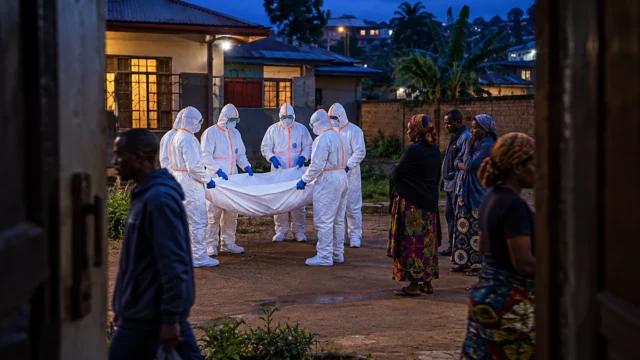
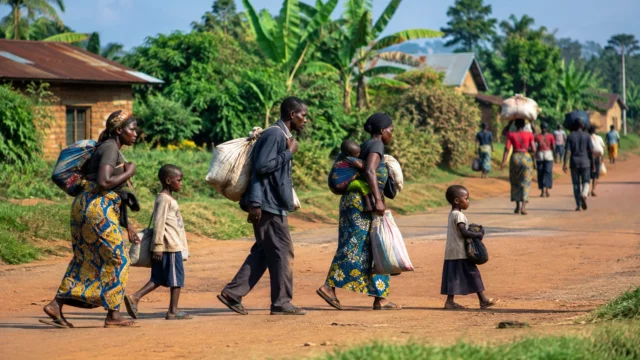
In the east of the Democratic Republic of the Congo, front lines are no longer visible only on military maps. They can also be seen in roofs torn off, displaced families and roads once again rendered impassable. In Fizi and Kalehe, in South Kivu, tensions show that a peace mechanism can make progress in negotiating rooms while remaining fragile on the ground.
This gap is central. Since the start of 2026, the African Union, together with Qatar, the United States and other partners, has supported exchanges between Kinshasa and the AFC/M23 on a framework for a ceasefire, humanitarian access and verification. But fighting has continued in several areas of North Kivu and South Kivu, with particular intensity in the territories of Fizi, Kalehe and Masisi.
Fizi and Kalehe, two theatres in the same war of attrition
In Fizi, violence has taken an increasingly aerial form. On 3 July, at least 18 people were killed in drone strikes on the village of Mulima, according to the territorial administration, as reported by Radio Okapi. The local authority said at the time that many people had been wounded, schools destroyed and large numbers displaced towards Baraka and other safer localities. A few days later, the same area remained under pressure, with bombardments attributed to fighting between the FARDC, AFC/M23 rebels and their allies.
On 8 July, still in Fizi, the territorial authorities accused Rwandan fighter jets of bombing several towns and villages around Minembwe, including Rugezi, Mulima, Point Zéro, Kazaroho, Bilalo Mbili and Mikenge. Several civilians were again reported wounded, while displaced people who had begun returning turned back for fear of further strikes. These reports could not all be independently confirmed, but they form part of a series of consistent warnings about the worsening humanitarian situation in the South Kivu highlands.
In Kalehe, the scenario is different, but the logic is the same: control of routes, pressure on strategic localities and population displacement. In June, Bitale came under AFC/M23 control after two days of fighting, while Tushunguti changed hands again in April. More recently, fresh clashes have been reported in several areas of the territory, amid shifting front lines where every military advance immediately affects civilians.
Kinshasa, the AFC/M23 and the trap of positional warfare
The heart of the problem is as much political as military. In Kinshasa, the Congolese authorities describe the AFC/M23 as an armed force supported by Rwanda. The movement, led by Corneille Nangaa, is seeking to extend its territorial control and establish itself as an unavoidable interlocutor. The UN has confirmed that Nangaa is under sanctions, noting that he leads a politico-military coalition linked to the M23/ARC and involved in destabilising the east of the DRC.
This sequence of events explains the current rise in tensions. The ceasefire mechanism remains formally on the table, but it has yet to produce credible de-escalation across the entire area. In April 2026, in Montreux, the parties had nonetheless recognised the importance of humanitarian access and civilian protection, under the auspices of the African Union, Qatar, the United States, Switzerland and Togo. The AU welcomed this step as a confidence-building measure. But written commitments are not enough when rural areas, the highlands and logistical routes remain militarised.
The case of Fizi is telling. This vast, mountainous territory connects the dynamics of South Kivu, the shores of Lake Tanganyika and the corridors towards Uvira, Baraka and Kalemie. When a drone strikes a centre such as Fizi-centre, it is not only infrastructure that is hit. Markets, healthcare, schools, travel and exchanges between villages are also affected. In a largely informal economy, the disruption of a single route is enough to break the supply of food and medicines.
What this flare-up says about the Great Lakes region
The resumption of fighting in Fizi and Kalehe extends beyond the borders of the DRC. It reshapes the balance across the Great Lakes region, where borders remain porous, armed alliances shift and cross-border accusations are constant. South Kivu borders Burundi and Rwanda and is connected to routes towards Tanzania. Every military advance therefore alters local balances, as well as diplomatic calculations around the International Conference on the Great Lakes Region, the African Union and parallel mediation efforts.
At continental level, this crisis is a reminder of a familiar but often underestimated reality: peace becomes fragile when it fails to protect civilians, roads and basic services. The UN sanctions against Nangaa, the resumption of work by ceasefire verification mechanisms and diplomatic efforts in Doha and Montreux show that a peace architecture exists. But as long as the balance of power is decided in the hills of Fizi and Kalehe and on the outskirts of Goma and Bukavu, that architecture will remain incomplete.
For Congolese people in Kinshasa and those in Bukavu, Baraka or Minembwe, the stakes are the same: safe roads, open schools and villages where movement no longer depends on a war communiqué. The question now is whether regional mechanisms can enforce genuine verification on the ground before a new round of fighting once again closes off the space for dialogue.