Algeria
 Libya
 Morocco
 Sudan
 Tunisia
 Benin
 Burkina Faso
 Cabo Verde
 Côte d'Ivoire
 Ghana
 Guinea
 Guinea-Bissau
 Liberia
 Mali
 Mauritania
 Niger
 Nigeria
 Senegal
 Sierra Leone
 The Gambia
 Togo
 Cameroon
 Central African Republic
 Chad
 DR Congo
 Equatorial Guinea
 Gabon
 Republic of the Congo
 São Tomé and Príncipe
 Burundi
 Comoros
 Djibouti
 Eritrea
 Ethiopia
 Kenya
 Madagascar
 Malawi
 Mauritius
 Mozambique
 Rwanda
 Seychelles
 Somalia
 South Sudan
 Tanzania
 Uganda
 Angola
 Botswana
 Eswatini
 Lesotho
 Namibia
 South Africa
 Zambia
 Zimbabwe
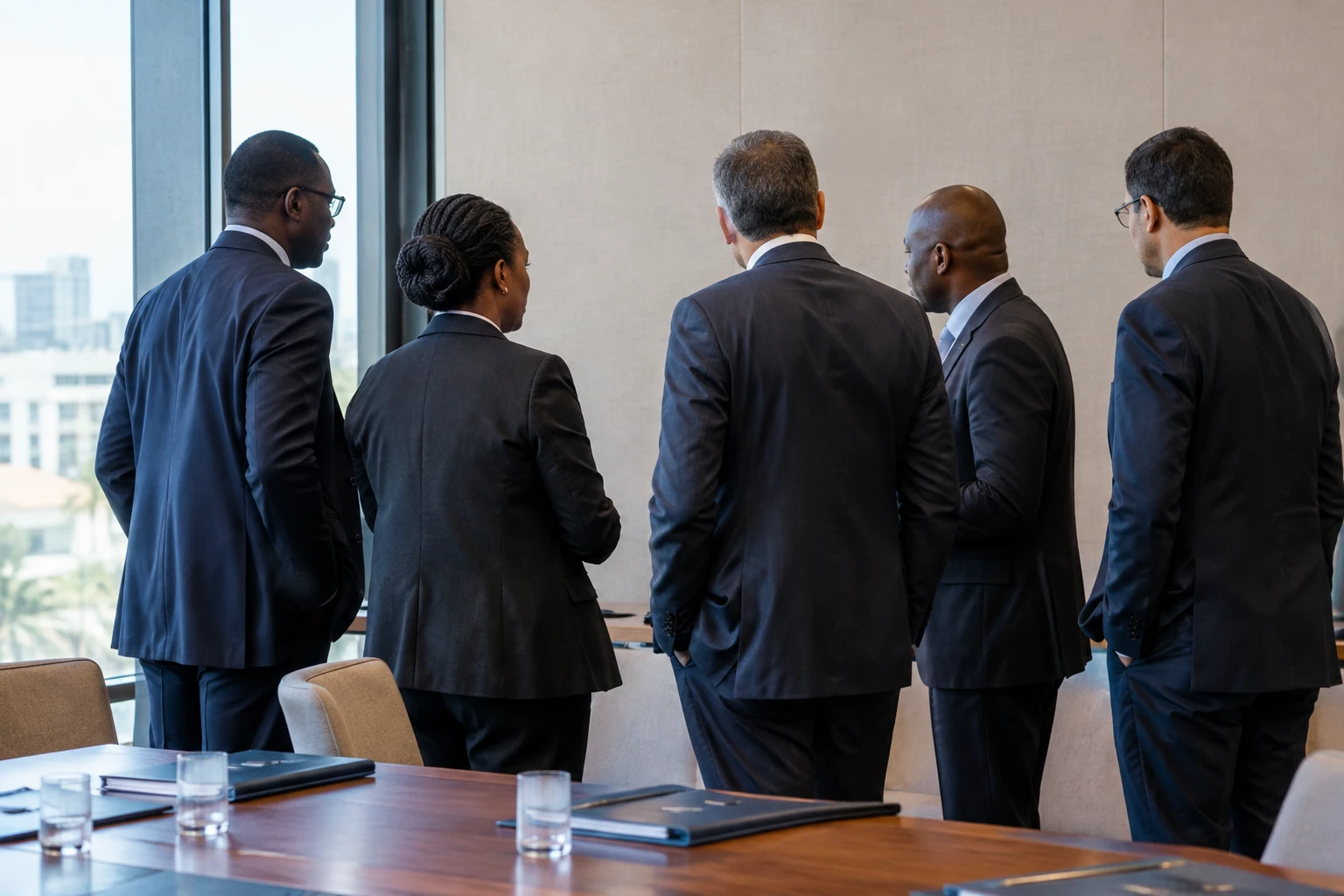
Can $125 million in announced funding both support Egyptian public services and open the market further to US companies? Cairo and Washington will have to make that balance visible, as projects and allocation rules remain to be clarified.
A new agreement in an already close economic relationship
Egypt occupies a pivotal position between North Africa, the Middle East and the maritime routes linking the Mediterranean to the Red Sea. It is also a member of the Common Market for Eastern and Southern Africa (COMESA), which aims to facilitate trade among its member states, and the African Continental Free Trade Area (AfCFTA). Investment in its infrastructure, energy or logistics can therefore reach beyond its domestic market alone.
With the United States, trade dialogue has been based since 1999 on a Trade and Investment Framework Agreement, known by its English acronym, TIFA. This mechanism provides for discussions on trade and investment conditions. It is not a free-trade agreement. The two governments held another meeting of its council in October 2024, focusing in particular on agriculture, industrial goods and working conditions. The US readout of the meeting shows that discussions also cover market access and trade rules.
The new agreement, announced on 4 November 2026, adds a funding and sectoral co-operation component to this framework. It was signed at Egypt’s Ministry of Foreign Affairs in the New Administrative Capital by Samar El-Ahdal, deputy minister for international co-operation, and Robert Silverman, chargé d’affaires at the US embassy. Foreign Minister Badr Abdelatty and several members of the Egyptian government attended the ceremony. Egypt’s State Information Service confirms the date, signatories and sectors involved.
$125 million committed, up to $625 million envisaged
Public announcements distinguish between two figures that should not be confused. Washington describes $125 million as the funding committed for the first phase. Egyptian official Samar El-Ahdal, for her part, said the US contribution could reach $625 million over five years. This total would comprise several annual commitments; it does not mean the entire sum has already been paid or allocated.
Egyptian and regional media have also reported the five-year ceiling of $625 million, while Egypt’s official statement details the initial commitment of $125 million. Egypt Today reports the five-year framework. At this stage, the available information specifies neither the breakdown by sector nor the payment schedule or selected projects. These unknowns matter: they make it impossible for now to assess which services or businesses will benefit directly from the funding.
The stated priorities span agriculture and food security, water management, energy, infrastructure, health, education, artificial intelligence, innovation and vocational training. Nader Zaki, spokesman for Egypt’s Ministry of Foreign Affairs, described the agreement as a way to support growth, employment and better public services. For Washington, it is also a means of expanding opportunities for US companies and strengthening the role of the private sector.
Implementation will determine whether these objectives advance together. Imported equipment or technological solutions could modernise water or energy networks. But their impact on the Egyptian economy will also depend on the use of local suppliers, the training of Egyptian technicians and the ability of domestic businesses to access markets. For residents, the outcome will be measured less by the announced sum than by the reliability of services, jobs created and the availability of water or healthcare, in cities and in less well-served regions alike.
Trade heavily tilted towards US exports
The trade context adds another dimension to the partnership. According to the Office of the US Trade Representative, trade in goods and services between the two countries reached about $16.1 billion in 2025, up 28.9% in a year. Trade in goods accounted for $12.3 billion. US exports to Egypt reached $9.4 billion, compared with $2.8 billion in imports from Egypt. The US goods trade surplus thus stood at $6.6 billion.
In services, bilateral trade totalled about $3.8 billion. US exports amounted to $2.2 billion, and imports from Egypt to $1.6 billion. The US surplus in this sector reached $638 million. These figures, published by the Office of the US Trade Representative, describe an expanding relationship, but one in which US goods sold to Egypt far exceed flows in the other direction.
This imbalance does not, on its own, show who will benefit from the new agreement. It does, however, make procurement and project-related contracts a central issue. If funding mainly supports imported equipment, the immediate effect could favour US suppliers. If Egyptian businesses take part in design, maintenance and production, local benefits could be broader. No public details yet make it possible to reach a conclusion.
Implementation will be the next test
For Cairo, the agreement is part of a strategy to modernise and strengthen national economic capacity. For Washington, it combines development co-operation with the opening of commercial opportunities. This dual purpose is not new: the TIFA already provides for discussions on trade and investment. The new instrument gives it a more concrete scope, although its operational details remain unknown.
What happens next will depend on the publication of projects, selection criteria and the amounts actually disbursed. It will also be necessary to check whether the announced annual commitments materialise up to the stated ceiling of $625 million. For Egypt, a member of COMESA and the AfCFTA, the way local businesses gain access to markets will be particularly significant: it will indicate whether this bilateral partnership also helps build productive capacity that can support regional integration.