
 Algeria
 Libya
 Morocco
 Sudan
 Tunisia
 Benin
 Burkina Faso
 Cabo Verde
 Côte d'Ivoire
 Ghana
 Guinea
 Guinea-Bissau
 Liberia
 Mali
 Mauritania
 Niger
 Nigeria
 Senegal
 Sierra Leone
 The Gambia
 Togo
 Cameroon
 Central African Republic
 Chad
 DR Congo
 Equatorial Guinea
 Gabon
 Republic of the Congo
 São Tomé and Príncipe
 Burundi
 Comoros
 Djibouti
 Eritrea
 Ethiopia
 Kenya
 Madagascar
 Malawi
 Mauritius
 Mozambique
 Rwanda
 Seychelles
 Somalia
 South Sudan
 Tanzania
 Uganda
 Angola
 Botswana
 Eswatini
 Lesotho
 Namibia
 South Africa
 Zambia
 Zimbabwe
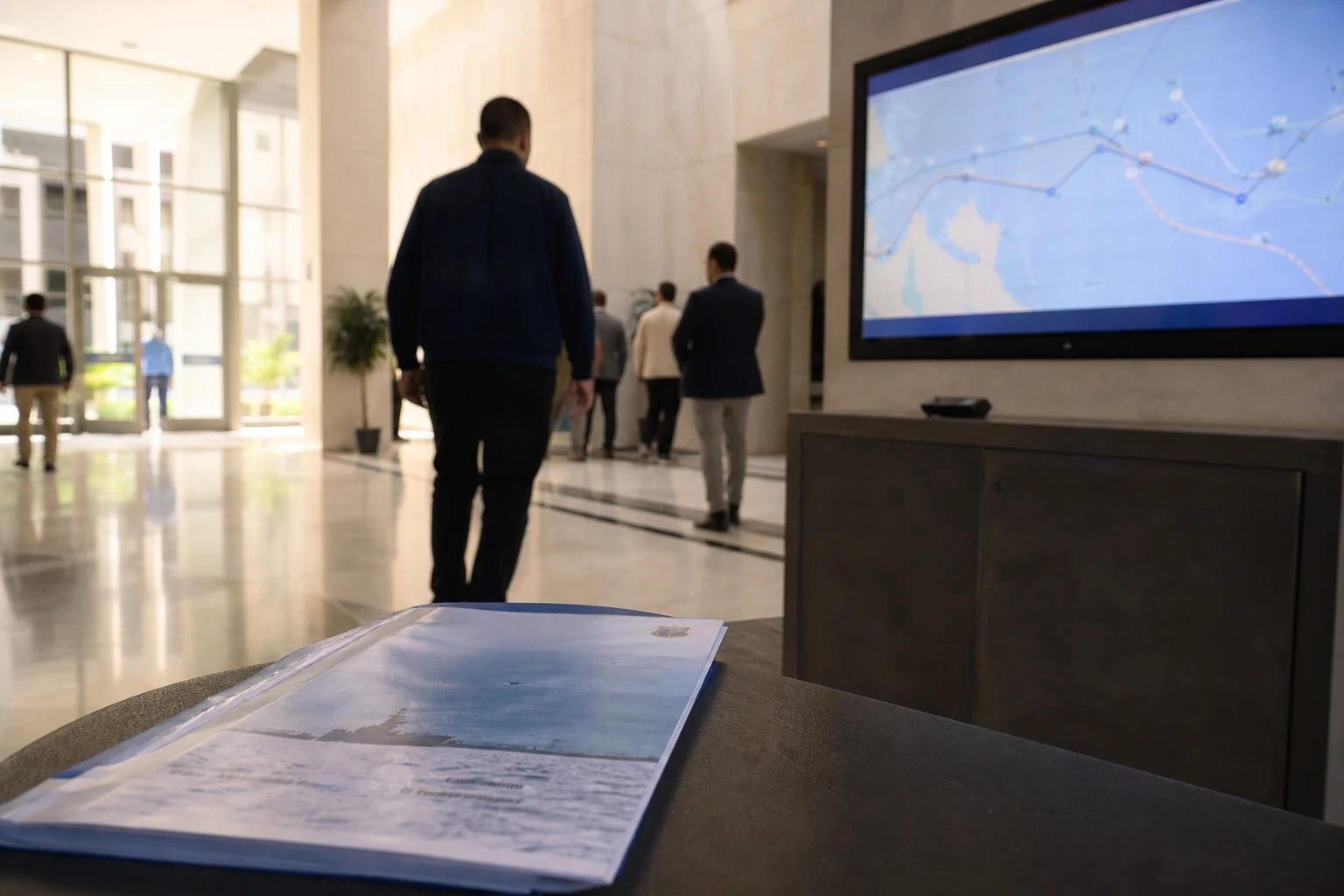
The Red Sea, a corridor of growing concern for Cairo
When sea routes come under pressure, Egypt becomes more than just a neighbour of the Gulf: it becomes a passageway. Cairo controls the Suez Canal, an artificial waterway linking the Red Sea to the Mediterranean, and also relies on SUMED, the oil pipeline that transports crude between Ain Sokhna and Sidi Kerir. In a region where Hormuz and Bab el-Mandeb are focal points of tension, this geography gives Egypt a weight that current crises make even more visible.
This reality goes beyond oil infrastructure alone. For Egypt, maritime security concerns diplomacy, canal revenues and the stability of foreign trade. For Saudi Arabia, it determines the continuity of exports to Asia. The two countries therefore have an interest in defending the same principle: keeping shipping moving and reducing risks in the region’s major straits.
In Cairo, a message of coordination rather than a break with the past
On Tuesday 15 September 2026, Egyptian President Abdel Fattah al-Sissi received Saudi Crown Prince Mohammed bin Salman in Cairo, where he had arrived on a working visit to Egypt. The Egyptian presidency had announced the meeting the previous day and said talks would focus on bilateral relations and regional and international issues of shared interest.
After the talks, Cairo and Riyadh reaffirmed their commitment to freedom and security of navigation in the Strait of Hormuz, the Bab el-Mandeb Strait and the Red Sea. Egypt also said it supported measures taken by Saudi Arabia to safeguard its security and stability, while calling for a lasting political solution to the Yemen crisis. Several media outlets and news agencies reported the same message, citing the Egyptian presidency’s statement.
The choice of words matters. The statement refers neither to a military alliance nor to a new operational agreement on oil. Instead, it highlights political convergence at a time when energy corridors in the Middle East are facing simultaneous pressures: threats around Hormuz, attacks on Saudi infrastructure, and disruption to shipping around Bab el-Mandeb.
Why Egypt matters to Saudi Arabia’s oil equation
The visit also matters for a very tangible reason: Egypt offers an alternative route between the Red Sea and the Mediterranean. The Suez Canal is a major artery of global trade, while SUMED, owned by the Arab Petroleum Pipelines Company, links the Red Sea and Mediterranean terminals over a distance of about 320 kilometres. Egyptian oil authorities describe the system as a strategic link in trade between the Gulf and Western markets.
This is important for Riyadh. Saudi Arabia’s East-West Pipeline was designed to bypass Hormuz by linking facilities in the east of the kingdom to the Red Sea port of Yanbu. But when that route itself is threatened or partly shut down, the value of Egyptian outlets immediately rises. The International Energy Agency notes that, in response to risks in the Red Sea, Saudi Arabia has already made greater use of the Red Sea and Yanbu terminals, while also relying on Suez and SUMED.
In other words, Egypt does not replace Saudi Arabia. It secures an option. In an oil supply chain, that distinction is essential. A fallback option does not change everything, but it reduces dependence on a single passage and provides breathing room when routes are under pressure. For an exporter such as the kingdom, that flexibility can matter as much as raw production capacity.
What this episode means for Egypt, the region and the continent
For Egypt, the paradox is clear. Houthi attacks on shipping in the Red Sea have weighed on traffic through the Suez Canal, and therefore on revenues from one of the country’s major assets. But those same tensions are also increasing the strategic value of Egypt’s transit infrastructure. The country thus finds itself at the centre of two opposing trends: commercial vulnerability on the one hand, and greater geopolitical importance on the other.
For Saudi Arabia, the stakes go beyond crude exports. They concern the credibility of its maritime routes, the security of its terminals and its ability to reassure Asian buyers. In this context, Cairo’s political solidarity matters as much as the infrastructure itself. Egypt’s message, linking Saudi security to regional stability, shows that Cairo is seeking to preserve a central Arab relationship without promising direct military involvement.
Across North Africa and the continent, this meeting is a reminder of a simple fact: the major straits of the Middle East also affect the African economy. The Suez Canal and SUMED link North Africa to global trade. Whenever a corridor comes under pressure, transport costs, delivery times and public revenues all shift accordingly. Red Sea security is therefore no distant issue for Egypt; it also affects the ports, shipowners, oil operators and public finances of an African country at the crossroads of several regions.
The continental significance is clear: the longer the Red Sea remains unstable, the more coastal states will have to contend with alternative routes, higher costs and crisis diplomacy. For Egypt and Saudi Arabia, the immediate priority remains securing flows. But the more enduring issue is a regional maritime architecture capable of absorbing shocks without halting trade between Africa, the Gulf and Asia.



