
 Algeria
 Libya
 Morocco
 Sudan
 Tunisia
 Benin
 Burkina Faso
 Cabo Verde
 Côte d'Ivoire
 Ghana
 Guinea
 Guinea-Bissau
 Liberia
 Mali
 Mauritania
 Niger
 Nigeria
 Senegal
 Sierra Leone
 The Gambia
 Togo
 Cameroon
 Central African Republic
 Chad
 DR Congo
 Equatorial Guinea
 Gabon
 Republic of the Congo
 São Tomé and Príncipe
 Burundi
 Comoros
 Djibouti
 Eritrea
 Ethiopia
 Kenya
 Madagascar
 Malawi
 Mauritius
 Mozambique
 Rwanda
 Seychelles
 Somalia
 South Sudan
 Tanzania
 Uganda
 Angola
 Botswana
 Eswatini
 Lesotho
 Namibia
 South Africa
 Zambia
 Zimbabwe
As the Black Sea corridor falters, buyers look elsewhere
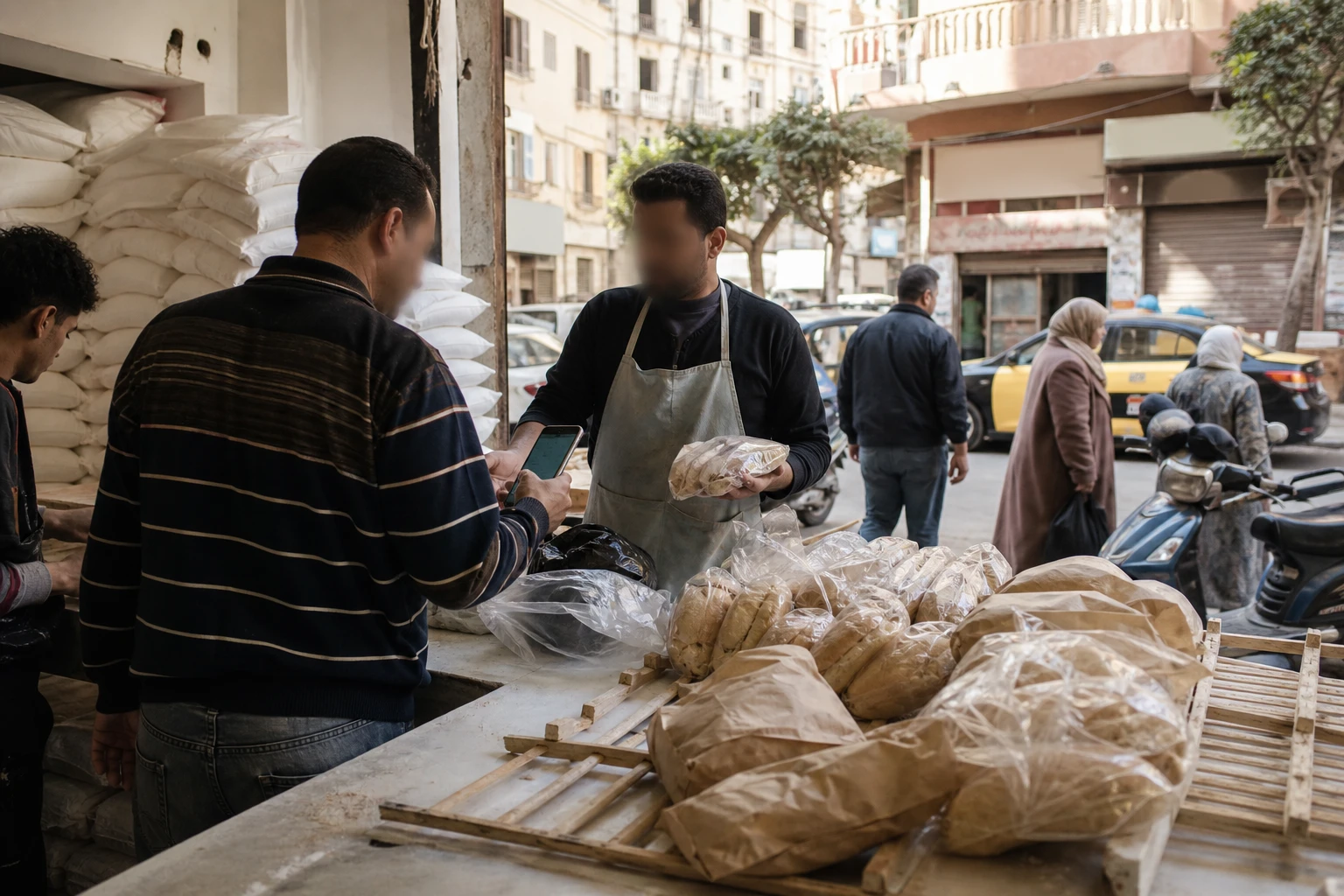
Wheat is not only in short supply in silos. Certainty is also scarce in ports, on shipping routes and in contracts. For Egypt, the world’s largest importer of the cereal, every disruption in the Black Sea forces a trade-off between price, delivery times and security of supply.
This tension is no abstraction for Egyptian households. Subsidised bread remains a major pillar of social stability in a country where domestic demand far outstrips local production. The authorities are therefore seeking to diversify sources, so as not to depend on a single logistics corridor or on two suppliers that have become dominant.
From Cairo, the strategy is clear: keep several options open. France, Romania and Bulgaria are now among the sources Egyptian buyers are watching more closely, as shipments from Russia and Ukraine remain exposed to attacks on port infrastructure and vessels in the Black Sea. Trade data confirm that Egypt remains a major wheat buyer, importing 8.8 million tonnes between July 2025 and January 2026, including 5.28 million tonnes from Russia and 2.16 million from Ukraine — the bulk of the total.
Cairo opens the door to other sources
On 20 September, Egypt’s Supply Minister, Sherif Farouk, said the country was expecting a shipment of 50,000 tonnes of French wheat and intended to continue buying from France, as well as other European suppliers. This is not a sudden turning point, but rather a pragmatic adjustment in a market where availability matters as much as price.
The figures explain this shift. According to the US Department of Agriculture’s agricultural report, Egypt imported 8.8 million tonnes of wheat between July 2025 and January 2026. During that period, Russia supplied 5.28 million tonnes and Ukraine 2.16 million. Together, the two Black Sea neighbours accounted for about 84.5% of Egypt’s purchases. This concentration leaves the country vulnerable to higher freight rates, shipping delays and occasional cargo disruptions.
France is not a newcomer, but it is returning during a more favourable trading window. FranceAgriMer said French soft wheat exports had rebounded in 2025/26, with 3.8 million tonnes shipped in the first three months of the season. The outlook for Europe points in the same direction, as operators across the Mediterranean basin keep a close watch on French soft wheat exports to Egypt. For Egyptian buyers, this wheat offers an alternative when the Black Sea becomes too risky or too expensive.
Bilateral ties between Cairo and Paris also provide a political framework for this development. Agricultural exchanges between the two countries continue to be discussed at the highest level, including technology, supply chains and investment. In other words, the wheat trade is not decided only on the quayside. It is also shaped by institutional discussions and operators’ ability to guarantee regular volumes.
Useful diversification, but not yet a break
For Egypt, broadening its pool of suppliers reduces the risk of a sudden shock. The country can thereby cushion the impact of attacks on ports, grain terminals and vessels in the Black Sea, which have disrupted flows from Russia and Ukraine since summer 2026. Markets have responded to this instability with higher risk premiums, rising insurance costs and more cautious decisions by importers.
But diversification does not remove the constraints. French wheat, like Romanian or Bulgarian wheat, must remain competitive. It must also be available at the right time, in the right grades and with reliable delivery terms. That is where the commercial contest is won or lost. Egyptian public buyers, who manage a large share of the volumes destined for subsidised bread, are looking less for a symbolic origin than for a stable combination of price, quality and timing.
At home, the stakes are immediate. Egypt’s Supply Ministry says the country has wheat stocks covering about six months. This buffer buys time, but offers no lasting comfort. Egypt must also contend with high domestic consumption, insufficient local production and constant pressure on public finances from the bread subsidy.
For France’s wheat sector, this period opens a window of opportunity, but offers no guarantee. French exporters could regain market share if tensions in the Black Sea persist. Competition, however, will remain fierce: Russia retains major logistical cost advantages, while Ukraine is seeking to maintain its outlets despite the war. France will therefore have to defend its volumes through consistency, quality and reliable deliveries.
Across Africa, the issue extends beyond Egypt. It is a reminder that the continent’s food security still depends heavily on shipping routes outside Africa and on a handful of exporting regions. Every disruption in the Black Sea reverberates across markets in the Maghreb, the Horn of Africa and the Sahel, where import bills weigh on public budgets and consumers alike. What happens next will depend on upcoming cargoes, price levels in the weeks ahead and Egyptian buyers’ ability to turn a geopolitical constraint into lasting diversification.



