Algeria
 Libya
 Morocco
 Sudan
 Tunisia
 Benin
 Burkina Faso
 Cabo Verde
 Côte d'Ivoire
 Ghana
 Guinea
 Guinea-Bissau
 Liberia
 Mali
 Mauritania
 Niger
 Nigeria
 Senegal
 Sierra Leone
 The Gambia
 Togo
 Cameroon
 Central African Republic
 Chad
 DR Congo
 Equatorial Guinea
 Gabon
 Republic of the Congo
 São Tomé and Príncipe
 Burundi
 Comoros
 Djibouti
 Eritrea
 Ethiopia
 Kenya
 Madagascar
 Malawi
 Mauritius
 Mozambique
 Rwanda
 Seychelles
 Somalia
 South Sudan
 Tanzania
 Uganda
 Angola
 Botswana
 Eswatini
 Lesotho
 Namibia
 South Africa
 Zambia
 Zimbabwe
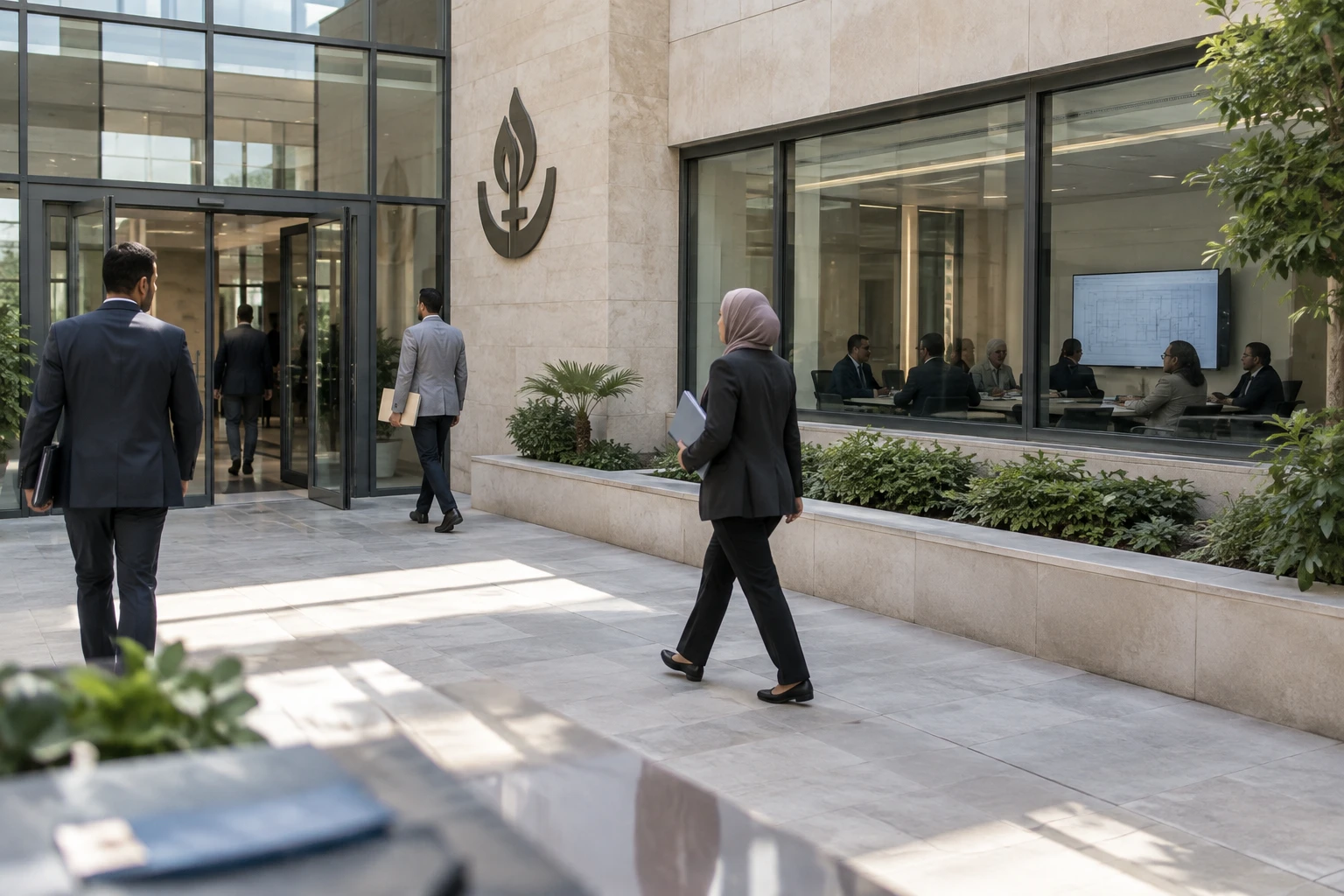
For Egypt, a nuclear power plant installed offshore would not be just another piece of equipment. It would raise very practical questions: where to generate electricity, how to connect it to the grid, and who would oversee its financing, operation and safety? The discussions mentioned in Moscow open up one possibility, but no Egyptian floating power plant project has yet been announced as approved.
An option discussed in Moscow, not yet under construction
On 28 October 2026, on the sidelines of the Russia-Africa summit in Moscow, Alexey Likhachev, director general of Russian state-owned group Rosatom, named Egypt among the countries with which his company is discussing floating nuclear power plants. According to Reuters, the talks also concern Togo, Namibia and Tanzania. The Russian group describes these installations as an option intended in particular for coastal countries. Reuters’ report on Rosatom’s discussions makes no mention, however, of a contract signed for Egypt or a deployment timetable.
The principle differs from that of a power plant built on land: the reactors are installed on a ship or floating platform, connected to onshore infrastructure. Rosatom highlights potentially faster deployment and limited-scale electricity generation. These are the arguments of the company offering the technology, not independently established guarantees for a future Egyptian site.
Egypt is not considering this possibility without an ongoing nuclear project. On the Mediterranean coast at El-Dabaa, Rosatom is already building a land-based plant with four reactors and a total stated capacity of 4,800 megawatts. On 9 July 2026, the reactor vessel for the second unit was installed. The milestone was reported by World Nuclear News and by a nuclear-focused publication relaying information from Rosatom. This construction milestone does not mean the plant is already able to generate electricity.
El-Dabaa, the project that puts the discussions in perspective
The summit meeting forms part of an energy partnership already under way. On 29 October, the Egyptian presidency said that Abdel Fattah al-Sisi had met Likhachev in Moscow and stressed the importance of keeping to El-Dabaa’s schedule. The statement presents the project as one way of meeting the country’s energy needs, while also mentioning an increase in renewable generation. This priority aligns with Cairo’s policy of diversifying the electricity mix rather than relying on a single source. The Egyptian presidency’s statement on the meeting confirms the importance attached to El-Dabaa, but does not mention an agreement on a floating power plant.
The timelines given for El-Dabaa must also be distinguished from exploratory discussions. In July, Rosatom said it was aiming to deliver the first fuel in the first half of 2027 and connect the units to the grid in 2028. These are targets announced by the company, not a commissioning date already secured. The vessel installed in the second unit, like the other stages of construction, shows the project’s progress; on its own, it does not allow the conclusion that these dates will be met.
This timetable matters in a country where electricity demand is changing with population growth, economic activity and the need for air conditioning. The International Energy Agency estimates that Egyptian electricity consumption rose by 1.5% in 2025. It also points to the development of renewables and storage capacity, which are essential for supplying electricity when solar power is not generating. The IEA’s electricity data for 2026 thus puts El-Dabaa in the context of a system expected to combine nuclear power, gas, solar, wind and grid upgrades.
The questions raised by an offshore power plant
A floating unit could, in theory, supply a coastal grid or provide energy to an industrial facility. But for Egypt, feasibility would depend on the site, connection lines, safety rules and allocation of responsibilities. The full cost would also need to be assessed: construction, transport, insurance, operation, fuel, maintenance and decommissioning. Rosatom’s statements do not yet specify these parameters for an Egyptian project.
The issues would not be the same for all stakeholders. The state would seek to secure supply and limit the risk of further pressure on the grid. Businesses would need reliable and predictable electricity. For residents, the benefits would be measured in service continuity and cost, not just installed capacity. Communities living near a potential site would be directly affected by information, safety and environmental monitoring procedures.
The relationship with Moscow also has an industrial and diplomatic dimension. El-Dabaa places part of Egypt’s nuclear programme in the hands of a Russian partner, with long-term implications for skills, maintenance and supplies. A potential floating power plant would deepen this cooperation; Cairo would therefore have to assess not only the technology, but also contractual dependencies and the country’s ability to oversee the installation.
A regional issue, still at the discussion stage
The proposal is part of a broader contest for energy partnerships in Africa. The Russia-Africa summit is a platform for presenting offers in several sectors, including energy. But needs and choices vary widely from one country to another: a technology suited to one coastal grid will not automatically suit another. Egypt, a North African power and a member of the African Union, will also have to align its projects with regional energy exchanges and its nuclear safety commitments.
At this stage, the established facts are limited: Rosatom says it is discussing the matter with Egypt, while Cairo continues work on El-Dabaa and advocates diversifying its energy supply. No site, financing, timetable or final agreement has been announced for a floating power plant. What happens next will depend in particular on the detail of the discussions and the publication of technical and regulatory information. Until those are available, the option remains a diplomatic and industrial prospect, not a new power plant under construction.