Algeria
 Libya
 Morocco
 Sudan
 Tunisia
 Benin
 Burkina Faso
 Cabo Verde
 Côte d'Ivoire
 Ghana
 Guinea
 Guinea-Bissau
 Liberia
 Mali
 Mauritania
 Niger
 Nigeria
 Senegal
 Sierra Leone
 The Gambia
 Togo
 Cameroon
 Central African Republic
 Chad
 DR Congo
 Equatorial Guinea
 Gabon
 Republic of the Congo
 São Tomé and Príncipe
 Burundi
 Comoros
 Djibouti
 Eritrea
 Ethiopia
 Kenya
 Madagascar
 Malawi
 Mauritius
 Mozambique
 Rwanda
 Seychelles
 Somalia
 South Sudan
 Tanzania
 Uganda
 Angola
 Botswana
 Eswatini
 Lesotho
 Namibia
 South Africa
 Zambia
 Zimbabwe
State-owned shipping company seeks to control its own routes
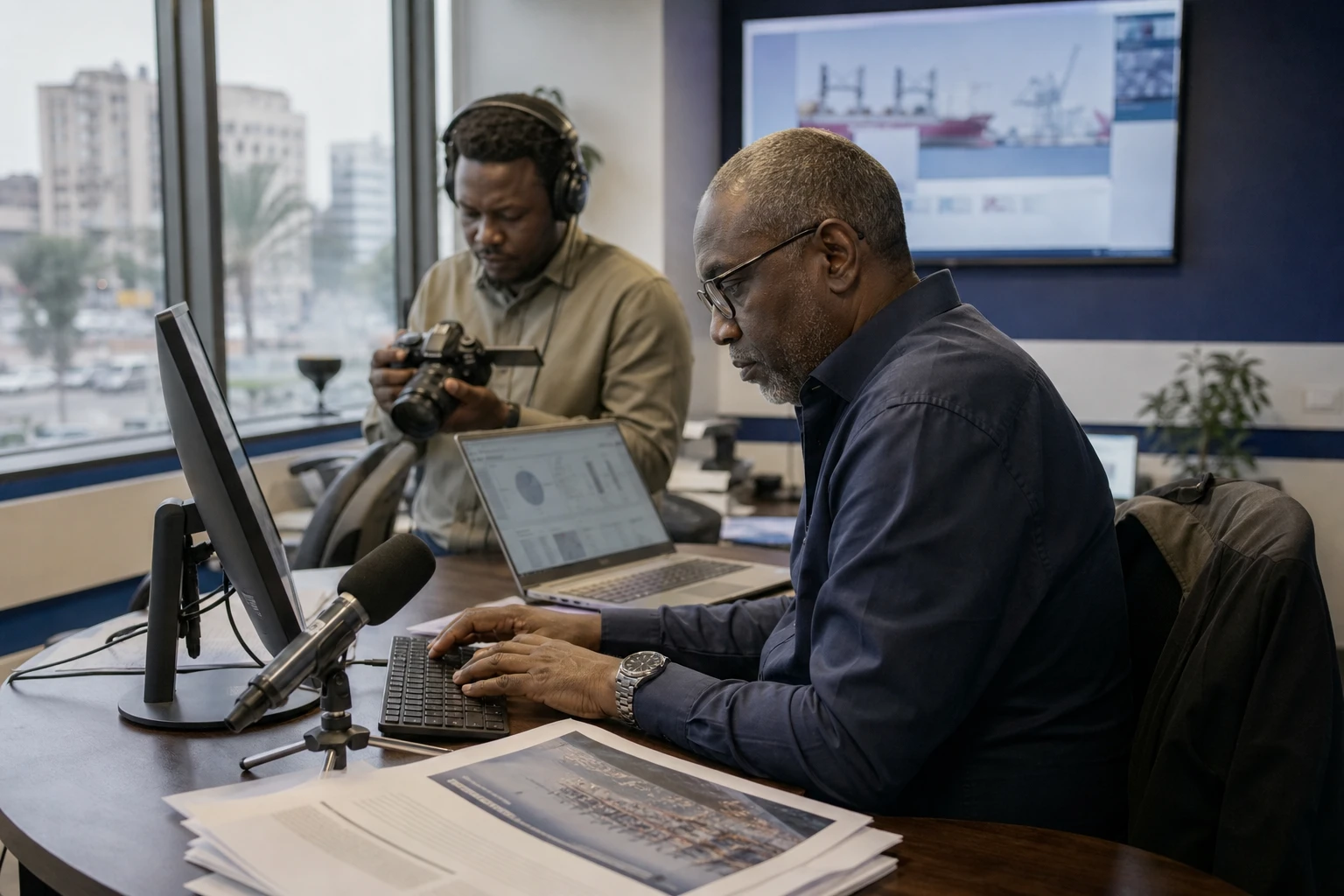
In Egypt’s ports, the battle is not being fought only on the quays. It is also being fought at sea, where a national vessel can reduce dependence, secure a cargo and capture a larger share of logistical value. It is in this context that Egypt is continuing to strengthen its commercial fleet, a project closely monitored by Cairo as part of its strategy to become a hub between the Mediterranean, the Red Sea and African routes.
The National Navigation Company, a state-owned shipping company, says it currently operates 14 vessels under the Egyptian flag, including 13 bulk carriers and one container ship with a capacity of 3,013 TEU. The Egyptian government, meanwhile, has set a more ambitious target: to expand the commercial fleet as a whole to 40 vessels by 2030 and increase the share of goods carried by national vessels. According to various official communications from the Ministry of Transport, the fleet is then expected to carry between 25 million and 30 million tonnes of goods a year.
Two next-generation bulk carriers delivered by China
The latest signal from Cairo concerns two new bulk carriers, each with a deadweight capacity of 82,000 tonnes, built by the Chinese shipyard Jiangsu Hantong Ship Heavy Industry. The company describes them as Kamsarmax-type vessels, a category suited to carrying dry bulk on major trade routes. One of them, “Wadi Al-Arish”, had already joined the fleet earlier, and receipt of the two new vessels confirms the continuation of a renewal programme that began several years ago.
Cairo makes no secret of the political aim behind this expansion. It is intended to strengthen Egypt’s logistical sovereignty, better serve strategic imports and reduce exposure to foreign shipowners on certain routes. In its strategy documents, the Ministry of Transport has also explained that fleet modernisation is intended to secure a larger share of Egypt’s foreign trade under the national flag.
This approach also has a financial dimension. A new vessel is expensive to buy, maintain and insure. But it can also secure regular long-term contracts, particularly for dry bulk, grain and other sensitive products. The challenge, then, is not simply to own more tonnage. It is to operate the vessels at a competitive pace against major international shipowners, with trained crews, consistent maintenance and sufficient cargoes.
VICMED, another piece of the regional puzzle
The fleet does not tell the whole story. Egypt also links this policy to a broader corridor project: VICMED, the waterway between Lake Victoria and the Mediterranean. Promoted by Cairo for several years, the project reached a new milestone in late October 2025 with the launch of its second phase, funded by a $2 million grant from the African Development Bank and a $100,000 contribution from the Egyptian government.
The African Development Bank describes VICMED as a project for economic integration, multimodal transport and stronger north-south trade in the Nile Basin. The African Union has also included it among its continental infrastructure priorities. For Egypt, the message is clear: the aim is not only to sail to its own ports, but to be part of an economic geography stretching from East Africa to the Mediterranean.
This approach also appeals to countries along the Nile and to the landlocked or semi-landlocked economies of East Africa. If the corridor advances, it could offer a logistical alternative, provided major challenges are resolved: financing, regulatory coordination, navigation safety, port facilities, and compatibility between river, rail and maritime routes. That is where the difference lies between a project designed for show and genuine regional infrastructure.
What this means for Egypt’s economy and the continent
For Egypt, the stakes go beyond shipping alone. The country wants to consolidate its status as a point of transit, processing and redistribution. This ambition is part of a broader vision: modernised ports making use of the Suez Canal, smoother inland corridors and a stronger national fleet. The Ministry of Transport says the maritime programme is part of Egypt Vision 2030 and a strategy to become a regional transport and logistics hub.
But the benefits will not be automatic. For major state-owned groups, the new fleet could improve cost control and commercial visibility. For port operators, it could support greater domestic traffic. For consumers and importing businesses, the impact will depend on the ability to make supply chains run more smoothly and limit additional costs. And for Egypt’s port areas, this upgrading will bear fruit only if quays, cargo handling and inland connections keep pace.
Across Africa, Egypt’s move reflects a broader trend: several states are seeking to regain control of strategic links in trade, whether ports, corridors or public fleets. On a continent where most trade is still dominated by non-African operators, the question is not only what to build. It is how to keep the value of transport, cargo handling and connections within Africa. This is precisely where Egypt’s maritime policy takes on continental significance.
The next developments to watch will be deliveries, the pace of orders and the vessels’ actual entry into service. If Cairo manages to stick to its timetable through 2030, Egypt’s commercial fleet could become a more visible instrument of regional economic influence. Otherwise, it will remain another costly but unfinished strategic promise.