Algeria
 Libya
 Morocco
 Sudan
 Tunisia
 Benin
 Burkina Faso
 Cabo Verde
 Côte d'Ivoire
 Ghana
 Guinea
 Guinea-Bissau
 Liberia
 Mali
 Mauritania
 Niger
 Nigeria
 Senegal
 Sierra Leone
 The Gambia
 Togo
 Cameroon
 Central African Republic
 Chad
 DR Congo
 Equatorial Guinea
 Gabon
 Republic of the Congo
 São Tomé and Príncipe
 Burundi
 Comoros
 Djibouti
 Eritrea
 Ethiopia
 Kenya
 Madagascar
 Malawi
 Mauritius
 Mozambique
 Rwanda
 Seychelles
 Somalia
 South Sudan
 Tanzania
 Uganda
 Angola
 Botswana
 Eswatini
 Lesotho
 Namibia
 South Africa
 Zambia
 Zimbabwe
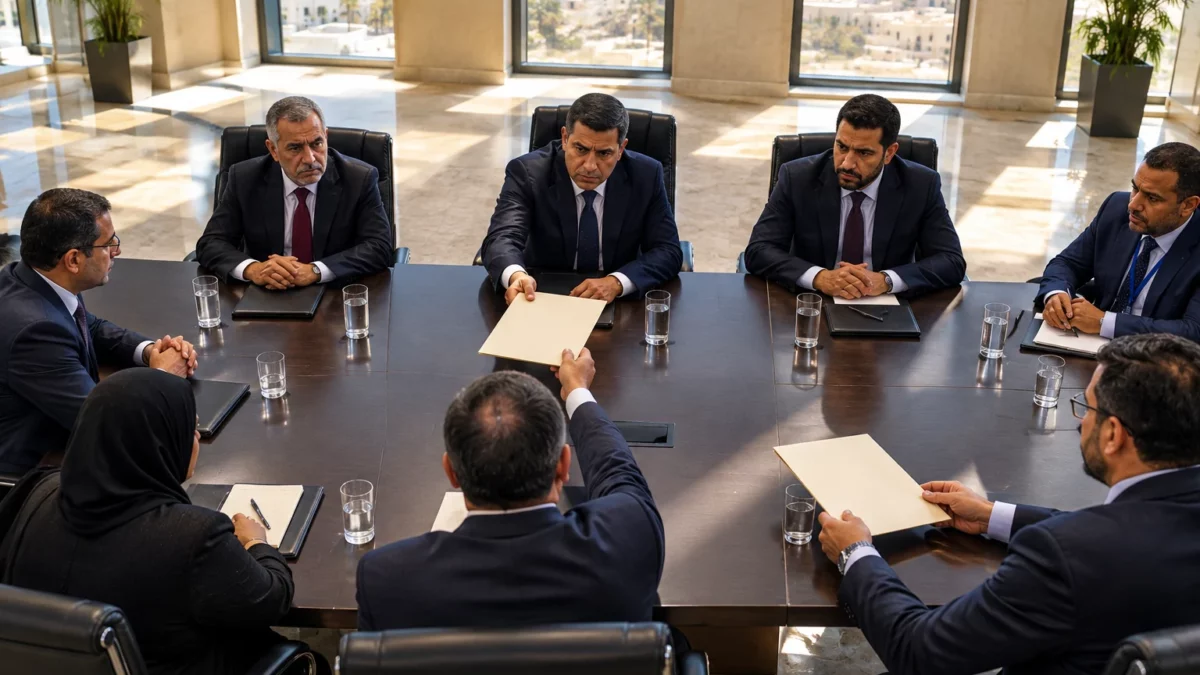
In Libya, an agreement on maritime borders can bring domestic adversaries closer while reigniting tensions between neighbouring countries. The visit of the head of Egypt’s intelligence services to Tripoli is part of this balancing act, as Cairo seeks to keep channels open despite Libya’s political division.
Egyptian diplomacy between Tripoli and the east
Since the fall of Muammar Gaddafi in 2011, Libya has struggled to reunify its institutions. The Government of National Unity, led by Abdel Hamid Dbeibah, is based in Tripoli, while the eastern authorities and the House of Representatives are based in Benghazi. Khalifa Haftar’s forces wield decisive influence in this part of the country. The two centres contest political legitimacy and control of institutions, while the national electoral process has yet to yield results.
This fragmentation obliges neighbouring states to maintain relations with several interlocutors. For Egypt, Libya is an immediate neighbour, a matter of border security and a potential economic partner. Cairo has developed relations with actors in the east while stepping up contacts with the authorities in Tripoli. This dual dialogue does not mean that differences have disappeared: it mainly enables Egypt to preserve room for manoeuvre in a country where no single camp controls the entire territory.
The maritime issue gives this caution particular relevance. On 20 October 2026, the House of Representatives, meeting in Benghazi, approved the memorandum delimiting maritime areas signed in 2019 between Turkey and the Libyan government then based in Tripoli. The Libyan news agency LANA reported a unanimous vote. Turkey’s Anadolu news agency also confirmed the approval and the reversal of the 2020 parliamentary decisions, which rejected the agreement and severed political relations with Ankara.
Security and the Mediterranean on the agenda in Tripoli
On 16 November, Prime Minister Abdel Hamid Dbeibah received Hassan Rachad, head of Egypt’s General Intelligence Service, in Tripoli. According to LANA, discussions focused on bilateral relations and coordination, particularly in the area of security. The Libyan outlet Libya Observer also reported on the meeting and discussions about political and security developments. Both accounts confirm the date and the officials’ presence, but do not detail the specific commitments made during the meeting.
The meeting came less than a month after the parliamentary vote on the maritime agreement. Cairo rejected the ratification on 21 October, saying the text infringed its maritime rights. The timing therefore places the visit in a tense regional context, without proving that the maritime dispute was the central subject of the meeting. According to the Egyptian press, the Libyan government’s office said Dbeibah was willing to take Egypt’s concerns into account and address them through dialogue. This statement should be distinguished from a formal agreement between the two countries.
The 2019 memorandum delimits maritime jurisdiction zones between Libya and Turkey in the eastern Mediterranean. The disagreement concerns, among other things, how maritime borders should be drawn and islands taken into account. Egypt disputes the interpretation adopted in the agreement, which affects its claims in the region. Turkey and the Libyan authorities that signed the text, for their part, defend their cooperation and the agreed delimitation. The dispute is therefore both legal and strategic: it concerns rights to resources and the balance of power in the Mediterranean.
Ratification by the Benghazi-based House of Representatives adds a political complication. The agreement was signed in 2019 by the Tripoli government, then rejected by the eastern parliament in 2020. Its approval by the same institution in 2026 shows that positions can shift, even as the unification of Libya’s institutions remains a work in progress. The vote alone does not resolve whether the text is recognised by the states concerned or address Egypt’s objections.
A balance that also affects Libyans
For leaders, the immediate challenge is to maintain working relations with neighbouring countries and prevent external disagreements from closing off channels of negotiation. For residents, the effects are less direct but can still matter: security cooperation concerns borders and movement, while maritime choices affect resources and economic prospects. People in Tripoli and Benghazi do not necessarily experience the same power relations or decisions. In the absence of unified national institutions, the practical impact of any commitment also depends on its implementation on the ground.
The issue is not confined to Egypt and Libya. Turkey is directly involved in the agreement, while Egypt’s maritime claims are part of an eastern Mediterranean where the interests of several coastal states intersect. For the African Union and the Arab Maghreb Union, the Libyan crisis is a reminder that a lasting political settlement matters as much to neighbouring countries as it does to domestic actors. But no regional organisation can replace an agreement accepted by Libya’s own institutions.
The next step to watch is therefore not an isolated diplomatic gesture but what follows the parliamentary vote: official reactions, possible negotiations with Cairo and Ankara, and the rival authorities’ ability to coordinate their foreign policy. The 16 November meeting confirms that dialogue between Tripoli and Egypt is continuing. It is not enough to establish that the maritime dispute has been resolved, or that closer ties with western Libya are replacing Egypt’s links with the east.