Algeria
 Libya
 Morocco
 Sudan
 Tunisia
 Benin
 Burkina Faso
 Cabo Verde
 Côte d'Ivoire
 Ghana
 Guinea
 Guinea-Bissau
 Liberia
 Mali
 Mauritania
 Niger
 Nigeria
 Senegal
 Sierra Leone
 The Gambia
 Togo
 Cameroon
 Central African Republic
 Chad
 DR Congo
 Equatorial Guinea
 Gabon
 Republic of the Congo
 São Tomé and Príncipe
 Burundi
 Comoros
 Djibouti
 Eritrea
 Ethiopia
 Kenya
 Madagascar
 Malawi
 Mauritius
 Mozambique
 Rwanda
 Seychelles
 Somalia
 South Sudan
 Tanzania
 Uganda
 Angola
 Botswana
 Eswatini
 Lesotho
 Namibia
 South Africa
 Zambia
 Zimbabwe
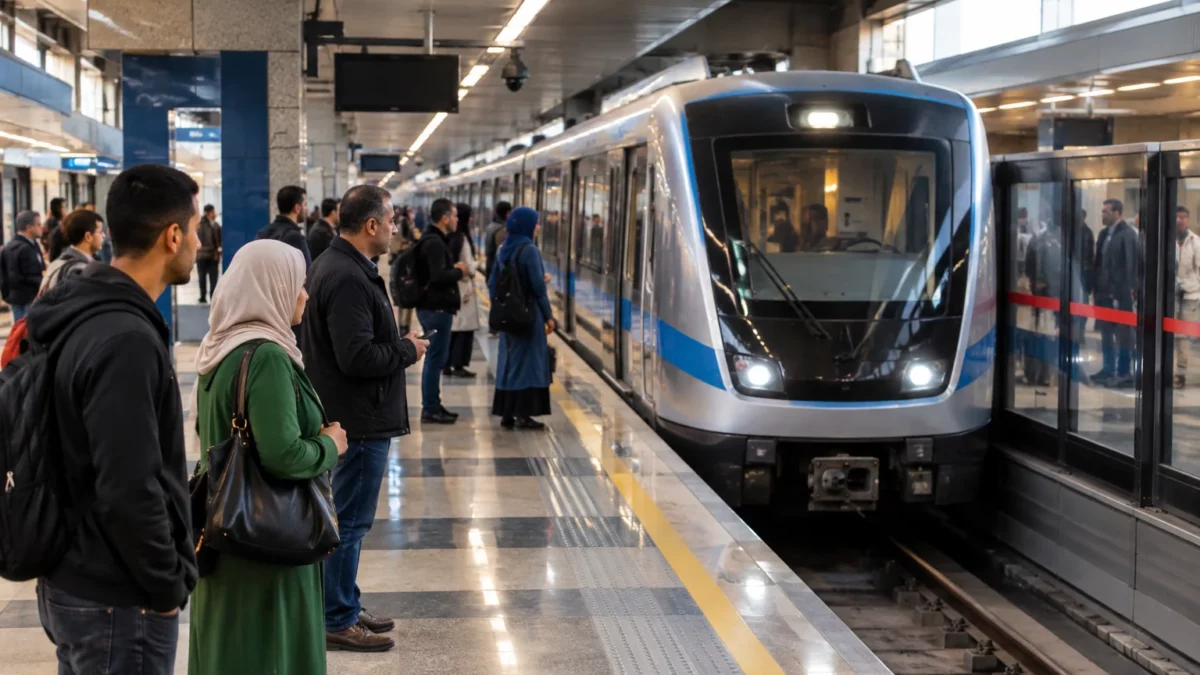
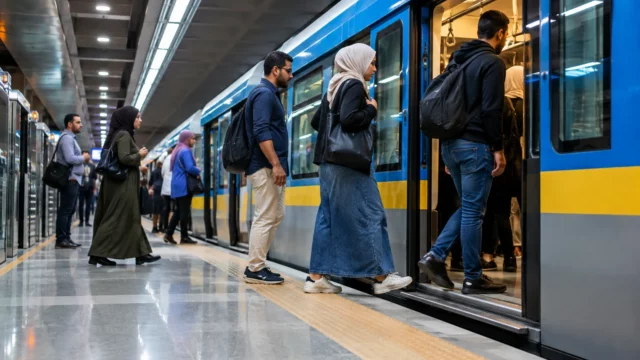
In Cairo, the metro carries millions of people every day. Around 50 kilometres to the south, a deadly rail collision had served as a reminder just days earlier that a modernised network does not automatically become a safe one. For Egyptian passengers, the issue is concrete: being able to rely on the equipment, but also on the rules and checks governing every journey.
Modernising lines and operations
On 15 November 2026, the first two Metropolis trains supplied by Alstom began operating on Cairo Metro’s Line 1. Their entry into service marks the start of deliveries under a contract signed in 2021 with the National Authority for Tunnels. The agreement covers 55 trains and eight years of maintenance, for a stated total of €876 million. These details have been confirmed by the company and the Egyptian authority responsible for tunnels.
Line 1, opened in 1987, is the historic backbone of the Cairo Metro. It serves densely populated neighbourhoods and connects several parts of the capital. The renewal of the rolling stock is intended to improve capacity and service reliability. For passengers, the impact will also depend on the actual frequency of trains, maintenance and the ability to keep the line running without prolonged disruption.
The project is part of a broader national programme: renewing rolling stock, rehabilitating tracks and modernising signalling. The authorities also plan to strengthen centralised control of the railway network and electric transport. The work therefore concerns the day-to-day management of traffic as much as the infrastructure visible to passengers.
An accident brings safety back into focus
On 8 November, two passenger trains collided in the Al-Ayyat district of Giza governorate. Egypt’s Ministry of Health reported seven deaths and 125 injuries. The toll was reported by several independent media outlets, including Ahram Online and the Associated Press. The precise circumstances are to be established by the investigation, which the authorities said they had opened.
Six days after the accident, Transport Minister Kamel al-Wazir announced a one-year emergency plan to strengthen rail safety. According to Egypt’s state news agency SIS, the measures announced include regular and unannounced inspections, accelerating the modernisation of signalling and installing cameras at stations, along tracks and aboard locomotives. The minister also stressed the need for technical checks before trains enter service.
Available statistics call for caution. According to data from CAPMAS, Egypt’s public statistics agency, the country recorded 170 train accidents in 2025, down from 220 in 2024, a decrease of 22.7%. However, this tally alone does not sum up the system’s safety: it does not necessarily cover all incidents involving people on or near the tracks, and a fall in the number of accidents does not, on its own, indicate how serious they were. The 2024 figures appear in data published by CAPMAS; the 2025 figures were reported by Ahram Online.
Performance also depends on maintenance and staff
A new train cannot, on its own, prevent a collision. Safety depends on several links in the chain: reliable signalling, consistent maintenance, regular inspections, staff training and compliance with operating procedures. If any one of them fails, investment in equipment is not enough to protect passengers.
The announced plan will therefore have to be judged by its implementation: what equipment will be installed, on which sections, according to what timetable and with what means of oversight? The one-year deadline sets a political horizon, but does not yet detail the expected results for each line. Transparency about inspections and the findings of the Al-Ayyat investigation will make it possible to assess progress beyond the announcements.
The effects are also unevenly distributed. In Cairo, Line 1 provides large-scale daily mobility, and any disruption affects journeys to work, education and services. Across the national network, trains also connect the capital with cities and regions in the south. For passengers and staff, the quality of on-the-ground checks matters as much as the new equipment announced in major investment projects.
An Egyptian issue with regional implications
Egypt is a member of COMESA, a regional common market bringing together countries in eastern and southern Africa, and of the African Union. Reliable transport has implications beyond domestic journeys: it matters for trade, the movement of people and connections between networks. This does not mean Cairo’s projects alone meet regional needs, but their implementation illustrates a shared challenge: combining infrastructure renewal with the lasting capacity to operate it safely.
The next step will therefore be twofold. On the one hand, delivery of the remaining 53 trains planned for Line 1 and the maintenance contract will have to meet their targets. On the other, the rail plan announced after the accident will have to produce verifiable improvements across the national network. For the Egyptian authorities, the challenge is no longer simply to modernise equipment: it is to make safety a constant practice, from the control room to the tracks.