
 Algeria
 Libya
 Morocco
 Sudan
 Tunisia
 Benin
 Burkina Faso
 Cabo Verde
 Côte d'Ivoire
 Ghana
 Guinea
 Guinea-Bissau
 Liberia
 Mali
 Mauritania
 Niger
 Nigeria
 Senegal
 Sierra Leone
 The Gambia
 Togo
 Cameroon
 Central African Republic
 Chad
 DR Congo
 Equatorial Guinea
 Gabon
 Republic of the Congo
 São Tomé and Príncipe
 Burundi
 Comoros
 Djibouti
 Eritrea
 Ethiopia
 Kenya
 Madagascar
 Malawi
 Mauritius
 Mozambique
 Rwanda
 Seychelles
 Somalia
 South Sudan
 Tanzania
 Uganda
 Angola
 Botswana
 Eswatini
 Lesotho
 Namibia
 South Africa
 Zambia
 Zimbabwe
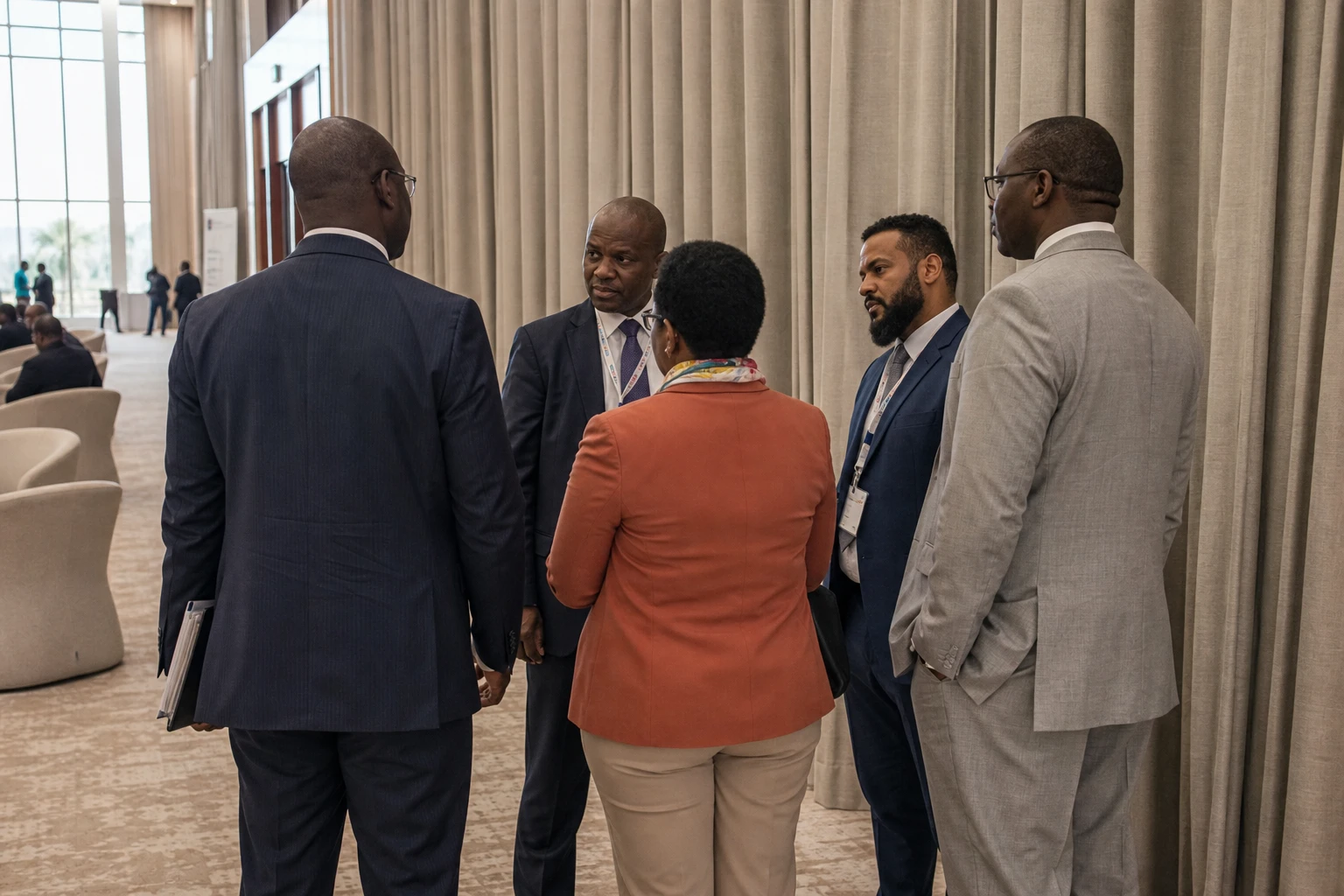
In New Alamein, Egypt wants to make African trade a lever of economic power. From 2 to 4 October 2026, political leaders, banks, businesses and development institutions are gathering on the Mediterranean coast to turn declarations on the continent’s integration into concrete projects.
The ambition goes beyond a straightforward economic meeting. For Cairo, it is also about consolidating its presence in North Africa, the Nile Valley and the African Union. For other participants, the challenge is more practical: finding financing, reducing barriers to trade and better connecting African markets.
A forum focused on implementation
The first edition of the Alamein Africa Forum was inaugurated on Saturday 3 October 2026 by Egyptian President Abdel Fattah al-Sisi. According to the organisers, more than 20 heads of state and government representatives are taking part, alongside business leaders, investors and officials from regional and international financial institutions.
The forum is organised by the Egyptian government, the African Union Commission, the African Union Development Agency-NEPAD and the African Export-Import Bank, Afreximbank. Its stated aim is to bring public decisions, capital and businesses together around sectors considered priorities for the continent’s economic transformation.
The forum is to be held every two years. This frequency would give it a lasting place in the continental calendar, alongside African Union political summits and major development financing meetings.
Discussions focus in particular on infrastructure, agriculture, mining, health, digital technologies, renewable energy and trade corridors. These corridors are transport and logistics routes connecting several countries to facilitate the movement of goods.
African trade is growing, but remains fragmented
The starting point is well known: African economies still trade more with external markets than with one another. The African Union Commission’s annual report says intra-African exports accounted for about 14.6% of total exports in 2024.
This proportion shows how far there is still to go. It does not mean that trade between African countries is weak in every sector. Rather, it highlights its still-limited weight compared with flows to Europe, Asia, the Middle East or the Americas.
The African Continental Free Trade Area, or AfCFTA, is intended to gradually reverse this trend. Its principle is to reduce customs duties and regulatory barriers between participating countries. In practice, businesses still face customs procedures, differing standards, transport costs and inadequate infrastructure.
Those gathered in New Alamein are therefore seeking less to announce a new ambition than to identify workable mechanisms. The central issue is financing: how can African savings be mobilised, regional banks strengthened and more capital directed towards the continent’s businesses?
The answers will affect economic players in different ways. Large companies can more easily access international financing. Small and medium-sized enterprises, which are strongly represented in cross-border trade and the informal economy, remain more exposed to banking costs, checks and delays at borders.
The private sector at the centre of Egypt’s strategy
President Abdel Fattah al-Sisi emphasised the role of the private sector in African growth. Cairo’s message is clear: governments cannot shoulder industrialisation, job creation and the modernisation of services alone.
For this strategy to produce results, however, African businesses need accessible markets and predictable rules. A company based in Cairo, Nairobi or Abidjan cannot expand its regional operations if borders bring a multiplication of formalities, payments are delayed or standards vary from one country to another.
Infrastructure is another obstacle. Roads, ports, railways, power grids and digital connections directly determine producers’ ability to sell beyond their domestic markets. Announced investments will therefore only realise their full value if they improve links between capitals, industrial zones, ports and rural areas.
This aspect matters for Egypt. The country occupies a strategic position between the Mediterranean, the Red Sea and East Africa. The Suez Canal, Mediterranean ports and major infrastructure projects give Cairo logistical advantages. But this position still needs to translate into more market opportunities for Egyptian businesses and balanced partnerships with other African economies.
The Nile remains in the background of the economic agenda
Egypt’s determination to strengthen its African ties comes against a sensitive diplomatic backdrop. The dispute with Ethiopia over the Grand Ethiopian Renaissance Dam, built on the Blue Nile, remains one of the continent’s most delicate issues.
Ethiopia officially inaugurated the dam on 9 September 2025. Addis Ababa presents it as a major project to increase electricity production and support its development. Egypt and Sudan, for their part, are calling for a legally binding agreement on the filling and operation of the facility, particularly during periods of drought.
The issue does not disappear with the holding of an economic forum. It weighs on Egypt’s relations with Nile basin countries and several East African states. Cairo is seeking broader diplomatic support, while Ethiopia defends the right of upstream countries to use their water resources.
This tension is a reminder of the limits of diplomacy based solely on investment announcements. Economic partnerships can open channels for dialogue. They do not, however, replace political negotiations over shared resources.
A step towards a stronger Egyptian presence in Africa
For several years, Egypt has been stepping up its initiatives across the continent. It is seeking to strengthen trade with sub-Saharan Africa, increase its investments and play a more visible role in continental institutions.
The Alamein forum is taking place as China, the Gulf states, Turkey and other emerging powers consolidate their economic positions in Africa. Cairo wants to avoid being left on the sidelines of this competition for markets, infrastructure, strategic minerals and new technologies.
For African economies, the value of the meeting will depend above all on its results. Financing agreements, infrastructure projects and measurable industrial partnerships would give the forum concrete significance. Conversely, a succession of general statements would deepen doubts about the ability of summits to accelerate economic integration.
The next test will therefore be the follow-up to commitments made in New Alamein. It will be necessary to monitor the projects actually financed, the barriers removed at borders and the place given to local businesses. Only then can Egypt’s initiative move beyond the diplomatic sphere and contribute to a denser flow of capital, goods and skills across Africa.



