
 Algeria
 Egypt
 Libya
 Morocco
 Sudan
 Tunisia
 Benin
 Burkina Faso
 Cabo Verde
 Côte d'Ivoire
 Ghana
 Guinea
 Guinea-Bissau
 Liberia
 Mali
 Mauritania
 Niger
 Nigeria
 Senegal
 Sierra Leone
 The Gambia
 Togo
 Cameroon
 Central African Republic
 Chad
 Equatorial Guinea
 Gabon
 Republic of the Congo
 São Tomé and Príncipe
 Burundi
 Comoros
 Djibouti
 Eritrea
 Ethiopia
 Kenya
 Madagascar
 Malawi
 Mauritius
 Mozambique
 Rwanda
 Seychelles
 Somalia
 South Sudan
 Tanzania
 Uganda
 Angola
 Botswana
 Eswatini
 Lesotho
 Namibia
 South Africa
 Zambia
 Zimbabwe
A river corridor under surveillance
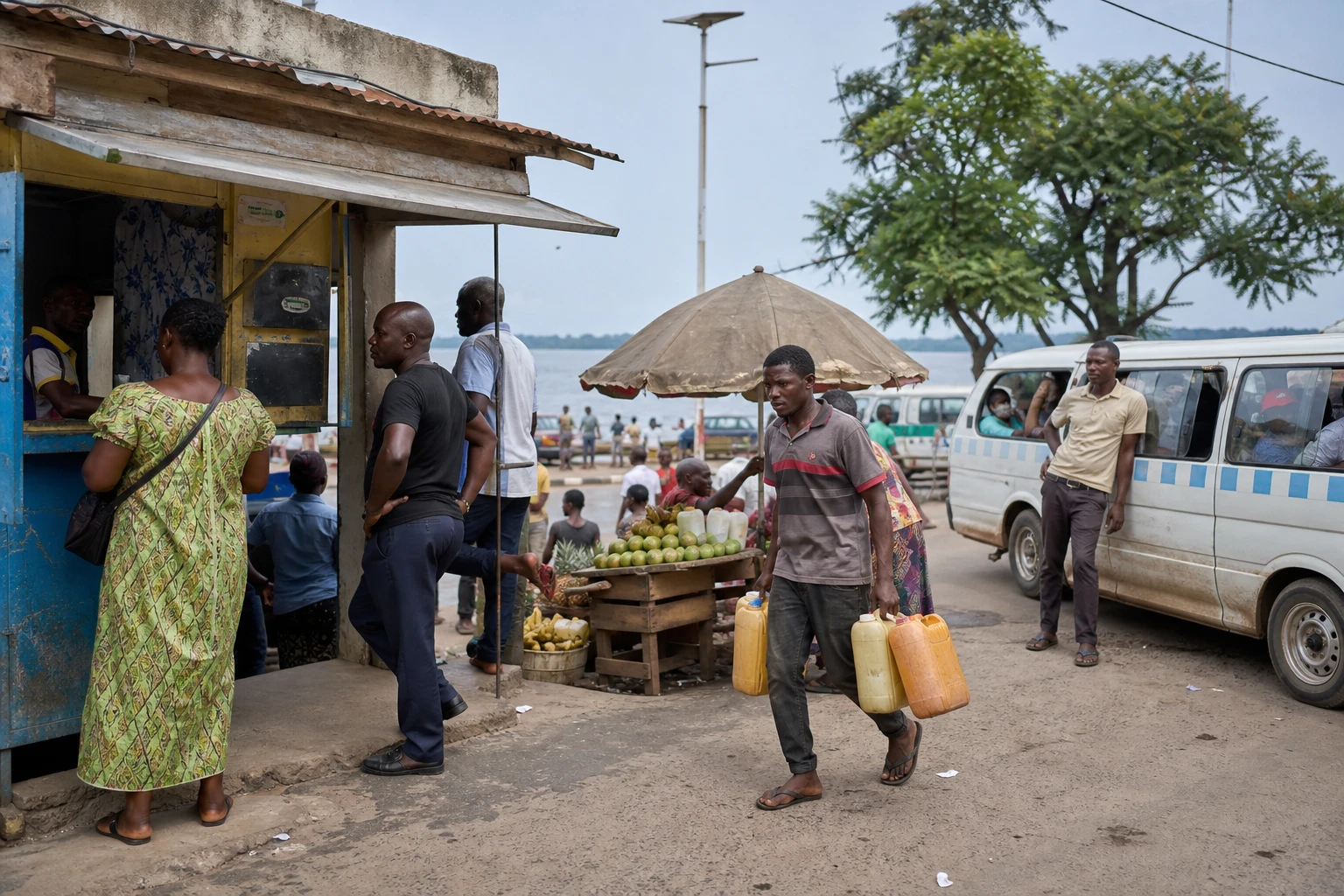
In the west of the Democratic Republic of the Congo, a health alert is enough to remind people how porous borders can be when travel takes place by river, boat and family networks. South Ubangi, a province in the country’s north-west, has now entered the field of an Ebola outbreak already established in several other Congolese provinces. The development is not merely geographical. It affects a major transport route between communities along the Congo River, where journeys between rural areas, provincial capitals and river markets complicate early detection.
This spread comes against a backdrop of an already strained region. The current epidemic, caused by the Bundibugyo virus, was declared in May 2026 by Congolese authorities and was subsequently classified by the World Health Organization as a public health emergency of international concern. The WHO says it was initially concentrated in Ituri before spreading to other provinces in the east of the country, and then beyond its original epicentre. Africa CDC is also monitoring the situation closely, while Kinshasa is coordinating the response with technical partners and the provinces concerned.
What the authorities say
The turning point for South Ubangi came with a laboratory confirmation. According to provincial authorities, the National Institute of Biomedical Research identified the Bundibugyo virus in a sample from the Bulu health zone, prompting acting governor Jean-René Galekwa Vundawe to officially acknowledge the disease’s presence in the province. Congolese media reported on the same day that a death had been reported in the health zone and that 38 contacts had been placed in quarantine. The second figure is local response data, and therefore useful, but still subject to ongoing epidemiological monitoring.
The patient’s journey is a particular concern for health teams. According to local authorities, the person who died had developed symptoms in Tshopo, notably in Kisangani, before travelling to Rwanda, Uganda and Ituri, and then reaching South Ubangi by river. This kind of movement is a reminder of a basic principle in the fight against Ebola: the risk is not limited to the confirmed case’s place of residence, but extends to every point along the way where contact may have occurred. That is why monitoring passengers, host families, health workers and participants in funeral rites becomes crucial from the earliest hours.
The DRC has already experienced several major Ebola outbreaks. The WHO says the epidemic that began in May 2026 is the 17th outbreak recorded in the country since 1976, and remains the largest ever documented on Congolese territory. It has surpassed the 2018–2020 outbreak in the number of confirmed cases. This epidemic history weighs on the current response, as each newly affected province expands the logistical area to be covered, creating additional needs for fuel, staff, laboratories, community outreach and isolation of suspected cases.
A health crisis, but also a logistical and political challenge
South Ubangi is not an isolated epicentre. It is a transit province, with exchanges extending to North Ubangi, Mongala and other routes in the north-west of the Congo. In a crisis such as Ebola, that changes everything. Authorities must trace contacts, manage movement, inform communities and prevent rumours from outpacing the response. In recent communications, the Ministry of Health has already stressed coordination with partners, active contact tracing and the preparedness of health facilities. At the same time, the eastern provinces remain exposed to security constraints that have long hindered access to populations.
Medically, the Bundibugyo strain calls for a specific response. The WHO says there is currently no vaccine or treatment specifically approved for this strain, unlike the Zaire strain, for which tools are available. That does not mean there is no response. It means the strategy relies first on rapid detection, isolation, symptomatic care, protection of health workers and rigorous monitoring of chains of transmission. In public health terminology, a “contact” is anyone exposed to a confirmed or probable case who must be monitored for 21 days.
Recent figures also show that the response is already far-reaching. At the end of July 2026, the WHO said the epidemic had reached five provinces and 49 health zones, with 3,605 confirmed cases and 1,587 deaths. A few weeks later, official updates indicated that transmission was continuing to spread, prompting Kinshasa and its partners to revise the 180-day response plan. The alert in South Ubangi further complicates the picture, adding a western front to a crisis that remains highly active in the east.
What this spread means for the DRC and the region
For the Congolese, the issue is not only the number of cases recorded. It is also the continuity of care, the cost of river transport, the availability of teams and trust in health messages. In provincial capitals and riverside villages alike, an Ebola alert can disrupt markets, slow travel and put pressure on already fragile health systems. The burden is particularly heavy for families living far from treatment centres, as rapid access to care remains a decisive factor in survival.
The implications, however, extend beyond the DRC. The Congo River, north-western roads and cross-border movement are reminders that an outbreak in one province can quickly become a regional, and then continental, concern. That is precisely why the WHO, the African Union through Africa CDC, and the health authorities of neighbouring countries are keeping a close eye on human, commercial and health-related exchanges around the DRC. The immediate next steps will depend on the ability to break chains of transmission in the health zones concerned, maintain contact monitoring and contain any new outbreaks along river and road routes.
The challenge, then, is twofold. The disease must be contained in South Ubangi without losing sight of the eastern epicentre, while preserving the normal movement of people as far as possible. In Kinshasa and across the provinces, the response will depend on speed, coordination and trust. And in a country as vast as the DRC, these three factors often make the difference between containing an outbreak and a new spread.



