
 Algeria
 Egypt
 Libya
 Morocco
 Sudan
 Tunisia
 Benin
 Burkina Faso
 Cabo Verde
 Côte d'Ivoire
 Ghana
 Guinea
 Guinea-Bissau
 Liberia
 Mali
 Mauritania
 Niger
 Nigeria
 Senegal
 Sierra Leone
 The Gambia
 Togo
 Cameroon
 Central African Republic
 Chad
 Equatorial Guinea
 Gabon
 Republic of the Congo
 São Tomé and Príncipe
 Burundi
 Comoros
 Djibouti
 Eritrea
 Ethiopia
 Kenya
 Madagascar
 Malawi
 Mauritius
 Mozambique
 Rwanda
 Seychelles
 Somalia
 South Sudan
 Tanzania
 Uganda
 Angola
 Botswana
 Eswatini
 Lesotho
 Namibia
 South Africa
 Zambia
 Zimbabwe
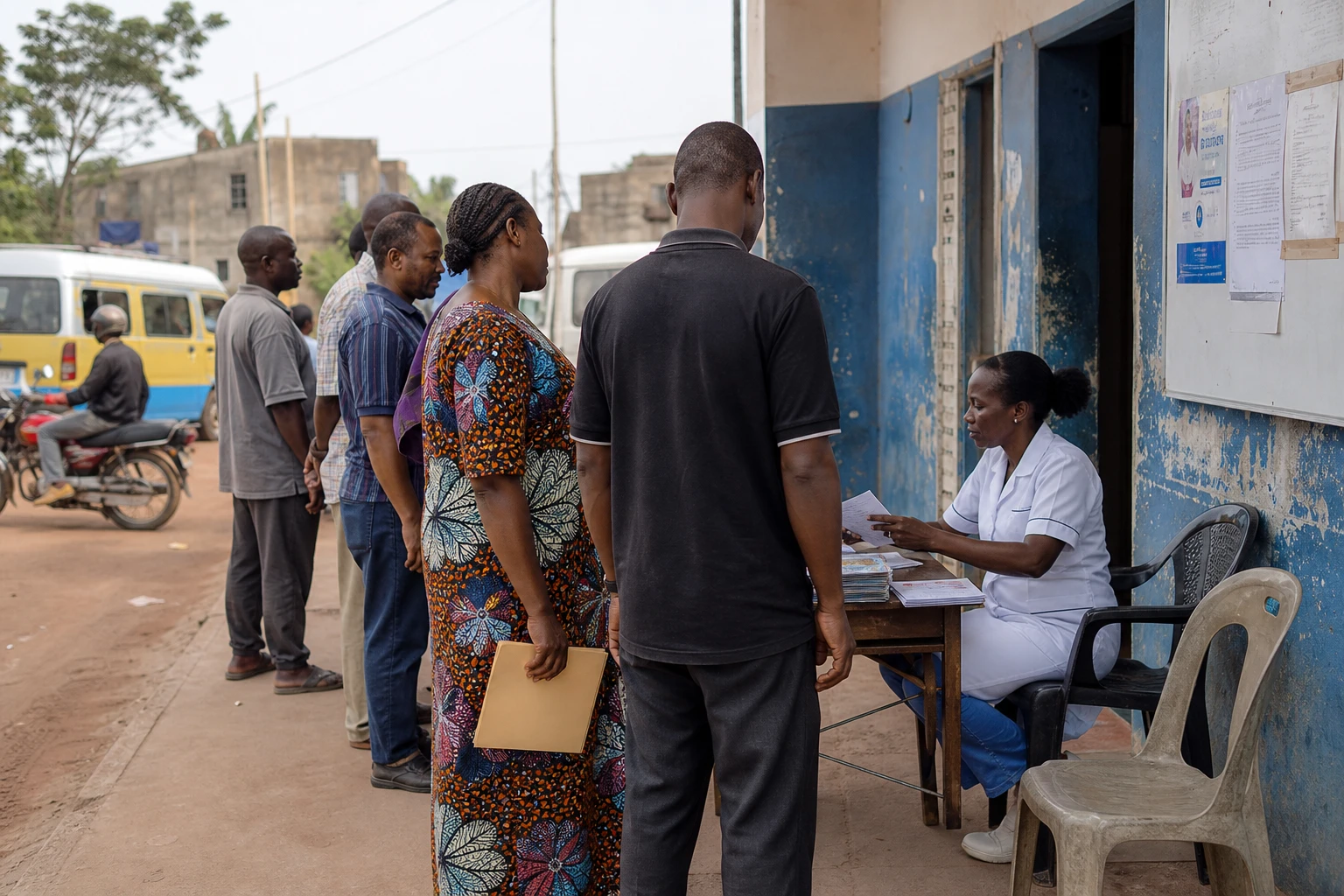
In DR Congo, Ebola is no longer just a health toll: it is also a test of public capacity
In the east of the Democratic Republic of the Congo, every hour counts. When an epidemic gains ground in areas with few roads, frequent movement and lingering mistrust, the medical response also becomes a test of the state. The country knows this better than most: since 1976, it has faced the Ebola virus repeatedly, and the current outbreak is now one of the most severe ever recorded on its territory.
The regional context helps explain the severity of the outbreak. The 2026 epidemic is mainly affecting eastern Congo, an area with intense movement, bordering Uganda and connected to the Great Lakes region. The area combines health vulnerabilities, commercial mobility and security tensions. The World Health Organization (WHO) has also pointed out that the outbreak is unfolding in a difficult humanitarian environment, marked by insecurity, population density and heavy cross-border movement.
Figures that have reached a new scale in just a few weeks
The Congolese government officially declared the 17th Ebola outbreak on 15 May 2026 in the health zones of Rwampara, Mongbwalu and Bunia, in Ituri. The disease soon spread beyond this initial focus. At the end of May, the Presidency said the response had been structured at national level, with a budgeted plan worth $319 million, including $20 million urgently released by the state.
Figures published by the WHO then showed a rapid rise in cases and deaths. As of 15 July 2026, the organisation reported 2,124 confirmed cases and 828 deaths in the Democratic Republic of the Congo, with a crude fatality rate of 39%. It also reported 119 infections among health workers, a figure that highlights the continued exposure of healthcare facilities when infection prevention and control are weak.
During the same period, Congolese authorities and health partners said the outbreak had already surpassed the major 2018-2020 outbreak in terms of cases. The WHO notes that the previous crisis, the deadliest the DRC had experienced up to that point, recorded 3,481 cases and 2,299 deaths. The new outbreak is now approaching it closely in both its rate of spread and its human toll.
The comparison highlights an essential point: the 2026 epidemic is not just hitting a country familiar with Ebola; it is hitting a health system already under pressure. The WHO noted the speed of its geographical spread, with several health zones affected in Ituri, North Kivu and South Kivu in the first weeks. It also stressed that no approved vaccine or specific treatment is yet available for the Bundibugyo strain, leaving prevention, isolation, surveillance and supportive care at the heart of the response.
Why this outbreak is putting Congolese people under such strain
The disease is not affecting hospitals alone. It is disrupting everyday economic life. In eastern DR Congo, markets, journeys between cities and territories, small-scale cross-border activities and informal work are often the main sources of income. As soon as an area is identified as a risk zone, travel slows, costs rise and fear reduces activity. This is particularly true around Bunia, Beni, Goma and the routes to Uganda.
The national response has therefore taken on a political dimension. The Presidency has convened the response task force several times, while the health ministry has imposed 21-day monitoring measures for healthcare providers and people returning from affected areas. On 25 June, the health minister told the Presidency that the country had already recorded more than 1,100 cases and 277 confirmed deaths, showing how rapidly the figures were changing from one meeting to the next.
Community involvement remains decisive. The WHO stresses the importance of community engagement in controlling such outbreaks, especially when safe and dignified burials are not consistently carried out and initial alerts are slow to be verified. The risk is therefore not only biomedical; it is also social. Where public communication is not trusted, the virus spreads faster.
Healthcare workers are in a particularly exposed position. Infections among health workers show that the challenge is not limited to opening treatment centres. It also requires equipment, protocols, training and strict oversight of care practices. Without these, hospitals can become amplifiers rather than bulwarks.
A Congolese crisis, but also a regional and continental issue
The Democratic Republic of the Congo is not facing Ebola alone. The outbreak has already crossed the border or triggered regional alerts, prompting surveillance measures in Uganda and preparedness steps in several neighbouring countries. The WHO has spoken of strengthened cross-border coordination, while Congolese authorities have stepped up exchanges with their counterparts and health partners.
This outbreak also raises a broader question for Africa: the continent’s ability to respond rapidly to high-risk diseases in fragile areas. African institutions, national health systems and regional partners know that Ebola respects neither administrative borders nor political agendas. In this crisis, the DRC is both the epicentre and a country drawing on extensive field experience, built up over 17 successive outbreaks.
The next priority is clear: breaking the chains of transmission before the death toll definitively surpasses the previous national record. The coming weeks will show whether stronger surveillance, rapid care and cross-border cooperation are enough to slow the disease. In DR Congo, the stakes go beyond the statistics. They concern public trust, continuity of care and the strength of regional ties.



