
 Algeria
 Egypt
 Libya
 Morocco
 Sudan
 Tunisia
 Benin
 Burkina Faso
 Cabo Verde
 Côte d'Ivoire
 Ghana
 Guinea
 Guinea-Bissau
 Liberia
 Mali
 Mauritania
 Niger
 Nigeria
 Senegal
 Sierra Leone
 The Gambia
 Togo
 Cameroon
 Central African Republic
 Chad
 Equatorial Guinea
 Gabon
 Republic of the Congo
 São Tomé and Príncipe
 Burundi
 Comoros
 Djibouti
 Eritrea
 Ethiopia
 Kenya
 Madagascar
 Malawi
 Mauritius
 Mozambique
 Rwanda
 Seychelles
 Somalia
 South Sudan
 Tanzania
 Uganda
 Angola
 Botswana
 Eswatini
 Lesotho
 Namibia
 South Africa
 Zambia
 Zimbabwe
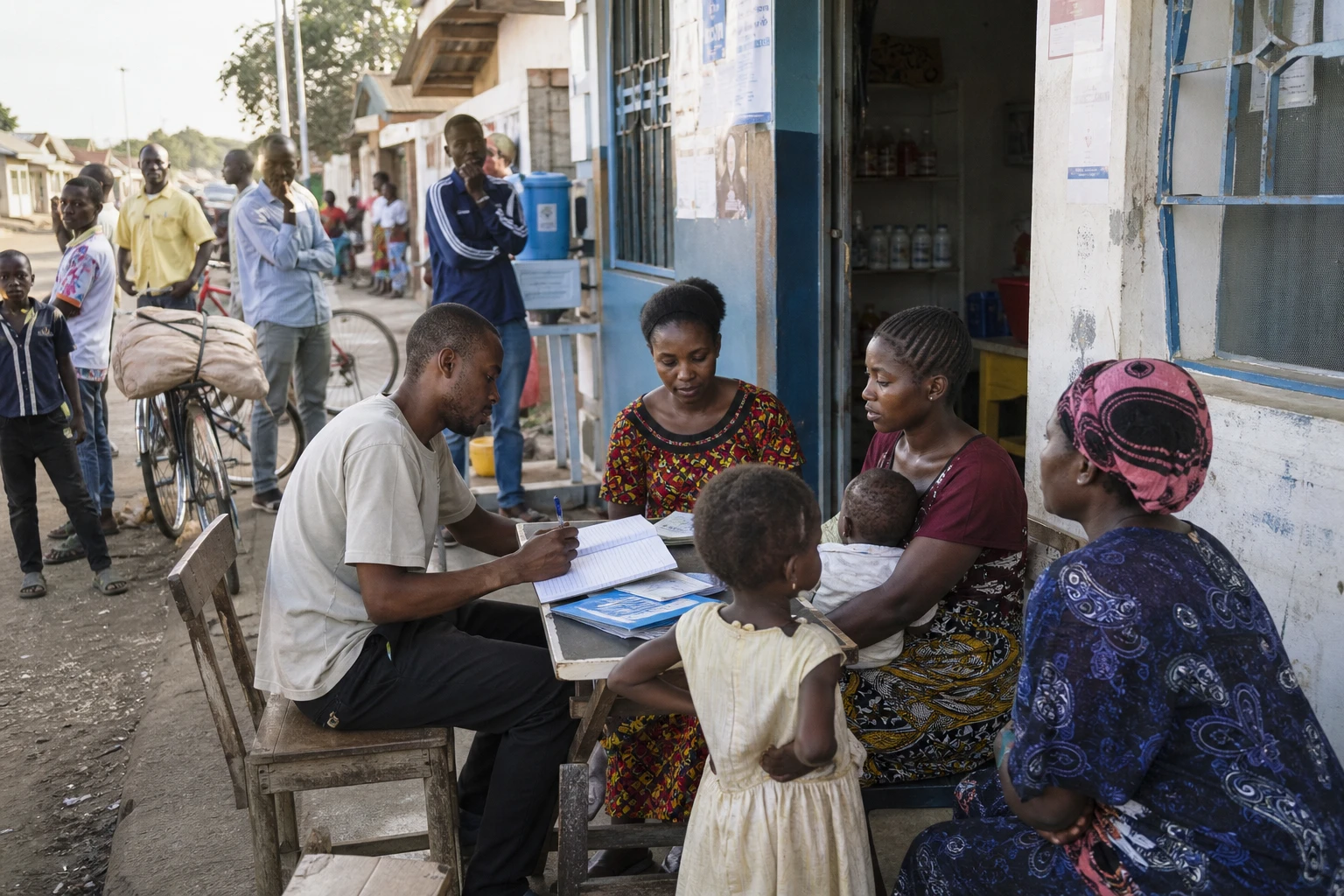
In the Democratic Republic of the Congo, the threshold of 4,000 deaths gives a measure of an epidemic that continues to spread. The toll published on Friday 2 October 2026 by the National Institute of Public Health stands at 4,018 deaths among 8,300 confirmed cases. These figures remain provisional and still need to be consolidated.
An epidemic now spread across seven provinces
The virus involved is Bundibugyo, a species of Ebolavirus distinct from the one targeted by the Ervebo vaccine, which has been approved for use. The epidemic was declared on 15 May 2026, after several cases were confirmed in Ituri province, in the north-east of the DRC.
Since then, transmission has spread to six other provinces: North Kivu, South Kivu, Bas-Uélé, Haut-Uélé, Tshopo and Sud-Ubangi. This spread does not mean that viral circulation is equally intense in all these areas. It does, however, show that the response must cover a vast area with very different health and security conditions.
The INSP toll puts the case fatality rate at 48.4%. In other words, nearly one in two confirmed cases has been associated with a death in the available data. The institute also records 2,162 people who have recovered and 842 patients in isolation or hospital.
These figures are not directly comparable with the latest tables published by the World Health Organization, which only covered data up to 7 September 2026. At that date, the WHO recorded 6,757 confirmed cases and 3,267 deaths in the DRC. The difference may be explained by continued transmission, but also by the incorporation of data reported later and by the process of reconciling figures between provinces.
The epidemic’s spread has already made this the largest outbreak ever recorded in the DRC. It surpasses the 2018–2020 epidemic, which totalled 3,317 cases according to the WHO. The comparison is, however, between different periods, areas and surveillance systems.
The risk of an incomplete toll
The official death toll does not necessarily reflect all mortality linked to the virus. In an analysis of the response, Médecins sans frontières (MSF) warned of the limitations of testing and monitoring people exposed to the virus. Some contacts are not registered. Others remain difficult to reach or cannot be monitored regularly.
The situation is particularly fragile when patients die at home or in communities far from health centres. Community deaths may then be reported late, or not immediately linked to Ebola. According to estimates cited by MSF in the available material, more than 68% of deaths linked to the epidemic are thought to have occurred outside health facilities.
An apparent fall in new cases must therefore be interpreted with caution. It may indicate a genuine decline in transmission. It may also result from less active surveillance, reduced access to laboratories or a break in the follow-up of alerts.
The WHO describes a context marked by insecurity, population displacement and limited access to healthcare. In Ituri, the epicentre of the epidemic, mining areas, displacement sites and isolated communities complicate the work of response teams. Water shortages, poor hygiene and population mobility also increase the risk of transmission within families and health facilities.
Health response under pressure
The control strategy relies on several complementary measures. Teams must rapidly detect sick people, confirm cases in laboratories, arrange their isolation and provide supportive care. They must also identify contacts, monitor their health and ensure safe burials.
Every link matters. An alert that is not investigated can delay a patient’s isolation. An unmonitored contact can transmit the virus before symptoms appear. An unsafe burial can expose relatives and those carrying out funeral rites.
Contact tracing stands at 80.6% in the data provided by the INSP. This level reflects significant mobilisation, but still leaves some exposed people outside the system. In an epidemic where travel is frequent, a few gaps can be enough to sustain chains of transmission.
The response also depends on trust. People must accept testing, report symptoms and allow contacts to be monitored. Health authorities and field partners must therefore work with local networks, community leaders and Congolese health workers. Communication cannot be limited to top-down instructions. It must address families’ practical concerns and take social practices into account.
A vaccine still limited by the viral strain
Vaccination remains one of the main points of uncertainty. The Ervebo vaccine targets Zaire ebolavirus. Its effectiveness against Bundibugyo in humans has not been established, and it is not approved for this strain.
The WHO therefore recommends its use only as part of research protocols. A study conducted by MSF, Epicentre and their partners focuses in particular on frontline workers in the DRC. This type of trial can produce useful data, but it does not yet amount to a routine vaccination campaign.
This constraint sets the current epidemic apart from several previous outbreaks in Central Africa. At this stage, the authorities do not have a proven vaccine tool to rapidly protect exposed populations. Prevention therefore relies more heavily on detection, care, isolation and community engagement.
An alert extending beyond the DRC’s borders
The epidemic directly affects Central Africa and the Great Lakes region. Proximity to Uganda, trade and crossings along informal routes make cross-border coordination essential. The WHO has already classified the outbreak as a public health emergency of international concern.
For the Congolese authorities, the challenge is twofold. They must contain transmission in affected provinces while maintaining routine health services. Health centres must continue to provide maternity care and treat malaria, injuries and other emergencies. A response entirely absorbed by Ebola could further weaken the health system.
The next step will be to consolidate provincial data and verify new deaths. The figures of 4,018 deaths and 8,300 cases are a major warning signal, but must remain attributed to the INSP until the datasets have been harmonised with international reports. In the DRC and neighbouring countries, border surveillance, continuity of care and community trust will influence the course of the epidemic.
The INSP toll reported on 2 October 2026 and the epidemiological data published by the WHO provide distinct reference points for tracking developments: the former gives a more recent national toll, while the latter provides the latest international picture available at the time of publication.



