Algeria
 Egypt
 Libya
 Morocco
 Sudan
 Tunisia
 Benin
 Burkina Faso
 Cabo Verde
 Côte d'Ivoire
 Ghana
 Guinea
 Guinea-Bissau
 Liberia
 Mali
 Mauritania
 Niger
 Nigeria
 Senegal
 Sierra Leone
 The Gambia
 Togo
 Cameroon
 Central African Republic
 Chad
 Equatorial Guinea
 Gabon
 Republic of the Congo
 São Tomé and Príncipe
 Burundi
 Comoros
 Djibouti
 Eritrea
 Ethiopia
 Kenya
 Madagascar
 Malawi
 Mauritius
 Mozambique
 Rwanda
 Seychelles
 Somalia
 South Sudan
 Tanzania
 Uganda
 Angola
 Botswana
 Eswatini
 Lesotho
 Namibia
 South Africa
 Zambia
 Zimbabwe
In Ituri, the response is not confined to hospitals
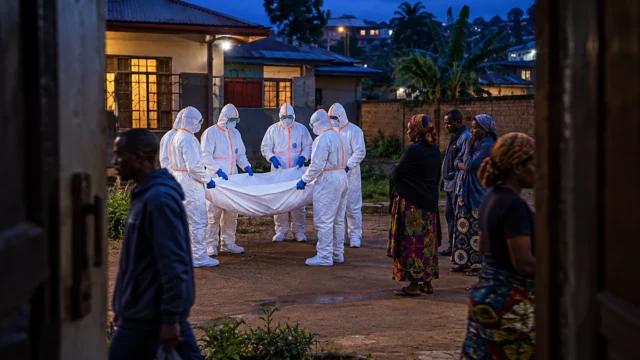
In Bunia and neighbouring health zones, every new Ebola case tells the same story of vulnerability: when chains of transmission go undetected, the disease gains ground faster than response teams can track it down. In the Democratic Republic of the Congo, the outbreak, which is concentrated mainly in Ituri, has now reached regional proportions, prompting a continental health alert led by Africa CDC and WHO.
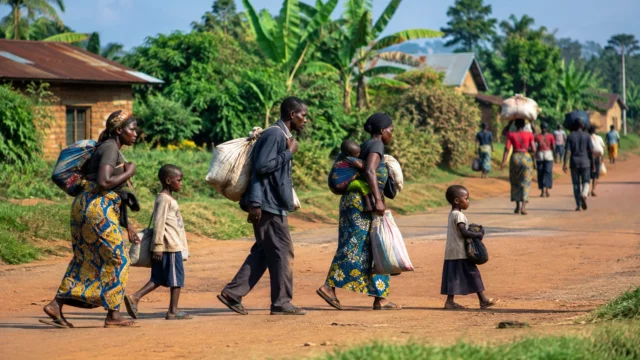
The context matters as much as the virus. Ituri, in the north-east of the Democratic Republic of the Congo, remains affected by population displacement, access difficulties and constant pressure on healthcare facilities. In this kind of environment, a suspected case can circulate for several days before being tested, isolated and followed up. It is precisely this delay that is weighing on the current response.
Outbreak declared in mid-May now among the largest on record
The official starting point was 15 May 2026, when Congolese authorities declared an Ebola outbreak caused by the Bundibugyo virus. WHO subsequently judged on 17 May that the event constituted a public health emergency of international concern, while Africa CDC classified it as a public health emergency of continental security. The two designations reflect the same reality: the situation extends beyond the local area.
On 16 July, WHO said that 2,073 cases had been reported and 796 deaths recorded. The organisation added that the outbreak had become the third largest ever recorded and had spread faster than any comparable outbreak over the past month. WHO’s Regional Office for Africa, meanwhile, reported at least 1,926 confirmed cases and 702 deaths as of 11 July, in figures released on 14 July, illustrating above all how rapidly the surveillance data are changing.
This variation in figures does not amount to a substantive contradiction. Rather, it reflects the pace of updates, the flow of information between national, regional and international levels, and the fact that indicators are not published at exactly the same time. In a crisis of this kind, monitoring is dynamic and sometimes shifting, and the figures should be read with caution.
Why Ituri remains the most sensitive area
WHO’s director-general said that more than 80% of new cases were not being detected through known contact lists. In other words, transmission is still partly evading surveillance. The agency also estimates that about two-thirds of deaths occur in communities, among people who never reached a health facility. These are the most concerning indicators because they point to the virus circulating undetected.
On the ground, the response has nevertheless been scaled up. WHO now reports more than 800 beds available in treatment facilities, 60 laboratories set up and a contact-tracing rate close to 80%. This is real progress, but it is not enough if patients arrive too late or contacts evade surveillance.
The viral type involved further complicates the response. It is the Bundibugyo variant, for which no vaccine or treatment has yet been approved. Clinical trials launched by WHO in July cover two treatments — the monoclonal antibody MBP134 and the antiviral remdesivir — as well as the ChAdOx1 vaccine and obeldesivir post-exposure prophylaxis. Research is therefore advancing, but under emergency conditions and with no validated, ready-to-use solution.
What the outbreak means for DR Congo and the region
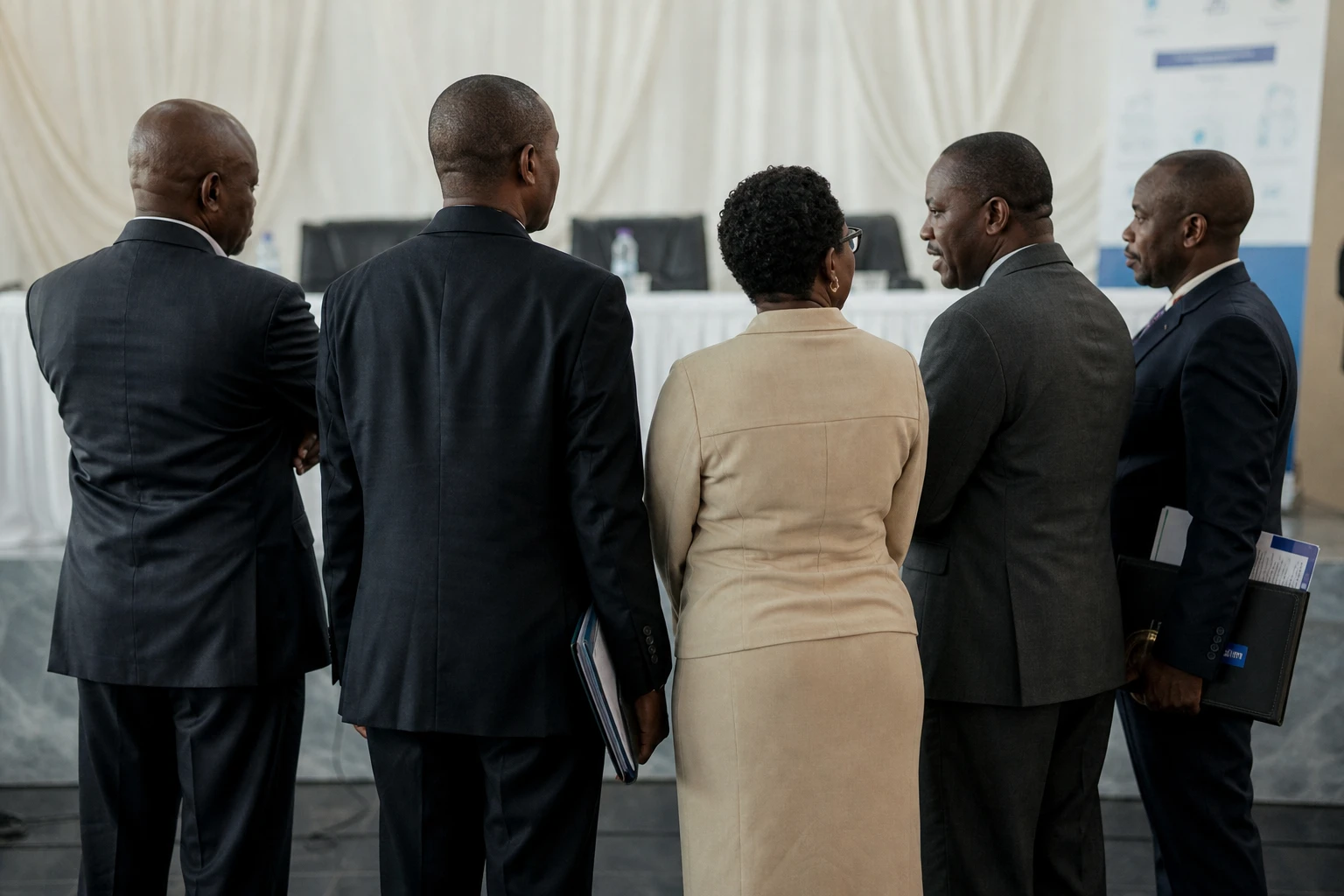
For Kinshasa, the challenge is not solely a health one. It is also political and logistical. An Ebola outbreak absorbs resources, puts laboratories to work, strengthens surveillance at points of entry and requires close co-ordination between the health ministry, provincial authorities, WHO, Africa CDC and humanitarian partners. In the DRC, where several provinces remain vulnerable to health and security crises, any disruption to the delivery of equipment or to community trust comes at an immediate cost.
The situation is also affecting daily life. In towns, people face anxiety, screening and restrictions linked to surveillance. In rural or isolated areas, families mainly contend with distance, transport costs and a shortage of facilities able to take in suspected patients. The crisis therefore looks different depending on whether someone lives in Bunia, near a peripheral health centre or in a more remote community in eastern Congo.
The precedent set by Uganda is a reminder that a co-ordinated response can reverse the trend. On 16 July, WHO announced that Uganda had no confirmed patients left, with 20 cases and two deaths in total, opening the way for the 42-day countdown to the official end of the outbreak in that country. The border does not eliminate the risk, but the example shows that rapid surveillance, early care and cross-border co-operation can contain an outbreak.
Across Africa, this crisis is a reminder of a truth that is often underestimated: epidemics respect neither administrative borders nor diplomatic calendars. Africa CDC has already incorporated the outbreak into a continental response, while WHO is calling for additional resources to support countries at risk. This will be one of the issues to watch closely in the coming days, particularly if the outbreak continues to spread faster than contacts can be traced.