
 Algeria
 Egypt
 Libya
 Morocco
 Sudan
 Tunisia
 Benin
 Burkina Faso
 Cabo Verde
 Côte d'Ivoire
 Ghana
 Guinea
 Guinea-Bissau
 Liberia
 Mali
 Mauritania
 Niger
 Nigeria
 Senegal
 Sierra Leone
 The Gambia
 Togo
 Cameroon
 Central African Republic
 Chad
 Equatorial Guinea
 Gabon
 Republic of the Congo
 São Tomé and Príncipe
 Burundi
 Comoros
 Djibouti
 Eritrea
 Ethiopia
 Kenya
 Madagascar
 Malawi
 Mauritius
 Mozambique
 Rwanda
 Seychelles
 Somalia
 South Sudan
 Tanzania
 Uganda
 Angola
 Botswana
 Eswatini
 Lesotho
 Namibia
 South Africa
 Zambia
 Zimbabwe
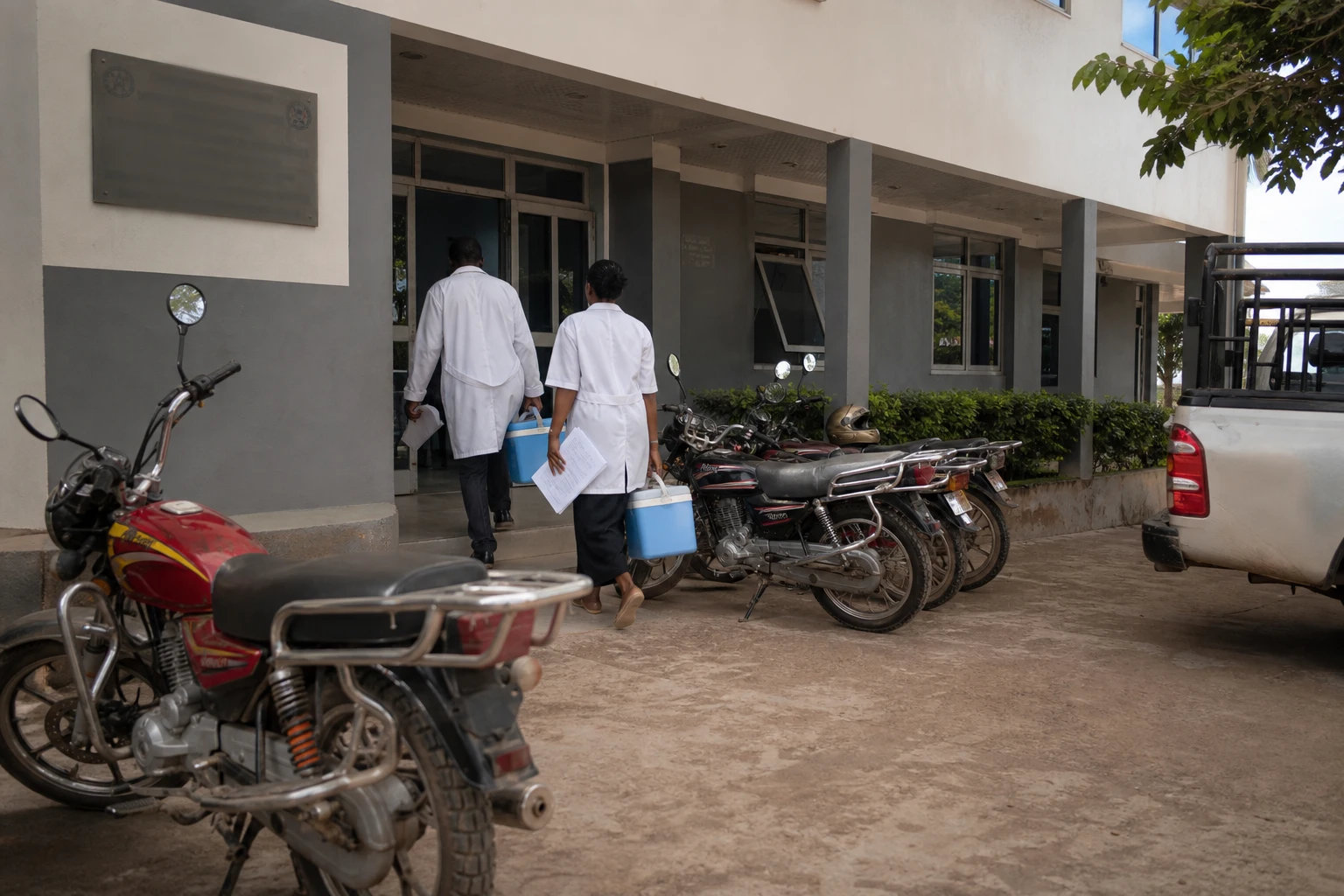
In eastern DR Congo, the health response faces difficult terrain
In the east of the Democratic Republic of the Congo, a virus never spreads alone. It often advances alongside blocked roads, fear, forced displacement and distrust of medical teams. This combination is complicating the fight against Ebola today, as health authorities continue trying to buy time in areas where every field visit remains a delicate operation.
DR Congo is no stranger to alerts. The country is facing its 17th Ebola outbreak since 1976, in an area already marked by recurring security crises, mass population displacement and sustained pressure on health services. In this part of the country, the challenge is not just to treat people. Communities must also be reached, health workers protected and a minimum level of continuity in basic care maintained.
An outbreak spanning several provinces
The latest data published by the Congolese health ministry and cited by WHO show an outbreak of exceptional scale. As of 21 August 2026, DR Congo had recorded 5,290 confirmed cases and 2,516 deaths in 56 health zones, according to the update cited by the World Health Organization. A week earlier, WHO and Africa CDC had already reported 3,973 confirmed cases, 1,801 deaths and 776 recoveries in 51 health zones across five provinces. The rapid change confirms that the outbreak continued to spread during August.
WHO also says the outbreak, caused by the Bundibugyo virus, now affects 54 health zones in six provinces: Ituri, North Kivu, South Kivu, Haut-Uélé, Tshopo and Bas-Uélé. Infection remains heavily concentrated in Ituri, where Bunia, the outbreak’s epicentre, is located. This geography matters. It shows that the virus is circulating in areas sometimes far from major urban centres, but connected to one another by daily movement, markets, informal care and trade routes.
The Congolese health ministry is also publishing situation reports day by day, a sign that the response remains active despite the constraints. Documents dated from 10 to 22 August 2026 are available on its official portal, making it possible to track developments almost in real time.
The real bottleneck: access to communities
The diagnosis from WHO and Africa CDC is clear: the tools exist, but access remains inadequate. Teams have tests, care protocols, vaccines for some forms of Ebola and surveillance capacity. Yet transmission continues when they have to reach remote villages, cross insecure areas or persuade families who have already lost trust in the health system. WHO and Africa CDC have therefore called for a response led more strongly by local communities, with faster detection, better contact tracing and greater support for frontline workers.
This approach is not a slogan. It responds to an operational reality. As of 4 August 2026, contact tracing had plateaued at 75%, while the minimum target cited by WHO is 95% to break chains of transmission quickly. At the same time, occupancy at treatment centres in North Kivu had reached 139%. In other words, the response is already under strain even before the virus reaches new hotspots.
Health workers are also paying a heavy price. By 20 August, 158 health workers had been infected and 45 had died, according to data cited in official communications. This is a reminder of a reality that is often underestimated: in an Ebola outbreak, health workers are both the first line of defence and one of the groups most exposed. Their protection is therefore essential to the credibility of the entire response.
Kinshasa, neighbouring countries and the risk of spillover
In Kinshasa, the government faces a complex equation. It must maintain the health response, secure access, speed up procedures for equipment and teams, and monitor population movements without paralysing trade. WHO specifically recommends strengthening controls on movement, gatherings and deaths outside treatment centres, as well as surveillance along roads, lake routes and borders. The organisation also considers the risk to DR Congo itself to remain “very high”.
For neighbouring countries, the issue is immediate. WHO considers the regional risk “high” for states bordering or closely connected to affected areas, and lower for the rest of the African region. In practice, this primarily concerns the Great Lakes countries and the mobility corridors linking eastern DR Congo with Uganda, Rwanda, Burundi and South Sudan. This is where border surveillance and community information can still prevent a local outbreak from becoming a cross-border alert.
The security situation complicates everything. In eastern DR Congo, war and armed violence disrupt the movement of health teams and displace entire families. From 17 to 21 August 2026, representatives of the Congolese government and AFC/M23 met in Switzerland, alongside Qatar, the United States, Togo, the African Union, the AU Commission and Switzerland, to review implementation of the Doha framework. The parties announced a roadmap for the next stage of negotiations and ceasefire verification. This matters for public health too: without safe movement, the Ebola response remains incomplete.
A Congolese crisis with regional implications
The impact extends far beyond DR Congo. On 24 August, WHO maintained the public health emergency of international concern status for this outbreak, while reaffirming that the risk to DR Congo remains the highest. The temporary recommendations stress that conventional public health measures remain decisive: contact tracing, community surveillance, local communication, protection of health workers and cross-border co-operation. This was also the message delivered by WHO and Africa CDC in Addis Ababa, at the 76th session of the WHO Regional Committee for Africa, which placed community-led responses at the centre of the continent’s priorities.
Another important signal is the mobilisation of vaccines and response stockpiles. On 20 August, WHO and Africa CDC welcomed the allocation of Evebo doses to DR Congo, a significant contribution to containing the outbreak, even though the vaccine does not cover all types of Ebola virus. It shows that the African response is also being built through logistical planning, regional co-ordination and scientific support, not only through day-to-day crisis management.
For DR Congo, the next phase will therefore be fought on three fronts at once: access to affected areas, the safety of teams and co-ordination with neighbouring countries. If one of these links fails, the virus gains ground. If all three move forward together, the curve can finally turn. In a region where borders are crossed faster than they are monitored, public health also becomes a matter of political co-operation. That is now where the outcome of the outbreak will be decided.



