
 Algeria
 Egypt
 Libya
 Morocco
 Sudan
 Tunisia
 Benin
 Burkina Faso
 Cabo Verde
 Côte d'Ivoire
 Ghana
 Guinea
 Guinea-Bissau
 Liberia
 Mali
 Mauritania
 Niger
 Nigeria
 Senegal
 Sierra Leone
 The Gambia
 Togo
 Cameroon
 Central African Republic
 Chad
 Equatorial Guinea
 Gabon
 Republic of the Congo
 São Tomé and Príncipe
 Burundi
 Comoros
 Djibouti
 Eritrea
 Ethiopia
 Kenya
 Madagascar
 Malawi
 Mauritius
 Mozambique
 Rwanda
 Seychelles
 Somalia
 South Sudan
 Tanzania
 Uganda
 Angola
 Botswana
 Eswatini
 Lesotho
 Namibia
 South Africa
 Zambia
 Zimbabwe
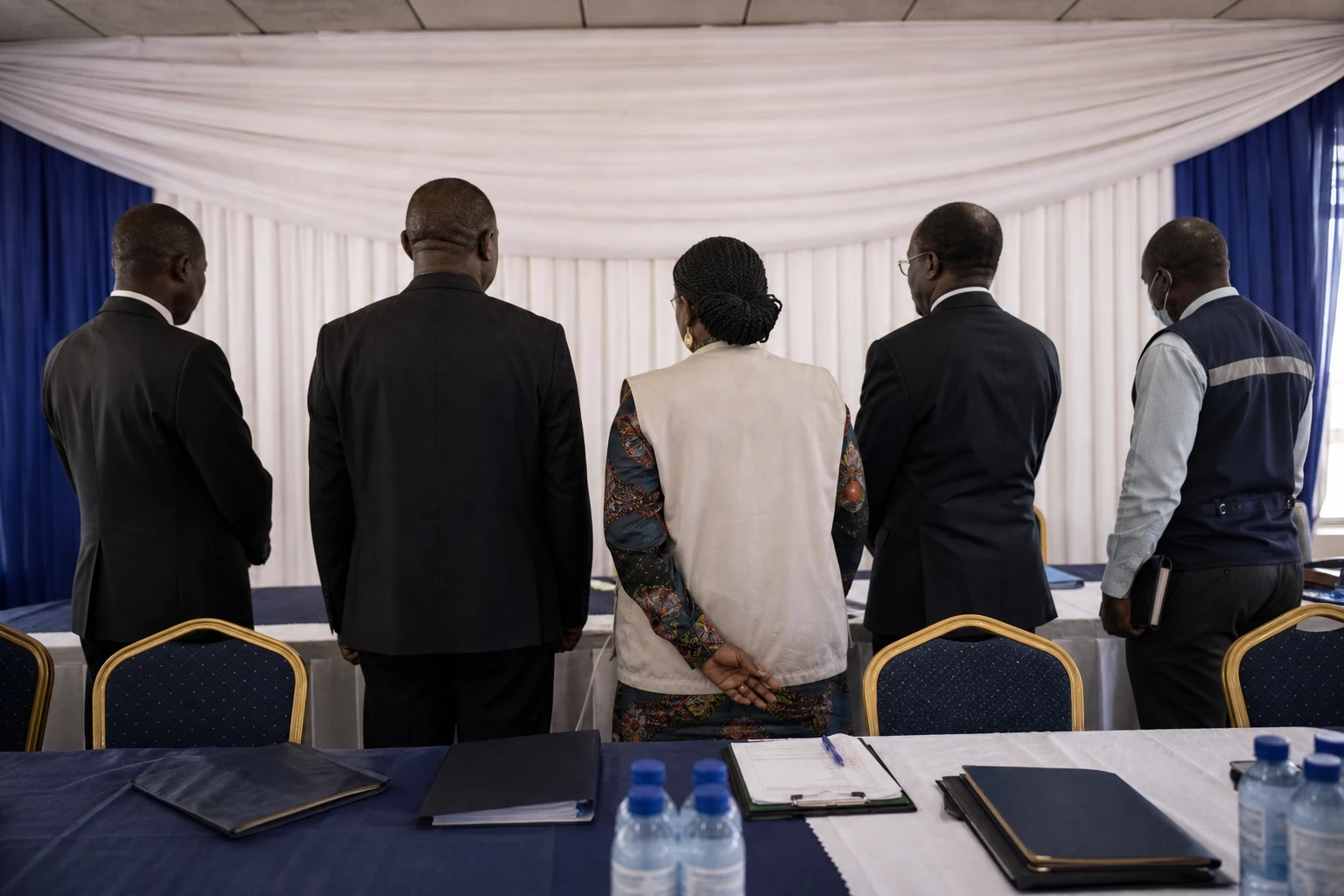
An outbreak that highlights the fragility of health zones in the east
In the east of the Democratic Republic of the Congo, the fight against Ebola is not being waged only in treatment centres. It is also being waged in markets, schools, on roads and in villages, where the slightest doubt can hamper contact tracing. As of 31 August 2026, the Congolese Ministry of Health had recorded 6 186 confirmed cases and 3 007 deaths, with 1 409 recoveries, according to the situation report published by the National Institute of Public Health. The country is therefore experiencing its 17th Ebola virus disease outbreak since 1976, and the strain involved is Bundibugyo, a variant for which there is, at this stage, no specifically approved vaccine.
The outbreak began in Ituri, where the first clusters were reported in mid-May 2026. The World Health Organization subsequently confirmed that the outbreak had crossed administrative boundaries to affect six provinces, with cases recorded in 54 health zones, including Ituri, North Kivu, South Kivu, Haut-Uélé, Tshopo and Bas-Uélé. The outbreak’s geographical reach partly explains the difficulty of the response. In this region, movement is extensive, health teams travel to areas that are sometimes hard to reach, and trust between communities and authorities remains a decisive factor.
What the figures say, and what they reveal about the response
The toll passing 3 000 deaths is more than a symbolic threshold. It marks a prolonged crisis, even as the authorities and their international partners have stepped up field operations. The Congolese government had already held a series of coordination meetings in Kinshasa in early June, while the WHO and Africa CDC raised the alert level in mid-May. Africa CDC declared the outbreak a Public Health Emergency of Continental Security on 18 May 2026, following the WHO’s declaration of a public health emergency of international concern on 17 May. This continental framework made it possible to mobilise surveillance, laboratory and regional coordination resources more quickly.
Since late August, the response has also gathered pace. The vaccination campaign began in Kisangani, in Tshopo, on 27 August 2026, using the Ervebo vaccine for frontline workers and people exposed to the virus. Health authorities described this step as protection for the ring of contacts, rather than a direct response to the Bundibugyo strain. This is an important point: science is advancing, but the response remains constrained by the availability of products, logistics and the suitability of tools for the circulating strain.
Developments on the ground also show the limits of the conventional public health strategy. Schools reopened in early September, despite concerns among parents and teachers in the epicentre of Ituri. The debate is revealing: the challenge is not only to save lives, but also to prevent a health crisis from stifling social life, schooling, local trade and routine healthcare for a prolonged period. In Bunia and in more rural areas, every staff journey, every contact-tracing visit and every community alert weighs on daily life. In this kind of outbreak, public health is not confined to hospitals. It depends on social ties.
A regional test for Central Africa and the African Union
This outbreak in the Congo extends far beyond the national borders. Cases in DR Congo and Uganda have prompted Africa CDC to coordinate the response with the region’s health ministries, amid intense cross-border movement and security vulnerabilities. Africa CDC has also noted that the affected area faces population displacement, difficult access to some localities and a lack of tools specifically approved for the Bundibugyo strain. In other words, the outbreak is also a stress test for African health cooperation, as the African Union seeks to strengthen shared alert and response mechanisms.
For DR Congo, there are two challenges. First, it must contain the disease in the eastern provinces, where insecurity already complicates government action. Second, it must prevent Ebola from diverting resources for a prolonged period from the response to other emergencies: malaria, measles, cholera and maternal health. Congolese institutions stress that the response also aims to maintain essential services, including schools and basic healthcare. This is a useful perspective, as it serves as a reminder that a prolonged outbreak does not destroy statistics alone. It weakens systems already under pressure.
At continental level, the course of this crisis matters for another reason. If the outbreak continues to spread, it will strengthen the role of African surveillance, research and rapid coordination mechanisms, from Kinshasa to Addis Ababa. If, by contrast, the curve slows sustainably, it will be thanks to a now-clear three-part formula: community trust, logistical access and regional cooperation. The next phase will be shaped by this, in the coming updates from the WHO, Africa CDC and the Congolese Ministry of Health, as eastern DR Congo remains the epicentre of a health battle involving the entire Great Lakes region.



