Algeria
 Egypt
 Libya
 Morocco
 Sudan
 Tunisia
 Benin
 Burkina Faso
 Cabo Verde
 Côte d'Ivoire
 Ghana
 Guinea
 Guinea-Bissau
 Liberia
 Mali
 Mauritania
 Niger
 Nigeria
 Senegal
 Sierra Leone
 The Gambia
 Togo
 Cameroon
 Chad
 DR Congo
 Equatorial Guinea
 Gabon
 Republic of the Congo
 São Tomé and Príncipe
 Burundi
 Comoros
 Djibouti
 Eritrea
 Ethiopia
 Kenya
 Madagascar
 Malawi
 Mauritius
 Mozambique
 Rwanda
 Seychelles
 Somalia
 South Sudan
 Tanzania
 Uganda
 Angola
 Botswana
 Eswatini
 Lesotho
 Namibia
 South Africa
 Zambia
 Zimbabwe
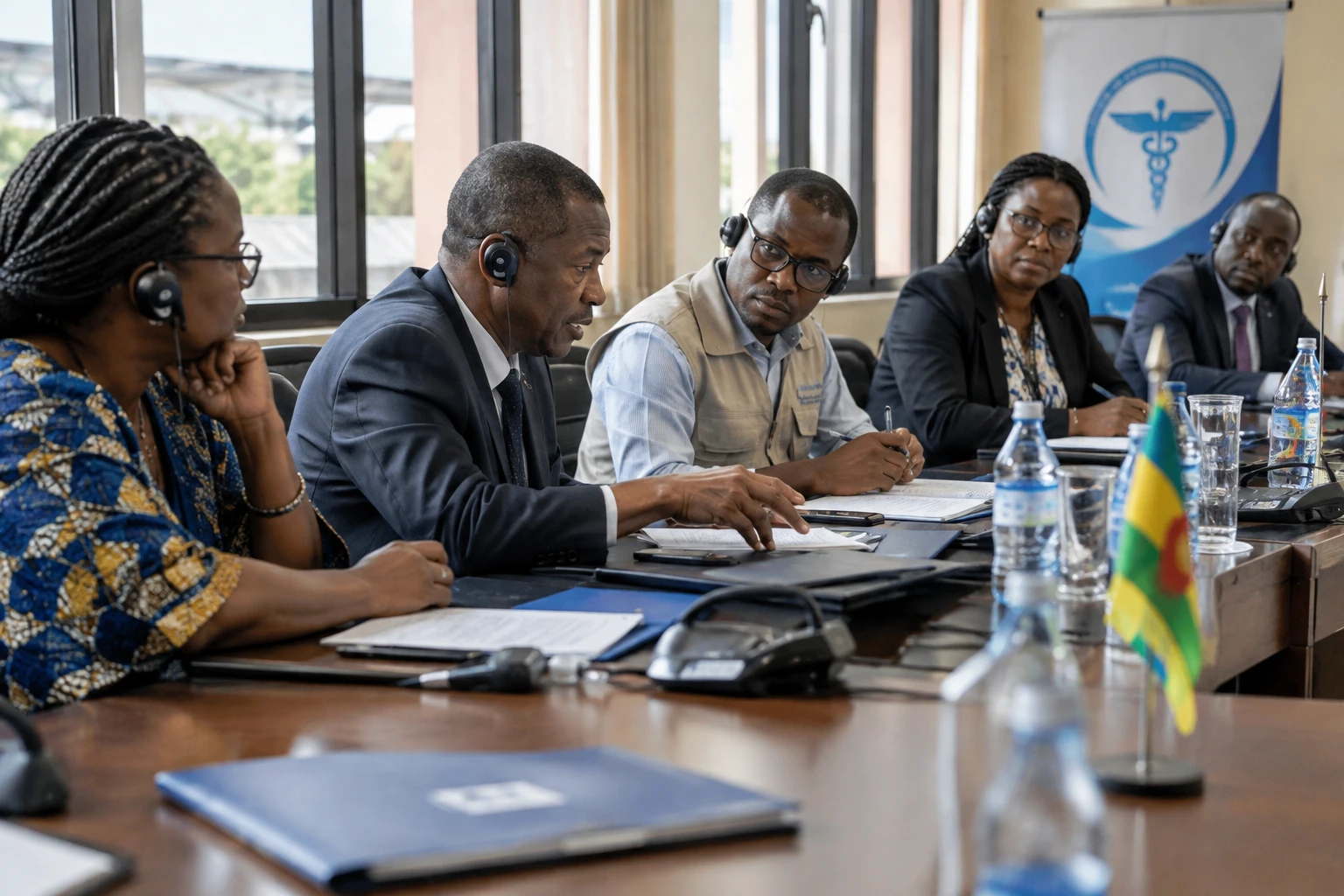
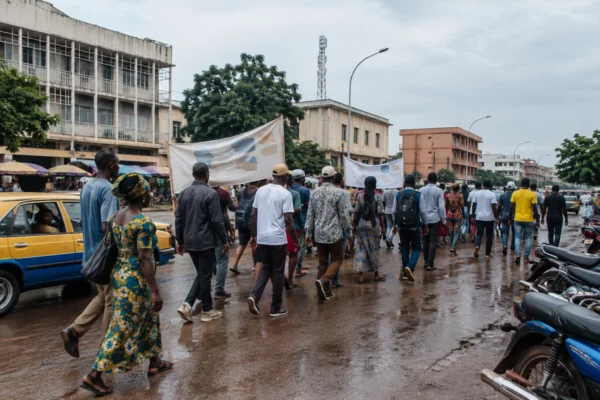
Along the Ubangi, canoe crossings provide a living for fishermen, vendors and transporters. They also link the Central African Republic to the Democratic Republic of the Congo (DRC), where an Ebola outbreak poses a health risk to riverside communities. In Bangui, protecting the population therefore means monitoring crossings without cutting off an essential route for trade.
A river border at the heart of trade
The DRC and the Central African Republic share a long border, partly marked by the Ubangi. Travel and river trade make exchanges a daily occurrence. But they also complicate the rapid detection of a disease that can spread between people.
The region has already experienced several Ebola outbreaks. In 2018, as the DRC faced an outbreak in Équateur Province, the World Health Organization (WHO) noted the Central African Republic’s preparedness efforts, particularly at the river port of Ouango-Sao and the Institut Pasteur in Bangui. This experience is a reminder that preparedness depends as much on checkpoints as on diagnostic capacity and the trust of local people.
The Central African Republic is a member of the Economic and Monetary Community of Central Africa (CEMAC), a regional integration bloc. Health surveillance, meanwhile, must take account of flows that cross administrative borders and connect communities on both banks.
Checks at Bangui landing points
At the M’Poko Bac landing point, in the commune of Bimbo, travellers arriving from the DRC are asked to wash their hands, then directed for a temperature check and to have their details recorded. The system aims to identify suspicious signs and inform passengers about health precautions.
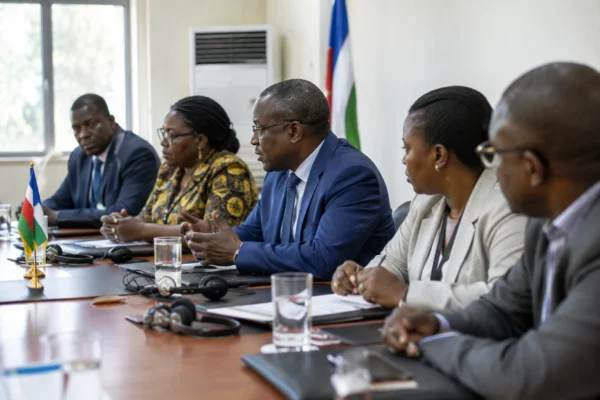
Central African authorities say they are deploying health workers, customs officials, civil protection personnel and security forces at entry points. Neighbourhood chiefs, community representatives and religious leaders are also helping to spread guidance.
Temperature checks alone are not enough to rule out an infection. Surveillance must also identify symptoms, quickly refer suspected cases for care and trace their contacts. The availability of staff and equipment is therefore crucial.
In a report from the landing point, river workers describe their concern about repeated crossings and a lack of protection. For them, avoiding travel is not always possible: fishing, passenger transport and selling fish are essential sources of income. Their accounts highlight a practical challenge: prevention measures must also protect those who keep these exchanges going.
A regional outbreak in flux
WHO data confirm the scale of the current epidemic in the DRC. As of 27 October 2026, the organisation had recorded 10,193 confirmed cases and 4,960 confirmed deaths in the country. Imported cases had also been reported in Uganda, Kenya, Nigeria and France. These figures may be revised as health investigations progress.
The epidemic is caused by the Bundibugyo virus, a strain distinct from the one behind the major 2018-2020 outbreak in eastern DRC. In September 2026, the WHO said the virus had reached South Ubangi, a Congolese province bordering the Central African Republic and the Republic of the Congo. This advance makes vigilance at the borders particularly important, but does not mean a case has been detected in the Central African Republic.
Transmission occurs mainly through direct contact with the blood or other bodily fluids of a sick or deceased person. Prevention therefore relies on early identification, appropriate care, the protection of staff and clear communication. Portraying every traveller as a threat would be both unfair and counterproductive: information and access to health services are essential to encourage the rapid reporting of symptoms.
Preventing disease without disrupting livelihoods
For the authorities, maintaining regular surveillance requires teams to be present over the long term. For people who live by the river, measures must be workable during their jobs: access to handwashing facilities, clear guidance and equipment suited to transporters. A general shutdown of crossings could undermine local incomes without replacing a system for detection and care.
The response is not confined to Bangui. Communities far from major care centres need accessible channels for raising the alarm and getting referrals. Meanwhile, information-sharing between Central African and Congolese health services can speed up case detection and reduce delays in responding.
The 2018-2020 outbreak in the DRC showed both the difficulty of interventions in areas affected by insecurity and the importance of local engagement. The WHO recorded 3,470 cases and 2,287 deaths during the outbreak, which was officially declared over in June 2020. It also highlights the role of cross-border surveillance and community participation.
For the Central African Republic, the immediate challenge is to maintain checks, diagnostic capacity and the trust of riverside communities. Across Central Africa, the spread of the epidemic to South Ubangi is a reminder that a health alert does not stop at a border. What happens next will depend on coordination between the two countries and their ability to protect workers without paralysing the exchanges on which communities depend.