
 Algeria
 Egypt
 Libya
 Morocco
 Sudan
 Tunisia
 Benin
 Burkina Faso
 Cabo Verde
 Côte d'Ivoire
 Ghana
 Guinea
 Guinea-Bissau
 Liberia
 Mali
 Mauritania
 Niger
 Nigeria
 Senegal
 Sierra Leone
 The Gambia
 Togo
 Cameroon
 Central African Republic
 Chad
 Equatorial Guinea
 Gabon
 Republic of the Congo
 São Tomé and Príncipe
 Burundi
 Comoros
 Djibouti
 Eritrea
 Ethiopia
 Kenya
 Madagascar
 Malawi
 Mauritius
 Mozambique
 Rwanda
 Seychelles
 Somalia
 South Sudan
 Tanzania
 Uganda
 Angola
 Botswana
 Eswatini
 Lesotho
 Namibia
 South Africa
 Zambia
 Zimbabwe
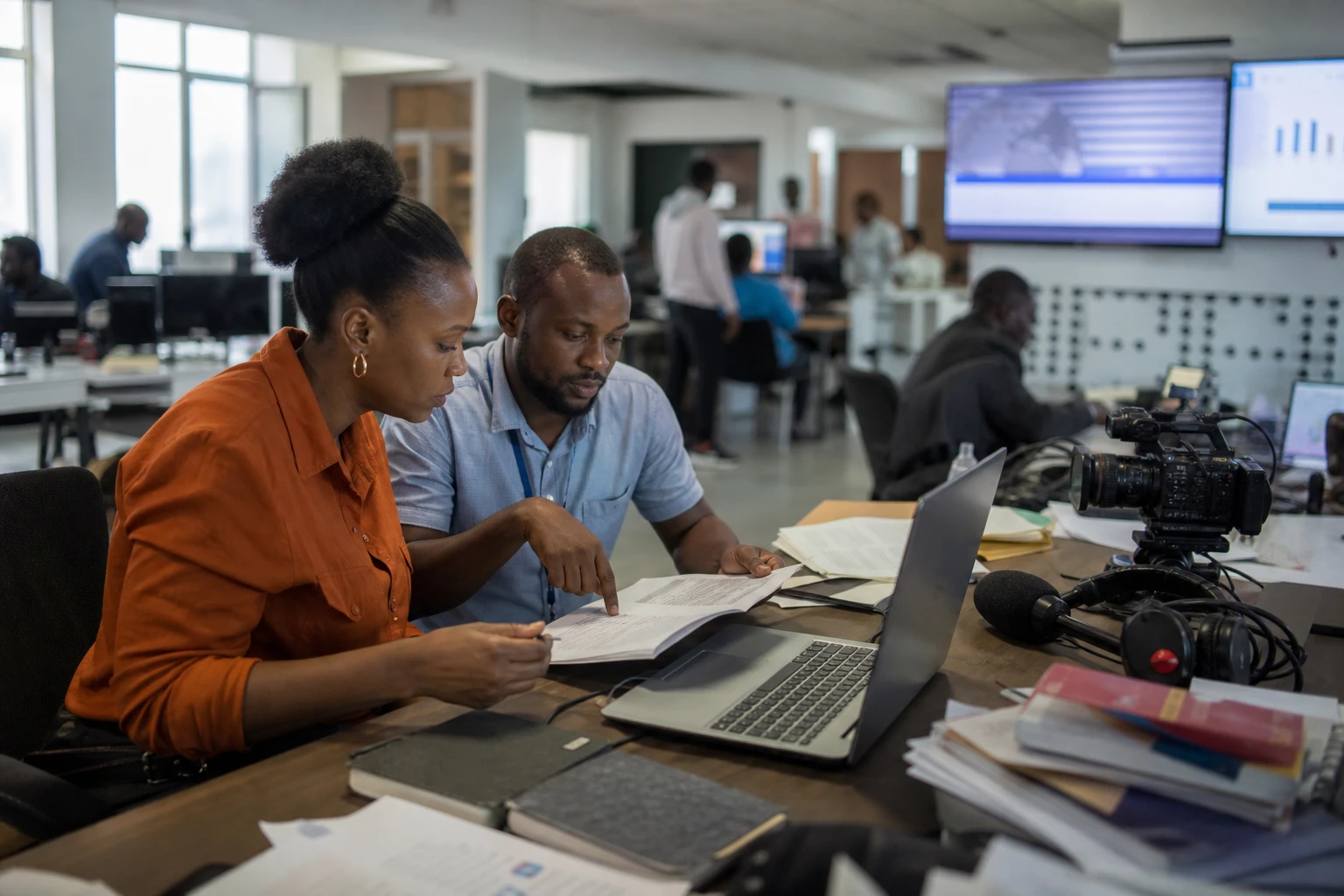
In Ituri, a virus, security and health workers’ pay intersect
In Bunia, an epidemic is never just a curve. It also plays out in the corridors of a treatment centre, in queues to register, and in the trust placed in teams already under pressure. In the Democratic Republic of the Congo, Ebola outbreaks have often shown that a virus spreads faster when the chain of care is weakened.
The Elikya Ebola treatment centre in Ituri’s provincial capital has been affected by a strike by health workers, who were demanding payment of their allowances. The stoppage disrupted care at a time when health authorities were already trying to monitor an outbreak in the east of the country, amid population displacement and chronic insecurity.
An outbreak concentrated in the east, in a tense region
The Democratic Republic of the Congo is used to large-scale health emergencies, but this outbreak has one important distinguishing feature: it was caused by the Bundibugyo virus, a rarer Ebola strain than the Zaire type, which caused most previous outbreaks in the country. The WHO confirmed that the outbreak was declared on 15 May and that most cases were concentrated in Ituri.
The regional context matters as much as the biology of the virus. Ituri shares a sensitive border with Uganda and lies at the heart of an area where traders, displaced people, artisanal miners and families separated by poor roads or insecurity move around. This mobility complicates contact tracing, a central tool for breaking chains of transmission.
In Kinshasa, the National Institute for Biomedical Research played a key role in identifying the virus. The WHO said analyses conducted at the capital’s reference laboratory had confirmed the Bundibugyo strain in the first positive samples. This matters because rapid diagnosis determines the response, the monitoring of contacts and the referral of patients to dedicated centres.
The reported figures and what they say about the response
The Congolese government reported 3,075 confirmed cases and 1,354 deaths. This level of alert puts the outbreak among the most severe in the country’s history. Above all, it confirms rapid spread, already noted in several health updates and reported by international agencies over the weeks.
In its situation reports, the WHO had already highlighted that the outbreak remained difficult to contain because of community deaths, delays between the onset of symptoms and isolation, and infections in healthcare facilities. The organisation had also noted an increase in cases among healthcare workers. At this stage, every disruption to care increases the risk of silent transmission.
In Ituri, health authorities said a significant part of the allowance arrears could be paid by mobile transfer rather than in cash. This technical change is not insignificant. In areas where physical cash is difficult to circulate, digital payments can provide greater security for teams and prevent a pay dispute from turning into an interruption to care. But it requires network coverage, functioning accounts and an administration able to process claims without delay.
Spread was also fuelled by a deeper human factor: the index patient had not been identified, according to health authorities cited in reports at the time. As long as the precise origin of the virus’s introduction remains unknown, investigators must trace broad circles of contacts and work in an environment where people may already have lived through too many successive emergencies to readily accept tracing measures.
What this crisis means for Congolese people and the region
For people in Bunia and neighbouring territories, the first consequence is tangible: access to care becomes less certain. When a treatment centre slows down, patients wait longer, families hesitate, and teams must re-establish contact with communities already battered by armed violence and poor public services. In rural areas, this vulnerability is even more pronounced than in urban centres, where there are somewhat more facilities.
For the Congolese state, the challenge goes beyond public health. An Ebola outbreak mobilises logistics, finances, health diplomacy and administrative authority. It tests Kinshasa’s ability to keep services running in a distant province, as well as its relationship with local communities, provincial authorities and international partners. When pay is delayed, the response loses credibility, even if medical teams remain mobilised.
The regional dimension is just as clear. The WHO has already considered that the outbreak in the DRC posed a risk of spreading beyond its borders, which is logical in an area connected to Uganda and the rest of Central Africa. In Africa, every new Ebola outbreak is a reminder that emerging diseases respect neither administrative borders nor political rivalries. They travel with people, markets, funerals and movements driven by the need to survive.
A lesson for Central Africa, beyond today’s emergency
This outbreak has highlighted an essential point for Central Africa: a health response depends on more than the presence of doctors or specialist centres. It also relies on security, regular funding, social trust and the ability to protect healthcare workers. Without these pillars, even a well-designed technical intervention can lose ground.
At continental level, the case of the DRC is a reminder that a local outbreak can become a regional issue as soon as trade routes, population movements and conflict zones intersect. For the DRC, the East African Community, to which several eastern provinces are now linked, and the continent’s public health institutions, the central challenge remains the same: detect early, pay promptly, isolate without force and provide care without severing ties with communities. Very often, that is where the outcome of a crisis is decided.



