
 Algeria
 Egypt
 Libya
 Morocco
 Sudan
 Tunisia
 Benin
 Burkina Faso
 Cabo Verde
 Côte d'Ivoire
 Ghana
 Guinea
 Guinea-Bissau
 Liberia
 Mali
 Mauritania
 Niger
 Nigeria
 Senegal
 Sierra Leone
 The Gambia
 Togo
 Cameroon
 Central African Republic
 Chad
 Equatorial Guinea
 Gabon
 Republic of the Congo
 São Tomé and Príncipe
 Burundi
 Comoros
 Djibouti
 Eritrea
 Ethiopia
 Kenya
 Madagascar
 Malawi
 Mauritius
 Mozambique
 Rwanda
 Seychelles
 Somalia
 South Sudan
 Tanzania
 Uganda
 Angola
 Botswana
 Eswatini
 Lesotho
 Namibia
 South Africa
 Zambia
 Zimbabwe
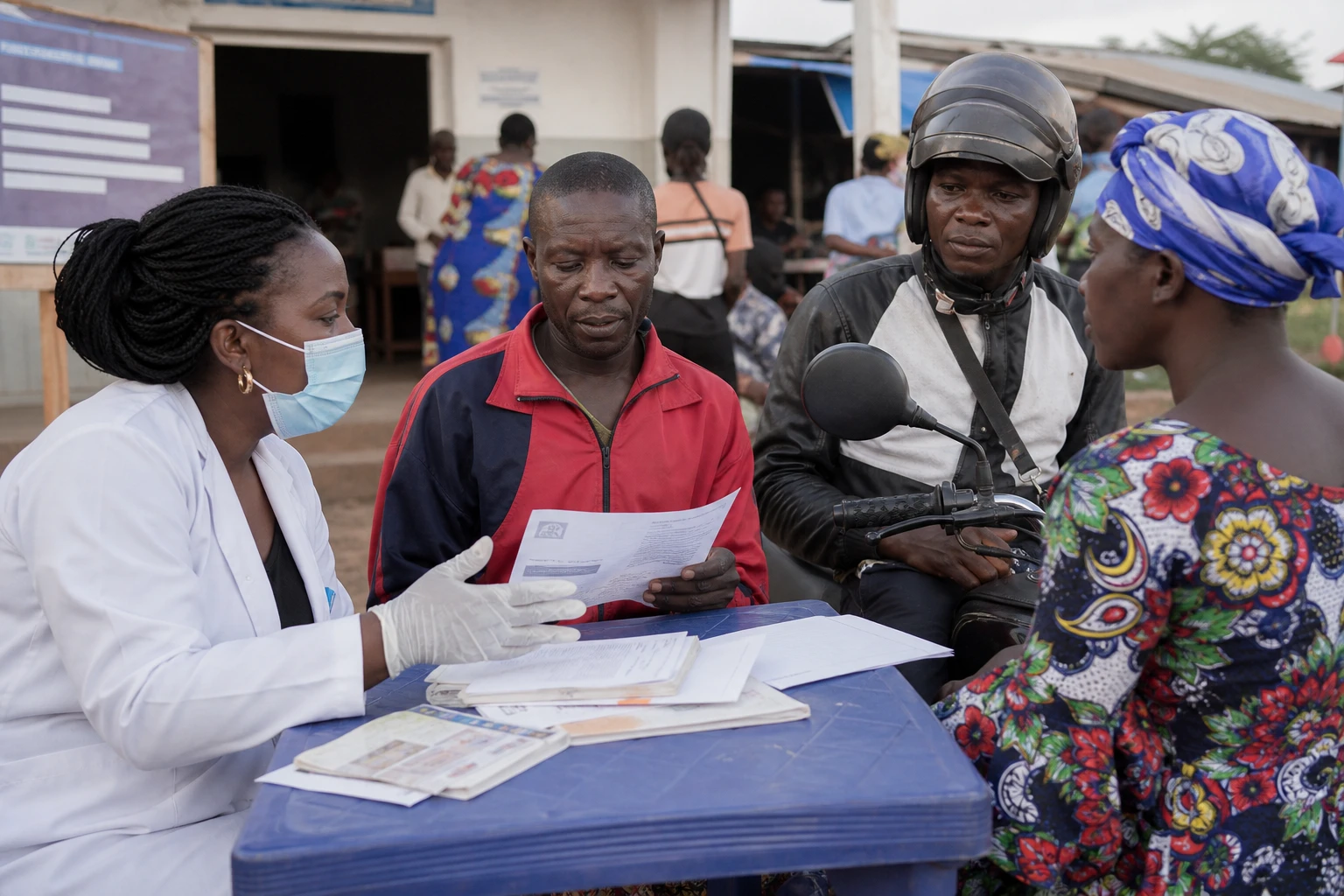
When the outbreak crosses into a new province
In the north-east of the Democratic Republic of the Congo, each new movement of the virus reveals more than a simple point on a map. It exposes porous roads, fragile surveillance systems and the impact of movement between secondary cities, rural areas and border routes.
Bas-Uele, whose provincial capital is Buta, has thus joined the list of areas already affected by Ebola. This shift is significant. It shows how an outbreak that begins further south or east can spread quickly in a vast country, criss-crossed by daily exchanges with Haut-Uele, Ituri, the Central African Republic and, further afield, South Sudan.
The Congolese health response is taking place in a sensitive regional environment. Central Africa and the Great Lakes region have for years experienced intense human movement, logistical vulnerabilities and, in some areas, the presence of armed groups that complicates access to healthcare and contact tracing. In this context, any break in monitoring can restart the chain of transmission.
What is known about the outbreak’s spread
Congolese health authorities and the Africa Centres for Disease Control and Prevention confirmed that a man had died in Buta after travelling from Isiro, in Haut-Uele. This sequence is significant: it suggests transmission linked to movement between two provinces rather than a completely isolated outbreak.
At the time of this spread, six provinces in DR Congo were considered affected since the official declaration of the outbreak on 15 May. Figures released by the government put the death toll at more than 2,100, with more than 4,500 cases. This already very heavy toll reflected the disease’s rapid spread and the immense pressure on response teams. Data released by the World Health Organization during 2018 also show that Équateur province was the first site of another outbreak that year, before the crisis moved to North Kivu and Ituri, confirming the virus’s ability to shift its focus within a few weeks.
At the same time, authorities said that 60% to 70% of new cases were being recorded outside the monitored contacts. In other words, a significant proportion of infections were eluding conventional surveillance. This is one of the most worrying signs in an Ebola outbreak: when teams can no longer identify exposed people early enough, the disease advances faster than the response. Contact tracing nevertheless remains one of the most effective tools for breaking chains of transmission.
This also helps explain the difference between the figures and the reality on the ground. Between official announcements, estimates from regional agencies and reports from communities, the outbreak map often changes faster than consolidated figures. This is why cross-checking between Congolese public health authorities, Africa CDC and WHO remains crucial.
A response hampered by mistrust and constraints on the ground
Ebola’s spread is not explained by the virus alone. It is also driven by social factors. Mistrust among some communities, fatigue among healthcare workers, rumours and local resistance slow surveillance, isolation and safe burial operations. In cities such as Buta, these tensions overlap with fears that daily activities will be disrupted: markets, transport, small businesses, schools and frontline health services.
Bas-Uele is not merely a backdrop to the crisis. It is a vast province bordering the Central African Republic, with areas that are difficult to reach. In this kind of setting, the health response depends as much on ambulances and laboratories as on trust between medical teams, local authorities and residents. Where communication channels break down, the virus gains ground.
A lack of suitable tools also complicates the response. The first Ebola outbreaks in the Congo relied mainly on conventional measures: isolation, contact monitoring, vaccination around cases and community awareness. But the strain involved in this part of Africa was not always covered by the same solutions as the Zaire strain, used in the best-known campaigns. Even in 2026, WHO was reminding people that there was no approved vaccine or specific treatment for Bundibugyo virus, a point that sheds retrospective light on the limits of the response in outbreaks linked to this strain.
The message to neighbouring provinces is clear. When movement continues, cases emerge outside monitored chains and health facilities are under strain, the risk is no longer merely local. It becomes interprovincial, then cross-border. This is precisely why WHO had already classified several Congolese provinces as priority areas for stronger preparedness. Bas-Uele was among the territories identified as at risk, along with Haut-Uele, Ituri, Maniema, South Kivu and Tanganyika.
What this alert says about DR Congo and the region
Beyond the case in Buta, this spread is a reminder of a constant in the Congo: health crises almost never remain confined to a single area. They follow the routes of trade, funerals, healthcare and family travel. In DR Congo, a vast country in Central Africa, the scale of the territory and unequal access to infrastructure can quickly turn a health outbreak into a national concern.
For the authorities, the challenge is twofold. They must contain the outbreak while preserving continuity of essential services. For the public, the stakes are immediate: access to healthcare without further exposure, freedom of movement without being cut off from places of daily life, and reliable information amid fear. For healthcare workers, finally, the risk is both professional and personal, with teams often working in difficult conditions.
At the regional level, this outbreak confirms the importance of African health coordination mechanisms. Africa CDC and WHO have played a central role in surveillance, information-sharing and technical support. In a region where administrative borders stop neither markets nor movement, health security depends as much on this cooperation as on decisions made in Kinshasa.
What happens next therefore depends on three things: how quickly cases are identified, the quality of contact monitoring and the ability to maintain community trust. Without these three levers, another province can become a new centre of gravity in the crisis within days.



