
 Algeria
 Egypt
 Libya
 Morocco
 Sudan
 Tunisia
 Benin
 Burkina Faso
 Cabo Verde
 Côte d'Ivoire
 Ghana
 Guinea
 Guinea-Bissau
 Liberia
 Mali
 Mauritania
 Niger
 Nigeria
 Senegal
 Sierra Leone
 The Gambia
 Togo
 Cameroon
 Central African Republic
 Chad
 Equatorial Guinea
 Gabon
 Republic of the Congo
 São Tomé and Príncipe
 Burundi
 Comoros
 Djibouti
 Eritrea
 Ethiopia
 Kenya
 Madagascar
 Malawi
 Mauritius
 Mozambique
 Rwanda
 Seychelles
 Somalia
 South Sudan
 Tanzania
 Uganda
 Angola
 Botswana
 Eswatini
 Lesotho
 Namibia
 South Africa
 Zambia
 Zimbabwe
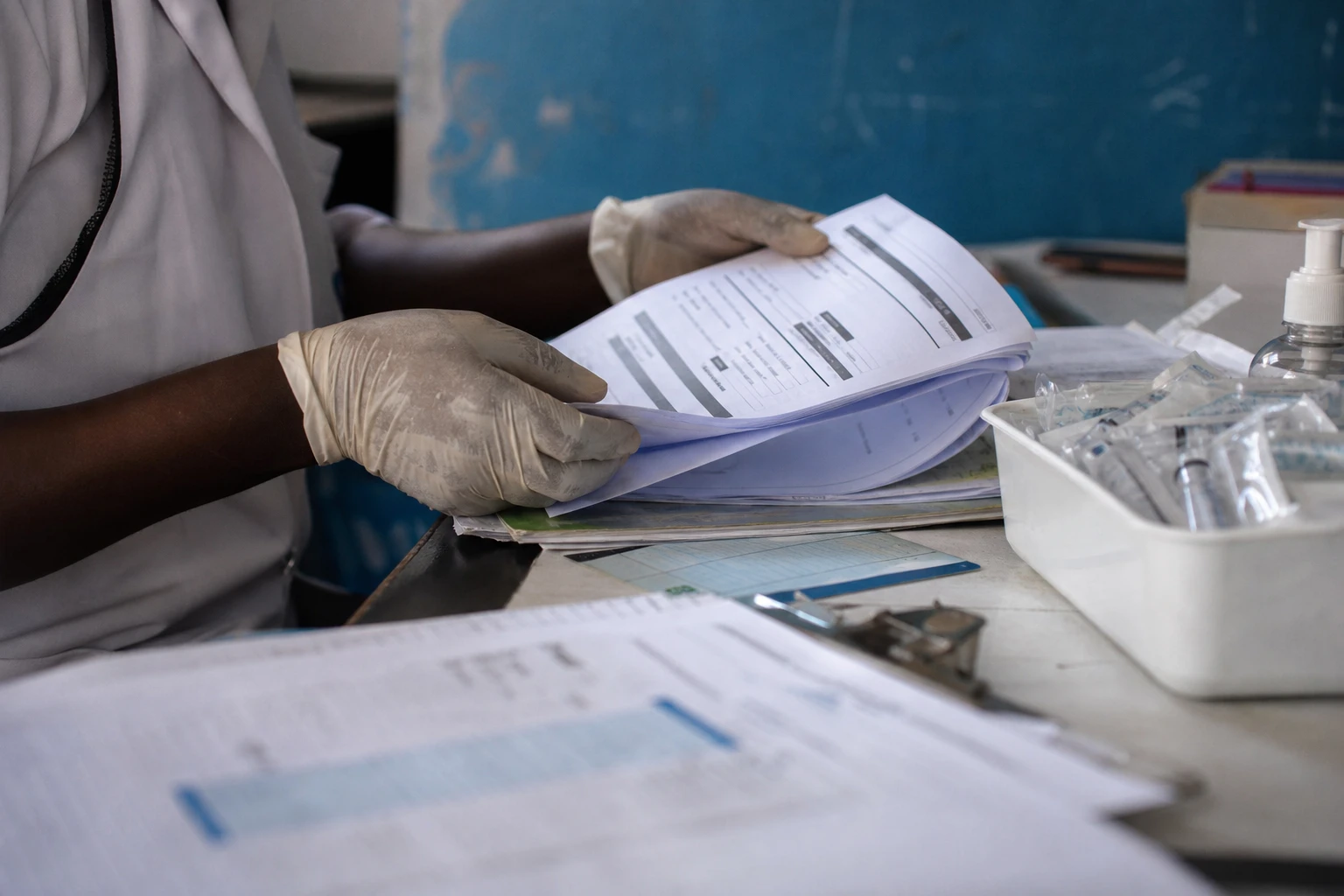
When an epidemic spreads, it is often the same families who pay the price first
In eastern Democratic Republic of the Congo, a fast-spreading disease never travels alone. It encounters difficult roads, forced displacement, overwhelmed health centres and areas where humanitarian access remains precarious. This combination makes the health crisis more severe than the case figures alone suggest.
Since 15 May 2026, the DRC has been facing its 17th Ebola outbreak, this time caused by the Bundibugyo virus. The WHO confirmed the alert on 17 May and deemed the situation to be of international concern, prompting a mobilisation beyond Congo’s borders, extending to Uganda and South Sudan.
At the same time, authorities and humanitarian partners describe rapid geographical spread towards Ituri, North Kivu, South Kivu, then Haut-Uele and Tshopo. By 21 May, the WHO had already reported 83 confirmed cases and 9 deaths among confirmed cases in the DRC, alongside 746 suspected cases and 176 deaths among suspected cases. On 13 July, UNICEF reported 2,111 confirmed cases and 750 deaths across five provinces. These differences mainly reflect different reporting dates, not contradictory realities.
Ebola, measles, cholera: three health emergencies on the same ground
Eastern Congo remains a place where crises overlap. The WHO says the current outbreak is affecting a region marked by insecurity, population movements and inadequate systems for referring patients. In this context, contact tracing becomes more difficult, and medical teams often have to work around road conditions, checkpoints and local tensions.
The Ebola alert comes on top of measles and cholera. On measles, Médecins Sans Frontières reported that, nationwide, more than 108,643 suspected cases and 1,394 deaths had been recorded between January and 19 July 2026, according to the official figures it cited. North Kivu and South Kivu alone accounted for more than 50,820 suspected cases. The organisation also carried out several interventions in the two provinces, treating more than 12,050 patients and vaccinating more than 283,150 children.
Cholera, meanwhile, continues to weigh on the same vulnerable communities. UNICEF says that seventeen of the country’s twenty-six provinces are affected, including Kinshasa, and notes that basic access to water remains very low, with only 43% of the population covered, according to the 2024-2025 DHS. The agency also stresses that conflict, displacement and flooding worsen transmission.
In July, figures reported by Congolese media and the WHO put the toll since January 2026 at at least 106,401 suspected cholera cases and 3,124 deaths. Here, too, the trend matters as much as the snapshot: the disease is taking root in areas where drinking water, sanitation and prompt treatment remain inadequate.
What war changes in hospitals, markets and villages
In eastern DR Congo, insecurity is not confined to front lines. It restricts ambulance travel, blocks vaccination teams, delays contact tracing and keeps patients away from treatment centres. The WHO describes contact tracing and patient isolation as “difficult”, while humanitarian agencies point to weak referral systems in some areas.
The consequences are very tangible. In cities, especially Goma and along major routes, the pressure falls first on hospitals, medicine stocks and emergency services. In rural areas, the challenge is even more severe: a health centre may be far away, a road impassable, and a rumour may be enough to delay a consultation. UNICEF says that more than 6.3 million displaced people are currently living in the DRC, mainly in Ituri, North Kivu and South Kivu.
Health workers are also at risk. The WHO reported four deaths among health workers at the start of the outbreak, and the United Nations has reported security incidents around treatment facilities. When teams are threatened, the response slows and distrust among communities grows. It is a familiar cycle, but one that always comes at a cost.
On 22 and 23 May, a ministerial meeting in Kampala focused on cross-border coordination. The health ministers of the DRC, Uganda and South Sudan, backed by Africa CDC, the WHO and UNICEF, stressed that trade and mining corridors make a regional response essential. The DRC is not alone in this equation, and the response must involve border surveillance as well as hospitals.
A Congolese crisis, but also a test for Central Africa and the Great Lakes
This issue says something broader about African public health. In the Great Lakes region, an epidemic almost never remains confined to one province. It follows markets, displaced families, trade routes and labour migration. That is why the Ebola alert in the DRC immediately concerned Uganda, and then regional preparedness mechanisms.
The DRC, a member of the East African Community and SADC, sits at the crossroads of several integration blocs. Its ability to contain Ebola, measles and cholera therefore matters well beyond Kinshasa. It affects confidence in border crossings, the continuity of trade and the burden on neighbouring health systems.
The real challenge now is managing simultaneous emergencies. If the response focuses all its attention on Ebola, measles and cholera will gain ground. If resources are spread too thinly, no front will hold. This is the message running through statements by UNICEF, MSF, the WHO and OCHA: in eastern Congo, public health is at stake in laboratories, villages, cross-border corridors and emergency budgets alike.



