Algeria
 Egypt
 Libya
 Morocco
 Sudan
 Tunisia
 Benin
 Burkina Faso
 Cabo Verde
 Côte d'Ivoire
 Ghana
 Guinea
 Guinea-Bissau
 Liberia
 Mali
 Mauritania
 Niger
 Nigeria
 Senegal
 Sierra Leone
 The Gambia
 Togo
 Cameroon
 Central African Republic
 Chad
 Equatorial Guinea
 Gabon
 Republic of the Congo
 São Tomé and Príncipe
 Burundi
 Comoros
 Djibouti
 Eritrea
 Ethiopia
 Kenya
 Madagascar
 Malawi
 Mauritius
 Mozambique
 Rwanda
 Seychelles
 Somalia
 South Sudan
 Tanzania
 Uganda
 Angola
 Botswana
 Eswatini
 Lesotho
 Namibia
 South Africa
 Zambia
 Zimbabwe
A strategic metal worth far more than cables
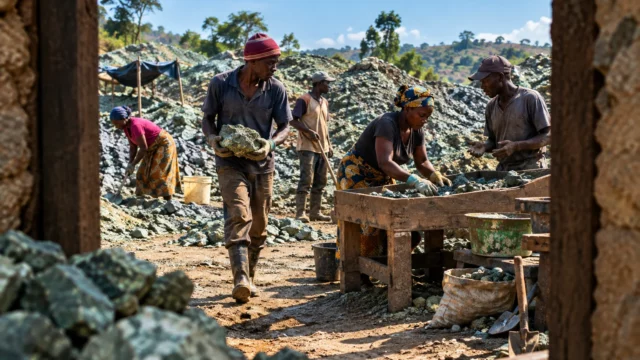
In global value chains, copper does more than carry electricity. It also reveals where capital, contracts and bargaining power are shifting. For the Democratic Republic of the Congo, the metal has become an economic lever, but also a test of commercial sovereignty, as Kinshasa seeks to sell more beyond the Asian channels that still dominate its mining flows.
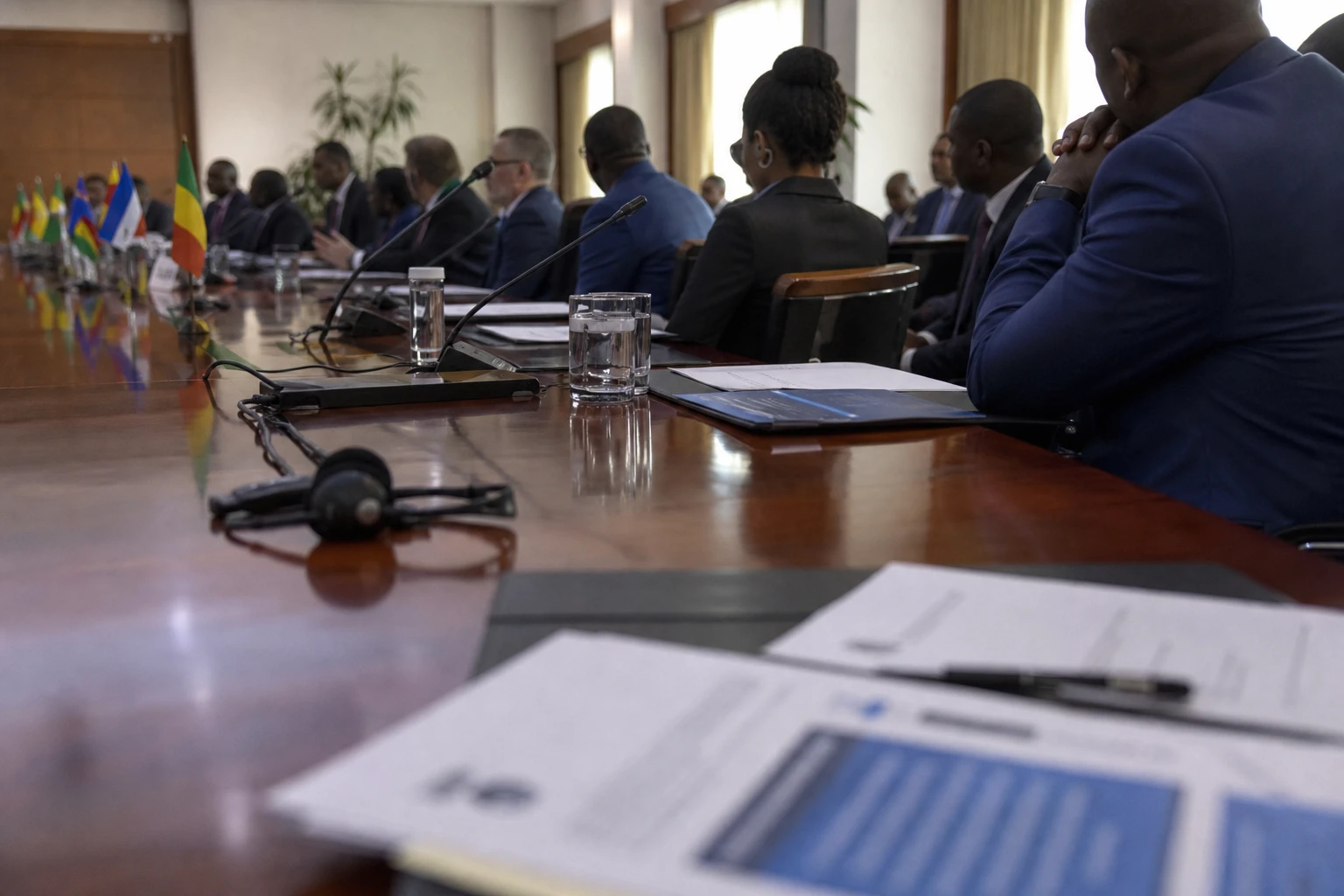
This shift is taking place within a specific regional framework. The DRC belongs to the Southern African Development Community, SADC, and also plays a central role in the Great Lakes region, where critical minerals are at the heart of power dynamics. Since December 2025, Kinshasa and Washington have formalised a strategic partnership that Congolese authorities have presented as a tool for peace, industrialisation and economic transformation. The Prime Minister’s Office then outlined, in February and June 2026, the establishment of monitoring and financing mechanisms linked to the agreement.
Exports to the United States gather pace
The trend is visible in the available figures. In July 2026, the United States imported 225,094 tonnes of refined copper and alloys, a record level, according to trade data reported by Reuters and cited by several specialist sources. Of this total, about 46% came from Chile, the world’s leading producer of mined copper, while the DRC ranked second with nearly a quarter of imports, signalling a rapid shift in US supply.
The increase has not come out of nowhere. In the first seven months of 2026, US copper imports exceeded 1.12 million tonnes, up on the same period in 2025, according to data cited by Reuters. Meanwhile, Congolese mining statistics show that the share of copper sales destined for the United States and Europe rose in the first half of 2026, with a further shift towards Western markets compared with 2025.
For the Congolese government, this direction reflects a deliberate political choice. The authorities want to reduce dependence on the “Chinese circuit” — the ecosystem of buyers, traders and investors linked to China, which has a strong presence in the DRC’s mining sector. The aim is simple: capture more value locally and sell a larger share of production to other markets, particularly in the United States and Europe. Gécamines, the long-established state-owned mining company, plays a key role through its right to take a share of certain output from state-held interests.
Why Kinshasa is looking west
This repositioning is driven by economic imperatives. Copper remains the DRC’s largest source of export revenue, and stable markets account for part of its foreign-currency inflows. By diversifying its buyers, Kinshasa aims to reduce its vulnerability to a single centre of demand, improve pricing terms and increase the value captured by the state. This is not simply a change of customer: it is an attempt to regain control of the commercial chain in a sector where Congolese production is often integrated into highly concentrated cross-border networks.
The international context also helps explain the shift. The United States has increased its focus on critical minerals, particularly for industrial and strategic reasons. Congolese official documents, as well as the partnership signed in December 2025, emphasise “secure, reliable and sustainable” supply chains and the Lobito Corridor, an infrastructure project described as essential for linking the region’s mining areas to Atlantic markets. In this context, Congolese copper is no longer circulating merely as a commodity: it has become an element of economic diplomacy.
Private-sector players are following suit. In 2026, deals such as the purchase of copper and cobalt producer Chemaf and investment projects around mines linked to Glencore illustrated US interest in Congolese mining assets. In Kinshasa, this presence could open up access to capital, wider markets and stronger infrastructure. But it also raises a familiar question: how can investors be attracted without selling off mining revenues cheaply or allowing the share accruing to the public purse to erode?
What this means for the Congolese economy
On the ground, the stakes go beyond export tables. If volumes destined for the United States continue to rise, the DRC can hope for more predictable revenue, stronger bargaining power and, over time, greater credibility with international financiers. But the impact will remain limited unless local processing keeps pace. Value is created mainly in refining, transport, logistics and, eventually, industry. Without these links, the country remains exposed to price fluctuations and decisions made far from Kinshasa.
The authorities have recognised this. A task force to monitor DRC–US economic agreements was established in August 2026, showing that the issue is now being treated as an interministerial priority. At the same time, Kinshasa has taken a tougher line on copper and cobalt concentrates, aiming to encourage more local processing and retain more value in the country. This strategy could boost industrial employment around the mining areas of Lualaba and Haut-Katanga, but it also requires energy, rail and customs capacity to match the stated ambitions.
The signal to the region is clear. The DRC remains one of the pillars of Africa’s mining economy, thanks to both its copper and its cobalt. What is at stake in Kinshasa therefore goes beyond a simple change of customer. It is a contest over Central Africa’s place in the global energy transition, control of export corridors and the ability of African states to exert greater influence over the terms of trade in critical minerals. The coming months will show whether the US market becomes a lasting outlet or merely a window of favourable prices in a still-volatile cycle.