Algeria
 Egypt
 Libya
 Morocco
 Sudan
 Tunisia
 Benin
 Burkina Faso
 Cabo Verde
 Côte d'Ivoire
 Ghana
 Guinea
 Guinea-Bissau
 Liberia
 Mali
 Mauritania
 Niger
 Nigeria
 Senegal
 Sierra Leone
 The Gambia
 Togo
 Cameroon
 Central African Republic
 Chad
 Equatorial Guinea
 Gabon
 Republic of the Congo
 São Tomé and Príncipe
 Burundi
 Comoros
 Djibouti
 Eritrea
 Ethiopia
 Kenya
 Madagascar
 Malawi
 Mauritius
 Mozambique
 Rwanda
 Seychelles
 Somalia
 South Sudan
 Tanzania
 Uganda
 Angola
 Botswana
 Eswatini
 Lesotho
 Namibia
 South Africa
 Zambia
 Zimbabwe
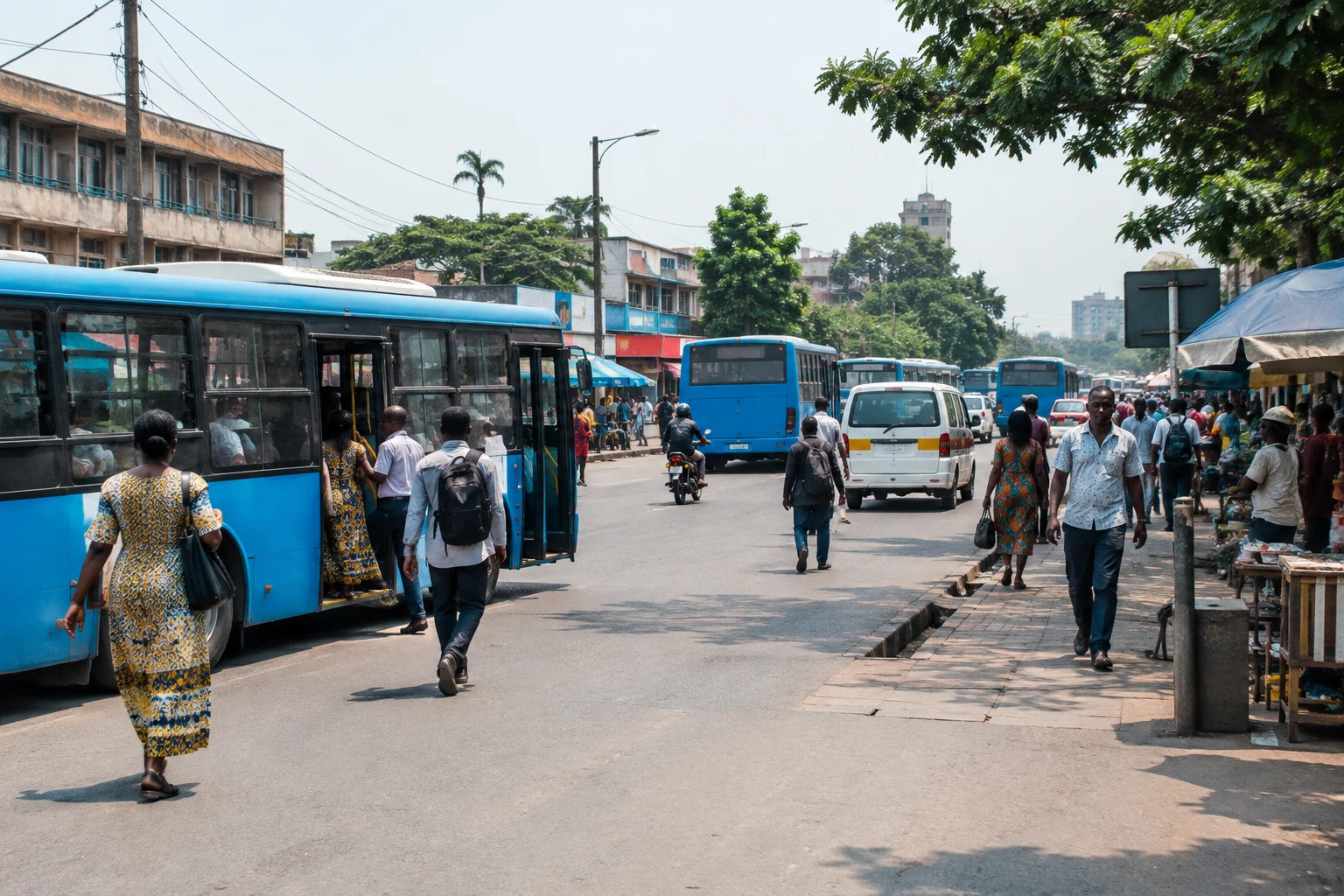
For residents of Kinshasa, Lubumbashi and Mbuji-Mayi, urbanisation is measured in everyday terms: time spent travelling, access to water and electricity, and housing security. In the Democratic Republic of the Congo (DRC), the government wants to coordinate these issues through a 10-year plan whose funding has yet to be secured.
Presented on 14 October 2026 by Alexis Gisaro Muvunyi, Minister of State for Urban Planning and Housing, the 2026-2035 Decennial Urban Planning and Housing Plan sets out an ambition of $16.5bn. This figure refers to resources to be raised, not funding already secured. Congolese media, including LePoint.cd and the Congolese National Radio and Television, have also reported on the programme’s presentation.
Urban needs extend beyond Kinshasa
Urban growth in the DRC does not follow a single pattern. Kinshasa accounts for a significant share of needs, while the southern mining cities, eastern centres and urban areas of Kasai face other pressures. An analysis of the DRC economy by the World Bank highlights these regional differences and the impact of rapid urbanisation.
The housing deficit is estimated at around four million units, a figure cited by Radio Okapi, which attributes it to UN-Habitat. For households, the shortage of affordable homes goes hand in hand with difficulties accessing services and securing land tenure. The authorities say they aim to increase urban access to drinking water from 52% to 80%, and to electricity from 45% to 75%, by 2035.
The programme also aims to help 500,000 households access decent housing, establish 62,000 hectares of land reserves and adopt 26 urban master plans. These are government targets. Achieving them will depend in particular on land availability, land regulations and the ability of local authorities to plan and then monitor projects.
Funding announced, financing still to be secured
Kinshasa features prominently in the priorities presented. An allocation of $6.4bn is announced for development and transport plans for the metropolitan area, including sanitation, bus rapid transit and urban rail. Four billion dollars would go to secondary cities and economic corridors, including Lobito. The plan also provides for $3bn for major urban areas, $2.3bn for housing and the future Housing Bank, and $750m for urban resilience and erosion control.
The itemised sums total nearly $16.46bn, close to the overall allocation announced. Funding is to be sought from several sources: $6bn from public-private partnerships (PPPs), $5.6bn from international donors and $2bn from the public treasury, plus $1.36bn in urban planning taxes. The plan also mentions $6.9m for governance, planning and monitoring. The announcements do not yet specify which donors have committed, or the disbursement timetable.
A PPP brings together public bodies and private companies to finance or deliver infrastructure. Such an arrangement can speed up some projects, but requires transparent contracts and a clear allocation of risks. It will be important to establish who will pay for services, how tariffs will be set and what public guarantees will be provided. These choices will have different consequences for investors, state finances and users, particularly low-income households and workers in the informal economy.
The government also plans to turn the National Housing Fund (FONHAB) into a Housing Bank. It is expected to mobilise savings and support mortgage lending. But its role will depend on its effective establishment, governance rules and the accessibility of loans. The project also aims to regulate self-build housing, as many households build their homes gradually.
Projects must be defined before attracting capital
Preparatory studies are to specify priorities and the technical and financial viability of projects in nine cities: Kinshasa, Lubumbashi, Kisangani, Mbuji-Mayi, Kolwezi, Kananga, Tshikapa, Likasi and Matadi. The digitisation of the building-permit application service has also been announced. It could simplify procedures, provided the tools are accessible and administrative responsibilities are clearly defined.
A practical challenge will be coordination between ministries, provinces and cities. Transport, sanitation, housing and land management projects often overlap. It will also be necessary to distinguish new needs from investments already planned. Without this clarification, it will be difficult to assess what the announced allocation will actually fund and to avoid duplication.
Land issues will also weigh on implementation. The announced reserves will have to be identified without disregarding residents’ rights and existing uses. In areas exposed to erosion or flooding, planning will need to link housing, drainage and risk prevention, rather than treating these projects separately.
A regional urban planning challenge
The DRC is a member of the Southern African Development Community (SADC), a regional organisation that also addresses the risks associated with rapid urbanisation. The SADC highlights the links between unplanned urban expansion, inequality and exposure to disasters. For the DRC, economic corridors add a regional dimension: urban infrastructure can support trade, but the benefits will depend on local connections and people’s access to services.
The next step, then, is less about announcing an allocation than publishing detailed projects, timetables and verifiable financial commitments. By 2035, indicators of access to water and electricity, the number of homes actually made accessible and progress on master plans will provide a basis for judging results. For Congolese people, the programme’s impact will be measured in neighbourhoods and cities, beyond the figures on paper.