Algeria
 Egypt
 Libya
 Morocco
 Sudan
 Tunisia
 Benin
 Burkina Faso
 Cabo Verde
 Côte d'Ivoire
 Ghana
 Guinea
 Guinea-Bissau
 Liberia
 Mali
 Mauritania
 Niger
 Nigeria
 Senegal
 Sierra Leone
 The Gambia
 Togo
 Cameroon
 Central African Republic
 Chad
 Equatorial Guinea
 Gabon
 Republic of the Congo
 São Tomé and Príncipe
 Burundi
 Comoros
 Djibouti
 Eritrea
 Ethiopia
 Kenya
 Madagascar
 Malawi
 Mauritius
 Mozambique
 Rwanda
 Seychelles
 Somalia
 South Sudan
 Tanzania
 Uganda
 Angola
 Botswana
 Eswatini
 Lesotho
 Namibia
 South Africa
 Zambia
 Zimbabwe
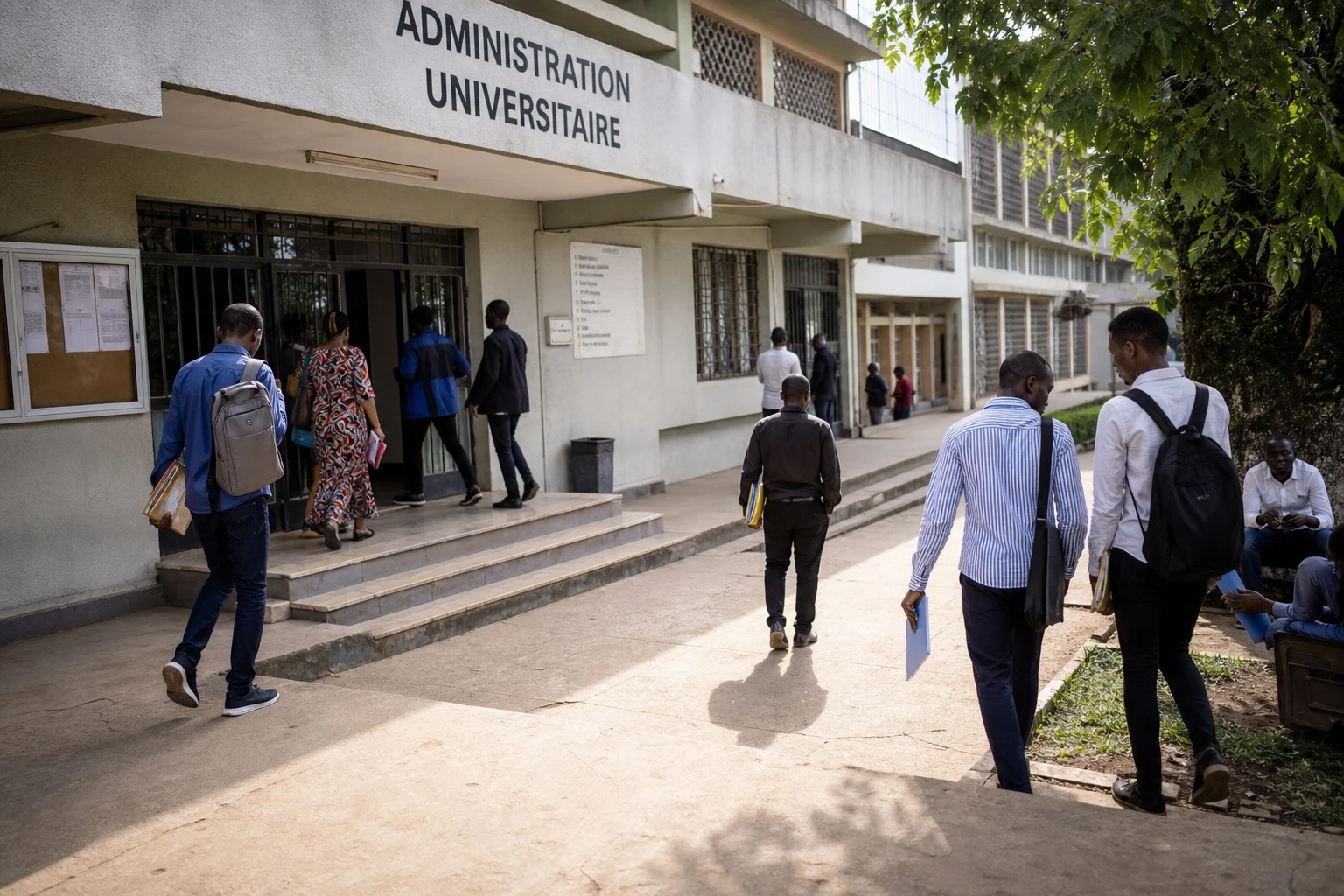
In Goma and Bukavu, education becomes an issue of sovereignty
In the east of the Democratic Republic of the Congo, the start of the academic year is never just a matter of the calendar. It also shows who administers the territory, who protects families and who decides students’ futures. Just days before 1 September 2026, Kinshasa has opted to suspend academic activities at several public institutions in Goma and Bukavu, two cities in North Kivu and South Kivu that have come under AFC/M23 control.
The move is as political as it is administrative. It comes in an area where the central government is seeking to reassert its authority, while the AFC/M23 movement, described by the UN as a politico-military force allied with M23 and active in the Congolese east, is trying to consolidate its own local governance mechanisms. In this power struggle, universities and higher institutes are not merely places of learning: they are becoming symbols of legitimacy.
Decision announced amid already heightened tensions
On 25 August 2026, the Congolese Ministry of Higher and University Education, Scientific Research and Innovation published an order temporarily suspending academic activities at several public institutions in Goma and Bukavu. The measure targets, in particular, leading institutions in the two provincial capitals, where the authorities in Kinshasa are contesting appointments made by AFC/M23 to university management positions.
The government says its decision is necessary to protect students, safeguard the continuity of their studies and prevent degrees from being undermined by decisions made outside the national legal framework. It has also announced special measures to ensure continuity of education, allowing students from areas affected by the conflict to be admitted and guided.
The suspension does not come out of the blue. On 19 August 2026, the Ministry of National Education and New Citizenship confirmed that the 2026-2027 school year would begin on 1 September across the national territory, with a differentiated system in areas hit by Ebola. This clarification highlights a key point: the Congolese state wants to retain control of the education calendar, even when security or public health concerns require adjustments.
Higher education caught up in the power struggle
In Goma and Bukavu, tensions go beyond the question of classes. According to publicly available information, the dispute erupted after AFC/M23 appointed new officials to several management committees at public institutions. Kinshasa denounced the appointments as illegal and then decided to suspend academic activities in the areas concerned.
The AFC/M23’s response was immediate. The movement rejected the decision, described it as the politicisation of the university sector and called on institutions to continue their activities. Its response is part of a broader battle over control of public services in the Congolese east: administration, security, finance and now higher education.
The Doha process remains open, however. On 22 August 2026, a joint statement confirmed that representatives of the Congolese government and AFC/M23 had met in Switzerland, with the support of Qatar, the United States, Switzerland, the African Union and its Togolese mediator, to assess implementation of the peace framework signed in Doha in November 2025. The parties discussed a monitoring mechanism and a roadmap for the next steps in the negotiations.
The suspension of classes therefore sends a contradictory signal. On the one hand, Kinshasa says it will not yield on administrative sovereignty. On the other, maintaining a peace dialogue requires steps towards de-escalation. Caught between these two demands, students are the first to be exposed.
What this means for families and the region
On the ground, the measure could disrupt the studies of thousands of students. In Goma and Bukavu, many families have already seen their daily lives burdened by insecurity, restricted movement and economic pressure. A prolonged suspension of classes adds an immediate cost: delayed exams, uncertainty over transfers, a loss of direction for final-year students and a decline in the small incomes linked to university life.
For teachers and administrative staff, the stakes are just as tangible. The debate is not only about appointments. It also concerns pay, recognition of management decisions and the validity of decisions made in a fragmented territory. When two authorities vie for control of the same institution, the entire academic system is shaken.
The implications also extend beyond the DRC. The country’s east remains a regional hub where security, diplomacy and the movement of goods and people across the Great Lakes intersect. The African Union, Qatar, the United States and Switzerland are already involved in mediation. In this context, every decision affecting education tests governance: can public authority be restored without further disrupting social life?
The answer will also say much about the balance of power to come between Kinshasa and the de facto authorities in some areas of the east. If the Doha negotiations make progress, education could provide a platform for easing tensions. If they stall, universities will remain one of the most visible fronts in the fragmentation of the Congolese state.