Algeria
 Egypt
 Libya
 Morocco
 Sudan
 Tunisia
 Benin
 Burkina Faso
 Cabo Verde
 Côte d'Ivoire
 Ghana
 Guinea
 Guinea-Bissau
 Liberia
 Mali
 Mauritania
 Niger
 Nigeria
 Senegal
 Sierra Leone
 The Gambia
 Togo
 Cameroon
 Central African Republic
 Chad
 Equatorial Guinea
 Gabon
 Republic of the Congo
 São Tomé and Príncipe
 Burundi
 Comoros
 Djibouti
 Eritrea
 Ethiopia
 Kenya
 Madagascar
 Malawi
 Mauritius
 Mozambique
 Rwanda
 Seychelles
 Somalia
 South Sudan
 Tanzania
 Uganda
 Angola
 Botswana
 Eswatini
 Lesotho
 Namibia
 South Africa
 Zambia
 Zimbabwe
An old but still sensitive case
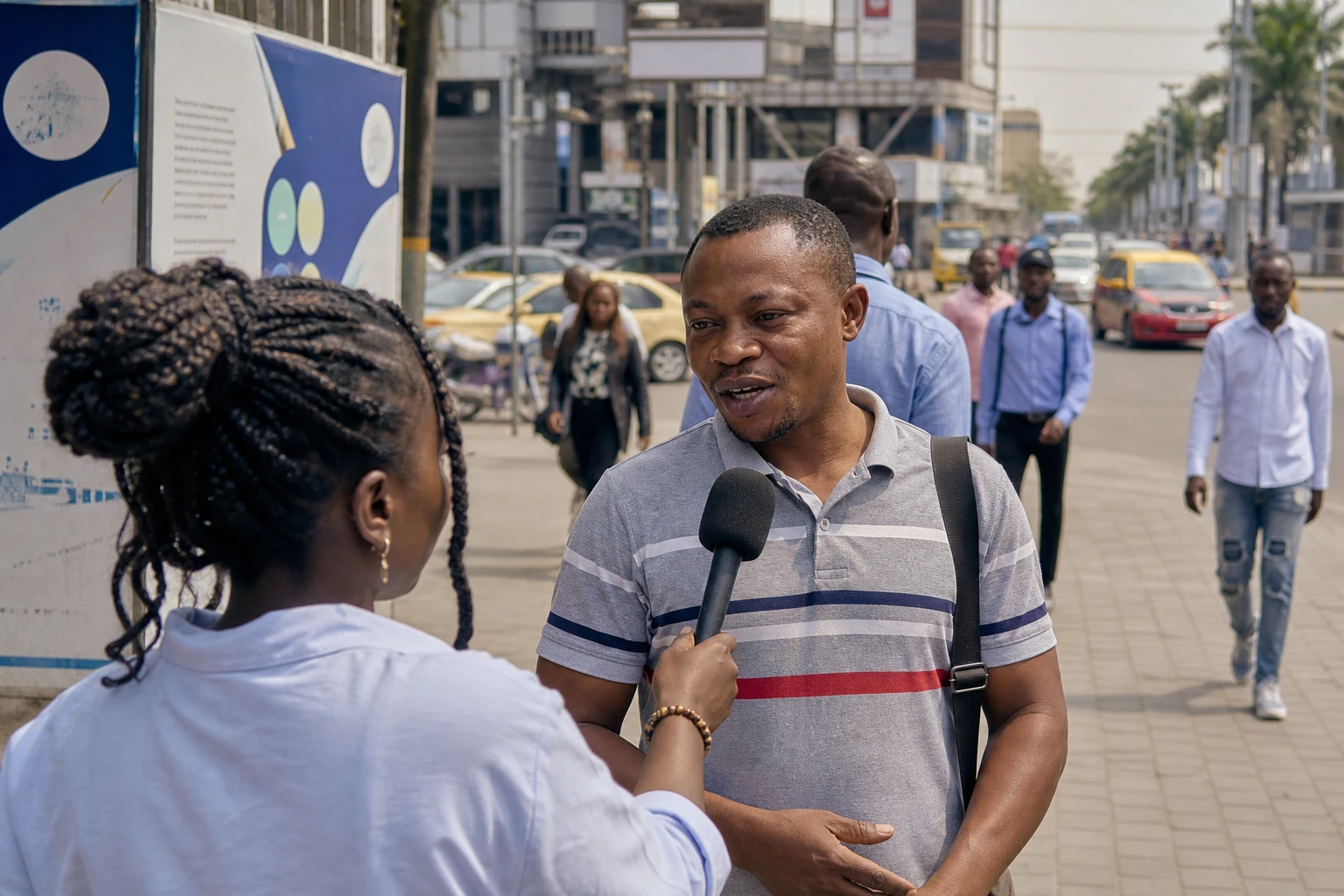
In the Democratic Republic of the Congo, a passport is more than a travel document. It is also a symbol of the state, a means of accessing mobility and, sometimes, a revealing indicator of how public contracts are captured or diverted. The case of the biometric passports entrusted to Semlex illustrates this intersection of public service, alleged corruption and the flow of money beyond citizens’ oversight.
The issue resonates all the more in Kinshasa because the fight against embezzlement remains central to public life in the DRC, while several transnational investigations in recent years have shown how networks operating between the DRC, Belgium and other financial centres can reach sectors as strategic as raw materials, public finances and identity documents.
What the Belgian courts have decided
On 1st September 2026, the Belgian courts referred 14 defendants to a criminal court in the Congolese biometric passport case. They include Albert Karaziwan, head of Semlex, and Emmanuel Adrupiako, a former financial adviser to Joseph Kabila. The other people implicated remain, for the time being, protected by the secrecy of the investigation and the presumption of innocence.
This judicial step does not bring the case to a close. On the contrary, it opens the public phase of legal proceedings that have been under way in Belgium for nearly nine years. The civil parties include Congolese citizens, human rights associations and anti-corruption organisations, including FIDH, the Human Rights League, UNIS and Transparency International Belgium.
In the view put forward by the complainants, this referral marks an important first: for the first time, a Belgian company and its head must answer before a Belgian criminal court for alleged acts of international corruption linked to an African public contract.
The contract, the cost and the allegations
The case dates back to the agreement signed in 2015 for the production of the DRC’s biometric passports. At the time, the Congolese travel document was among the most expensive in the world, at $185 each. Investigations published in 2017 by Reuters and reported by Africanews indicated that only part of this sum went to the Congolese state, while a company based in the United Arab Emirates, LRPS, received $60 per passport, according to documents examined by journalists.
The same body of evidence fuelled suspicions of kickbacks and embezzlement. According to these investigations, financial flows surrounding the contract were used to fund intermediaries and pay people linked to the government of the time. The figure of $60 million embezzled appeared in the reports, but it must remain attributed to the investigations that put it forward, as no court has established that amount at this stage.
One event triggered the investigation in Belgium: in January 2017, at Zaventem Airport, an intermediary linked to the contract was arrested with $400,000 in cash. The seizure was the starting point from which investigators traced the chain of suspicions.
Why Kinshasa is directly concerned
For Congolese people, the stakes go beyond the fate of 14 defendants. They concern the credibility of the state in a sensitive area: identity. When a passport becomes an overpriced product, poorly distributed and surrounded by opaque intermediaries, the relationship between the administration and citizens is weakened. This particularly penalises ordinary households, for whom the cost of the document is a substantial expense, sometimes essential for work, study or travel.
The case also says something about the relationship between the DRC and its foreign partners. Belgium is not only the former colonial centre; it is also a judicial venue where some African cases find an outlet when local avenues remain limited or overwhelmed. In this particular case, the Belgian proceedings have become a forum for confronting transnational corruption, with responsibility attributed to European private operators, intermediaries and alleged Congolese political beneficiaries alike.
Congolese civil society organisations see the referral as a useful precedent. They hope that, in time, it will help inform other proceedings in the DRC concerning local responsibility. This expectation matters in a country where the demand for accountability is strong, but major corruption cases often run up against political power dynamics, lengthy investigations and the difficulty of tracing complex financial networks.
A significance that extends beyond the DRC
The Semlex case is part of a wider sequence of cases in which Europe-based companies have been accused of selling African public services at inflated prices, with kickbacks in the background. OCCRP’s investigations into Semlex showed that the company had built a model based on biometric documents and influence networks in several African countries.
For Central Africa, the case is also a reminder that civil registration, mobility and access to official papers have become matters of sovereignty as well as governance. In a region where people, capital and goods move across several economic areas, transparency in public contracts matters as much as the technology of the equipment supplied.
The next stage will play out before the Belgian criminal court. But the real impact will also be measured in Kinshasa, by the ability of Congolese institutions to take back control of sensitive contracts, clarify past responsibilities and ensure that basic services such as passports do not once again become a mirror of predation.