Algeria
 Egypt
 Libya
 Morocco
 Sudan
 Tunisia
 Benin
 Burkina Faso
 Cabo Verde
 Côte d'Ivoire
 Ghana
 Guinea
 Guinea-Bissau
 Liberia
 Mali
 Mauritania
 Niger
 Nigeria
 Senegal
 Sierra Leone
 The Gambia
 Togo
 Cameroon
 Central African Republic
 Chad
 Equatorial Guinea
 Gabon
 Republic of the Congo
 São Tomé and Príncipe
 Burundi
 Comoros
 Djibouti
 Eritrea
 Ethiopia
 Kenya
 Madagascar
 Malawi
 Mauritius
 Mozambique
 Rwanda
 Seychelles
 Somalia
 South Sudan
 Tanzania
 Uganda
 Angola
 Botswana
 Eswatini
 Lesotho
 Namibia
 South Africa
 Zambia
 Zimbabwe
A tense reopening, but the country does not come to a halt
On the morning of 1 September, the Democratic Republic of Congo reopened its classrooms in an unusual atmosphere. In several cities, school gates opened. But the pupils did not always follow. Between fears of Ebola, insecurity in the east and the cost-of-living pressures facing households, this school reopening revealed an education system that is holding up, but with visible weaknesses. The authorities say about 31 million pupils are expected for the 2026-2027 school year. That is a considerable number, requiring the state to contend with very different realities from one province to another.
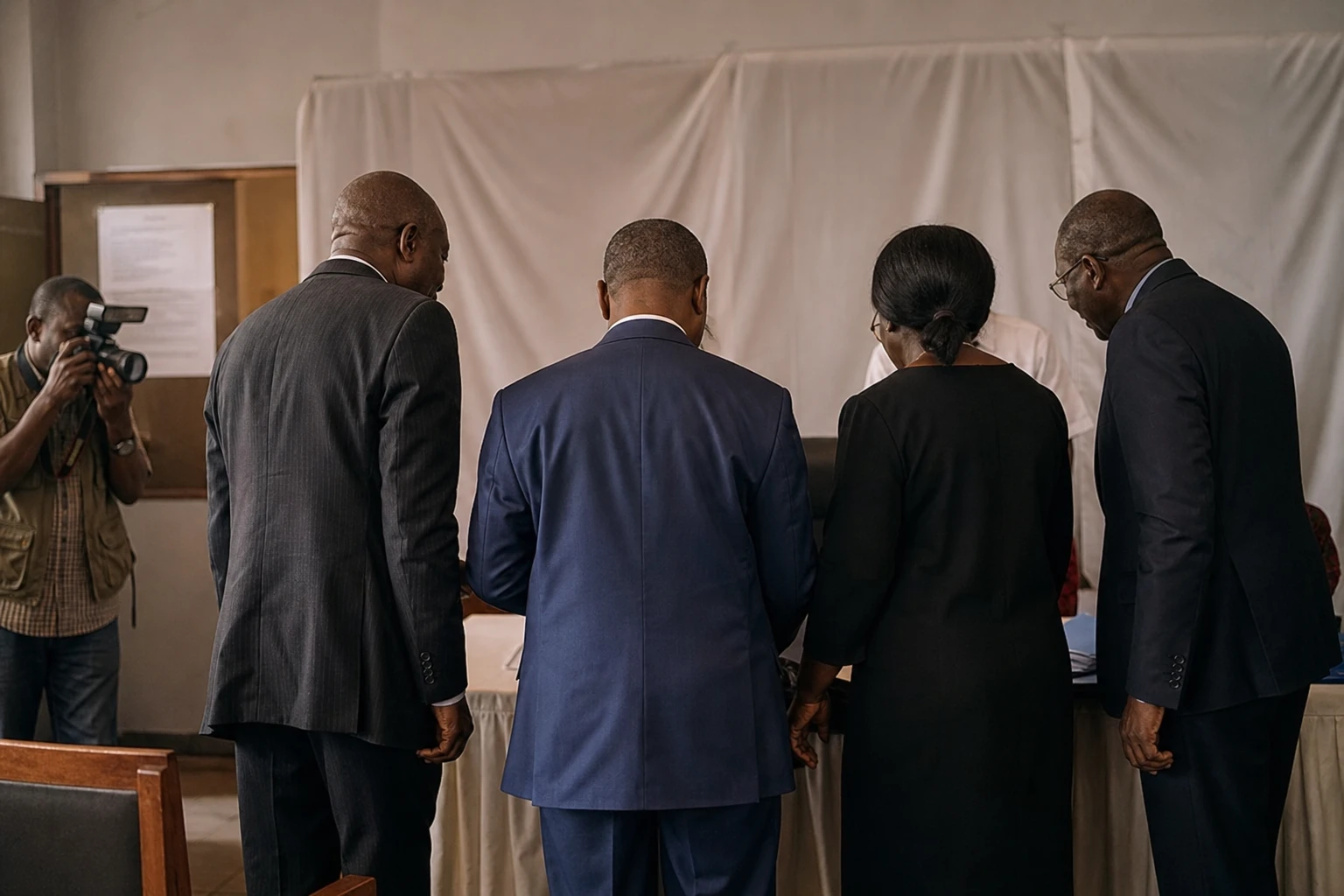
The official launch took place in N’Sele, on the outskirts of Kinshasa, where the Minister of National Education and New Citizenship confirmed that classes had resumed across the country, while acknowledging that conditions were not in place everywhere. This clarification says much about the situation in Congo: there is a national calendar, but its implementation still depends on the security, health and logistical situation in each area. In the east, war, population displacement and epidemics continue to weigh on schooling.
Schooling varies widely from province to province
In Kinshasa, the streets remained relatively calm and the return to school was largely routine. In Bukavu, in South Kivu, private schools reopened while some public schools chose to wait for more clarity. In Walikale-centre, in North Kivu, teachers were already there early in the morning. Classes also began in Kitshanga, in Masisi territory. These contrasts are a reminder that the return to school in Congo is never uniform. It plays out neighbourhood by neighbourhood, territory by territory, often according to local security conditions and the resources available to families.
In places such as Kiwanja, in Rutshuru territory, the challenge is not limited to opening the school. Children still have to be enrolled, uniforms found, exercise books bought and the bare minimum assembled to get back to school. When incomes are irregular, these expenses become a social filter. Poor urban families, displaced people and rural households affected by insecurity are the first to delay or give up. In these circumstances, the return to school measures not only the state of the education system. It also measures how much a household can withstand.
Ebola, another factor emptying classrooms
The main shock to this school reopening is the Ebola outbreak affecting six provinces, including Ituri, North Kivu, South Kivu, Tshopo, Haut-Uele and Bas-Uele. The World Health Organization says the current outbreak is linked to the Bundibugyo virus and is spreading across several health zones in the east and north-east of the country. It has described the outbreak as the largest ever documented in the DRC. In this context, schools are sensitive places because they bring children, teachers and parents together in enclosed spaces where preventive measures must be visible and consistent.
In Bunia, the capital of Ituri, preventive measures were in place from the morning: handwashing, temperature checks and health vigilance. But classrooms remained largely empty. Union representatives spoke of teachers being present but many pupils being absent. Their observation reflects families’ concerns: they do not want to expose their children to a disease about which public information remains difficult for households far from urban centres to follow. The state kept schools open, but public buy-in remains incomplete.
In Beni, the provisional capital of North Kivu, some public-sector teachers even boycotted the reopening, citing Ebola, and pupils who had turned up were sent home. Such disruption has immediate consequences: it breaks the rhythm of learning, throws families’ lives into disarray and widens the gap between areas where schools are functioning and those where they are interrupted intermittently. In several provinces, the government has planned a differentiated approach, with in-person classes continuing where possible and remote learning used elsewhere. On paper, the logic is sound. On the ground, it requires resources, electricity, networks, equipment and trained teachers.
What this school reopening says about the Congolese state
This school reopening first of all speaks to the role of education in the country’s stability. In the DRC, public schools remain one of the few services that reach almost the entire population. When they slow down, the whole social balance is shaken. Children stay at home, parents reorganise their day, teachers contend with uncertainty, and provincial authorities become crucial links. Coordination between Kinshasa and the provinces is therefore not a mere administrative detail. It determines whether the right to education is genuinely accessible.
The case of Ituri is particularly telling. The province faces an outbreak, families’ distrust, a need for handwashing kits and difficulty making awareness-raising part of daily routines. When schools still lack water, soap or chlorine, prevention becomes theoretical. In more stable areas, such as parts of Kinshasa or the west of the country, the challenge is different: above all, it is to keep children in the education system despite household poverty and the high cost of supplies. Two distinct problems, but one possible outcome: children quietly dropping out of school.
The 2026-2027 school year also falls within a broader period of upheaval. For several years, the DRC has alternated between education reforms, closures linked to health crises and disruptions caused by armed conflict. September’s events therefore do not simply mark the start of a school year. They show how a Central African country continues to keep its education system running amid overlapping shocks. That is where the continental challenge lies: for the African Union and regional organisations, the question is not merely how to reopen schools, but how to ensure they stay open when public health, security and purchasing power collapse in the same place.
In the coming days, the real test will be easy to read: how many schools maintain regular attendance, how many pupils return after the first day, and in which provinces the combination of insecurity, Ebola and economic hardship continues to empty classrooms. The answer will say far more than the reopening ceremony. It will show whether the Congolese education system is recovering, adapting or resisting.