
 Algeria
 Egypt
 Libya
 Morocco
 Sudan
 Tunisia
 Benin
 Burkina Faso
 Cabo Verde
 Côte d'Ivoire
 Ghana
 Guinea
 Guinea-Bissau
 Liberia
 Mali
 Mauritania
 Niger
 Nigeria
 Senegal
 Sierra Leone
 The Gambia
 Togo
 Cameroon
 Central African Republic
 Chad
 Equatorial Guinea
 Gabon
 Republic of the Congo
 São Tomé and Príncipe
 Burundi
 Comoros
 Djibouti
 Eritrea
 Ethiopia
 Kenya
 Madagascar
 Malawi
 Mauritius
 Mozambique
 Rwanda
 Seychelles
 Somalia
 South Sudan
 Tanzania
 Uganda
 Angola
 Botswana
 Eswatini
 Lesotho
 Namibia
 South Africa
 Zambia
 Zimbabwe
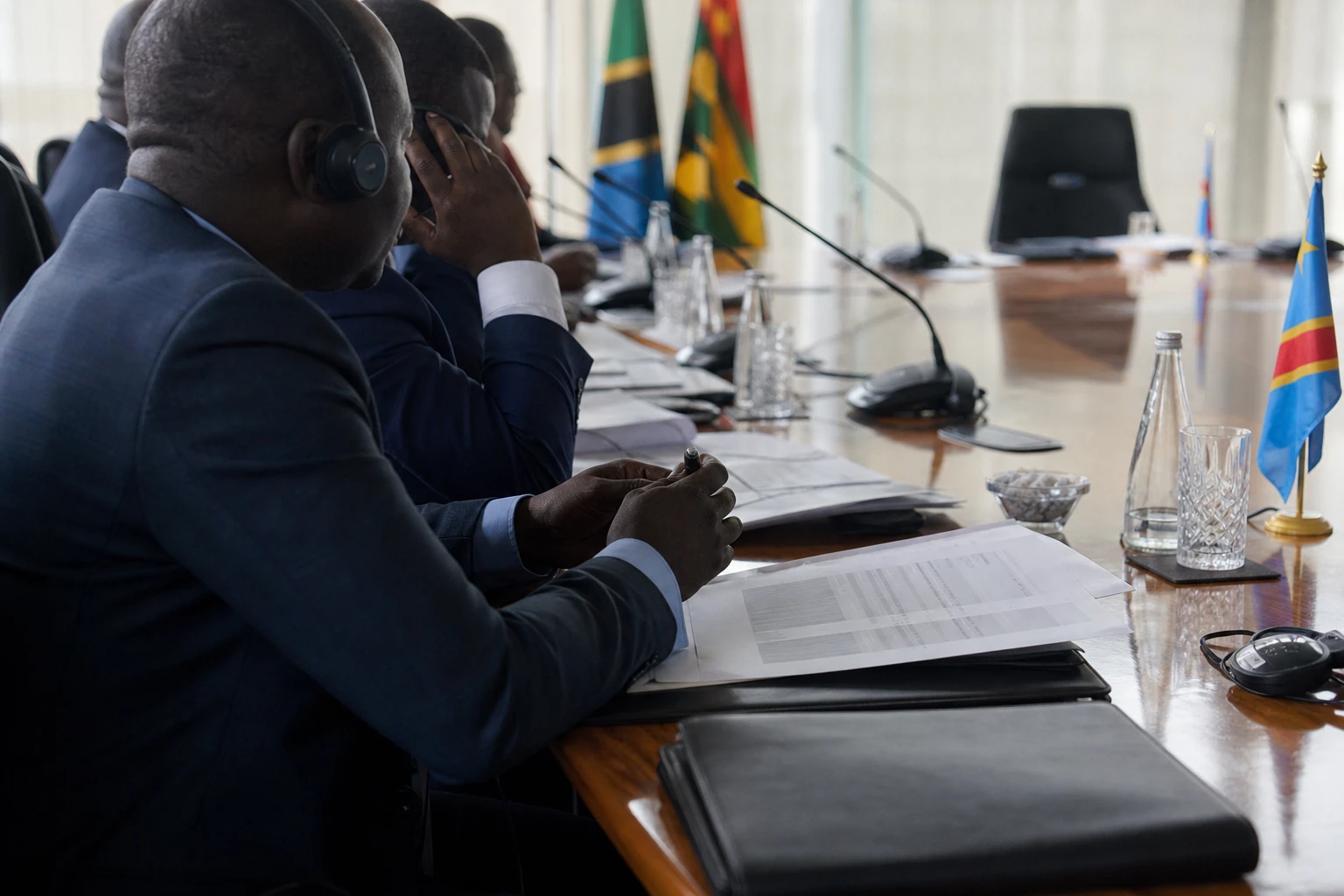
An old legal dispute, but with very current stakes
In Kinshasa, the battle against insecurity in the east is not being fought only on the military front. It is also playing out in international courts, where every filing becomes a political, diplomatic and commemorative act. For the Democratic Republic of the Congo, the issue is not merely to persuade a judge. It is also to secure recognition of state responsibility in a crisis that has shaped the lives of millions of Congolese for decades.
The case reflects a relationship long marked by the Great Lakes wars, cross-border armed movements and rivalry between regional security and national sovereignty. The International Court of Justice, the United Nations’ principal court for disputes between states, has already been seized of this dispute. In 2006, it ruled that it had no jurisdiction to hear the Congolese application of the time.
What Kinshasa is asking the Court to do now
On 26 June 2026, the DRC formally brought a case against Rwanda before the International Court of Justice. The Congolese justice minister presented the move as the exercise of a right under international law, citing several conventions to which both countries are parties, including those on genocide, racial discrimination and torture.
According to the Congolese government, the application seeks findings of violations attributed to Rwanda over a period stretching from 1996 to the present. The Court itself confirmed that it had received the application and said the dispute concerned “abuses attributable to Rwanda” over that period. The case argues that the violence affected civilians in eastern DRC, involving massacres, extrajudicial executions, acts of torture, sexual violence and forced displacement. These allegations have yet to be examined by the Court through adversarial proceedings.
The Congolese account forms part of a broader reading of the conflict. Kinshasa believes that armed groups, notably the AFC/M23 coalition, receive support from Rwanda. Kigali, for its part, rejects this framing and says its posture is a response to a threat from the FDLR, the Democratic Forces for the Liberation of Rwanda, an armed group that emerged in the region after the 1994 genocide.
Why the case matters beyond the courtroom
The application comes after several years of failed political efforts to de-escalate. In 2025, a peace agreement backed by Washington, followed by a ceasefire declaration facilitated by Qatar, failed to silence the guns in eastern DRC. On the ground, armed groups continued to displace people, weaken public services and weigh on the local economy, particularly in mining areas and trade corridors.
For the Congolese authorities, turning to international justice has a clear purpose: to shift the balance of power. The aim is no longer only to negotiate withdrawals, but to document responsibility, prepare for possible reparations and build a stronger legal case than diplomatic statements can provide. The government has also said it wants to pursue this course within the framework for the peaceful settlement of disputes set out in the United Nations Charter.
For Congolese society, the expectation is different. In the east of the country, displaced families, traders, farmers and mining operators do not view the proceedings in terms of legal doctrine. They see them in terms of security, freedom of movement and a return to normality. In a region where the state still struggles to ensure public order over the long term, a court ruling will have practical significance only if it is accompanied by political, security and humanitarian follow-up. That is where the difference between a procedural victory and a real change in people’s lives will be measured.
A Congolese case, but with regional significance
The dispute between Kinshasa and Kigali goes beyond their bilateral relationship. It touches on stability in Central Africa and the Great Lakes, two areas where porous borders remain vulnerable to trafficking, rebellions and cycles of retaliation inherited from the conflicts of the 1990s. The DRC is seeking to internationalise a case that for too long has played out on the ground, in diplomatic circles and in regional forums alike.
The continental significance is real. If the Court agrees to consider the merits, the case could strengthen the idea that an African state can use international justice to seek accountability for complex cross-border violence. It will also underline an important limit: legal proceedings cannot replace either a credible security architecture or regional cooperation capable of cutting off support for armed groups.
For now, the immediate issue is procedural. The case is entering a phase in which each written submission will matter, ahead of possible public hearings. In this kind of dispute, justice moves slowly, but it sets benchmarks. For the DRC, the case is at once a test of institutional determination, an act of remembrance for victims and a signal to the whole region: protracted conflicts can end up before a judge, even when peace remains elusive.



