
 Algeria
 Egypt
 Libya
 Morocco
 Sudan
 Tunisia
 Benin
 Burkina Faso
 Cabo Verde
 Côte d'Ivoire
 Ghana
 Guinea
 Guinea-Bissau
 Liberia
 Mali
 Mauritania
 Niger
 Nigeria
 Senegal
 Sierra Leone
 The Gambia
 Togo
 Cameroon
 Central African Republic
 Chad
 Equatorial Guinea
 Gabon
 Republic of the Congo
 São Tomé and Príncipe
 Burundi
 Comoros
 Djibouti
 Eritrea
 Ethiopia
 Kenya
 Madagascar
 Malawi
 Mauritius
 Mozambique
 Rwanda
 Seychelles
 Somalia
 South Sudan
 Tanzania
 Uganda
 Angola
 Botswana
 Eswatini
 Lesotho
 Namibia
 South Africa
 Zambia
 Zimbabwe
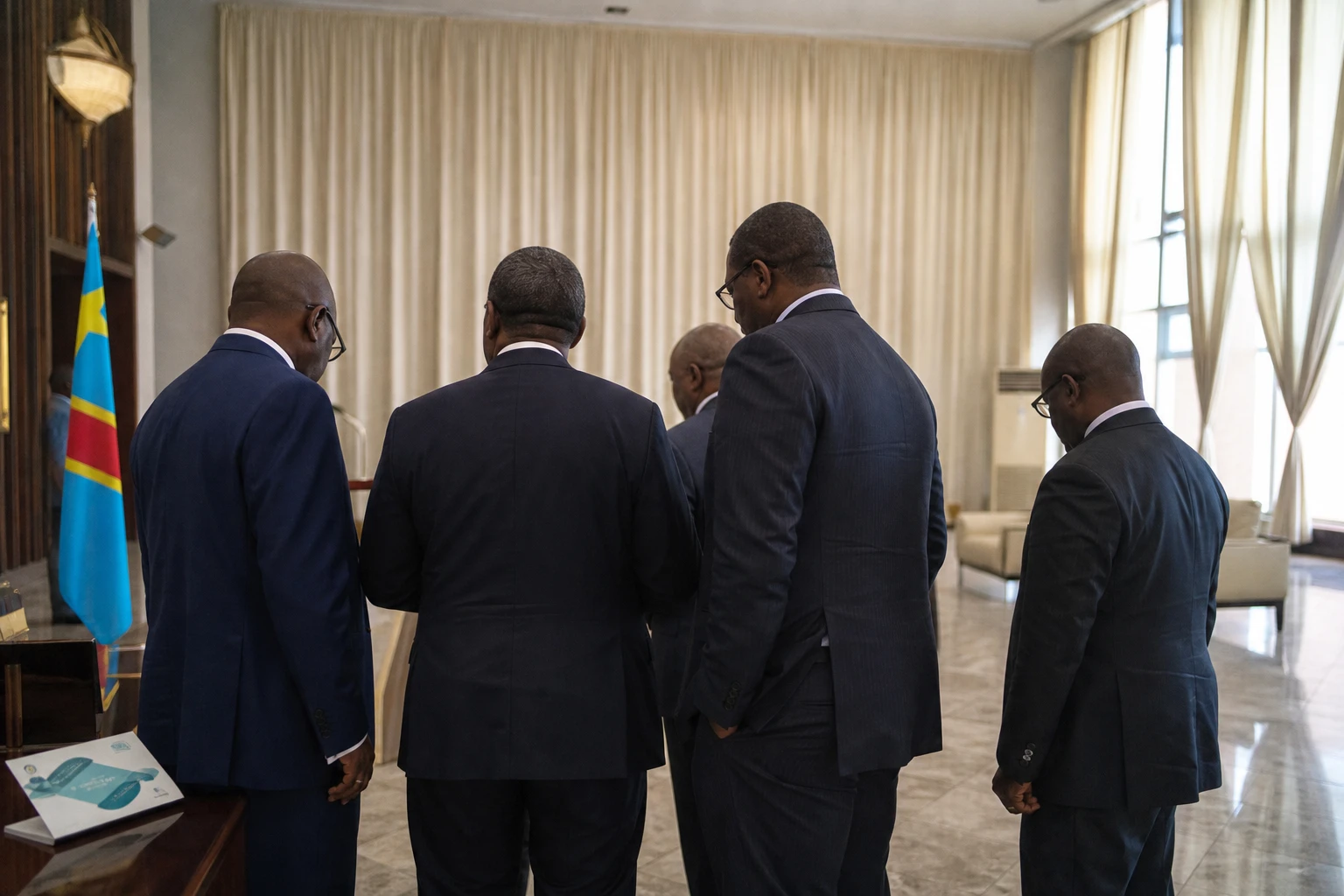
In Kinshasa, the battle is no longer just legal
In the Democratic Republic of the Congo, debate over the referendum law has ceased to be a matter for legal specialists. It has become a test of trust between institutions, the opposition and part of the public, which fears a change in the rules midway through the game. In Kinshasa, the tension is already weighing on the streets, Parliament and the next stages of the political calendar.
At the heart of the issue is a simple but weighty question: can the way be opened for a referendum without further inflaming an already suspicious political system? The Constitutional Court is at the centre of this stand-off. The Congolese Constitution gives it the power to review the constitutionality of laws and hear disputes over referendums. It is also made up of nine members appointed by the President of the Republic, Parliament sitting in Congress and the High Council of the Judiciary.
A recent precedent that hardened positions
The Article 64 Coalition, known as C64, emerged in this climate of distrust. It brings together several opposition figures, including Martin Fayulu, Jean-Marc Kabund, Moïse Katumbi, Augustin Matata and Delly Sesanga. Its first rallying cry, made public in May 2026, was already clear: withdraw the referendum bill and reject any process seen as preparation for a change to the Constitution.
Since then, events have gathered pace. On 9 June 2026, the National Assembly adopted the bill on the organisation of a referendum, according to the Congolese press. C64 then announced a sit-in outside the Palais du Peuple on 12 June, followed by a march and several postponements of protests. Each step strengthened the opposition’s view that the reform was not merely institutional but politically charged.
What the law says, and what opponents dispute
The current controversy concerns the Constitutional Court’s decision to uphold the referendum law. C64 rejects this interpretation and believes the high court has lost its neutrality. This harsh political judgement is based on a recurring criticism among the Congolese opposition: that the Court is too dependent on the executive, particularly following appointments made during Félix Tshisekedi’s term in office. The accusation is not new. It reflects broader distrust of institutional arbitration in electoral and constitutional matters.
The President of the Republic publicly stated on 6 May 2026 that no matter of national interest should be off limits for discussion, while adding that any debate on institutions must remain serious, transparent and respectful of the rule of law. This leaves the reform debate open without settling its outcome. It also fuels his opponents’ fear that the door has been left ajar to a broader revision.
Under the Constitution as it stands, the Constitutional Court also hears disputes over referendums. In theory, it therefore has the final legal say on this kind of process. In practice, however, when a significant part of the opposition believes the arbiter is disputed, a court ruling is no longer enough to close the political debate. It becomes the starting point for a fresh confrontation.
Political pressure extends beyond the presidential camp
C64 has set a new deadline: 15 August 2026. In its ultimatum, made public on 20 July, the coalition said that if an inclusive national dialogue had not been officially convened by that date, it reserved the right to draw “all political consequences” and resume peaceful civic actions. It also maintained its planned march on 22 July before postponing it. The date of 15 August has now become a marker of the current tension.
This timetable is putting pressure on several groups at once. For the authorities, the challenge is to prevent an institutional issue from turning into a crisis of legitimacy. For the opposition, it is to retain the ability to mobilise without sliding into permanent confrontation. For the urban population, particularly in Kinshasa, the concerns are more immediate: traffic, security, economic activity and the freedom to demonstrate. For working-class neighbourhoods and the informal economy alike, every day of tension has a tangible cost.
The country’s security situation makes this episode even more sensitive. The DRC continues to contend with a complex political, security and socio-economic situation, while the authorities highlight major development projects in Kinshasa and across the country. In this context, another institutional crisis could divert attention from economic projects and undermine trust at a time when the state is seeking to show that it is in control of its agenda.
A Congolese issue, but also a regional signal
The issue extends beyond the Congolese case. The DRC is a member of SADC, the Southern African Development Community, and the EAC, the East African Community. Across these regional blocs, debates about transfers of power, respect for terms of office and institutional stability are closely watched because they directly affect cooperation, security and trade. Kinshasa knows that any lasting political crisis quickly reverberates through regional mechanisms.
Recent SADC meetings in Kinshasa on the DRC’s access to the regional free trade area highlight another issue: political credibility also shapes economic integration. A country beset by institutional distrust finds it harder to attract investment, makes slower progress on reforms and leaves its decisions more exposed to challenge. This is particularly true of a vast, mineral-rich and strategically important continental country such as the DRC.
The pan-African significance of the issue is therefore as much about method as law: how can institutions be reformed without triggering a crisis of trust? In the DRC, the answer will depend less on a statement than on the actors’ ability to clarify their intentions, respect constitutional safeguards and ensure that, if it takes place, the referendum is not seen as an instrument of political survival rather than a national choice. 15 August will show whether the tension gives way to compromise or another round of confrontation.



