
 Algeria
 Egypt
 Libya
 Morocco
 Sudan
 Tunisia
 Benin
 Burkina Faso
 Cabo Verde
 Côte d'Ivoire
 Ghana
 Guinea
 Guinea-Bissau
 Liberia
 Mali
 Mauritania
 Niger
 Nigeria
 Senegal
 Sierra Leone
 The Gambia
 Togo
 Cameroon
 Central African Republic
 Chad
 Equatorial Guinea
 Gabon
 Republic of the Congo
 São Tomé and Príncipe
 Burundi
 Comoros
 Djibouti
 Eritrea
 Ethiopia
 Kenya
 Madagascar
 Malawi
 Mauritius
 Mozambique
 Rwanda
 Seychelles
 Somalia
 South Sudan
 Tanzania
 Uganda
 Angola
 Botswana
 Eswatini
 Lesotho
 Namibia
 South Africa
 Zambia
 Zimbabwe
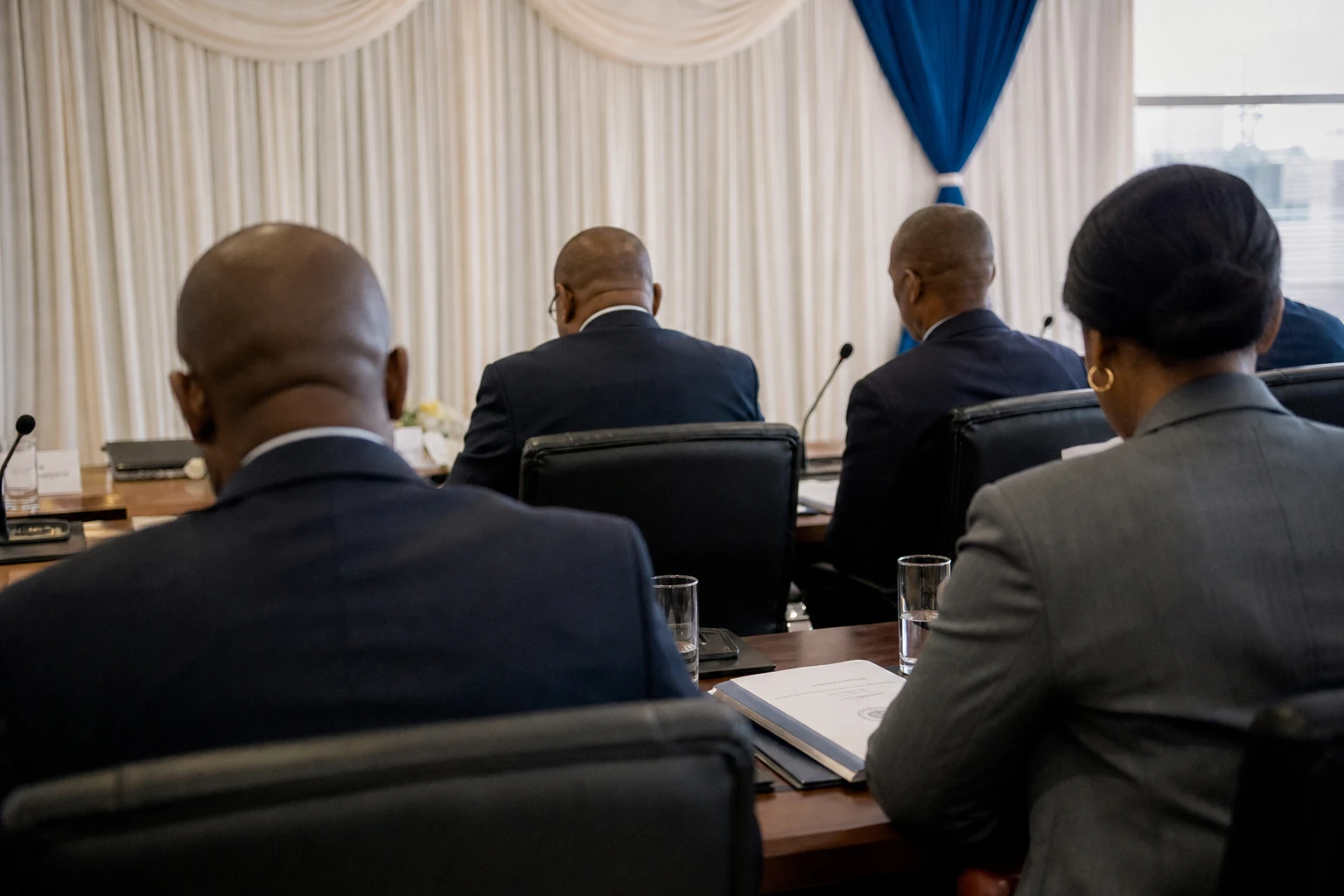
In Kinshasa, the battle is no longer just about a law. It touches the very balance of power.
In the Democratic Republic of the Congo, debate over constitutional reform has moved from lawyers’ corridors into the streets, political parties and homes. With the next electoral cycle only a few years away, the issue is no longer theoretical: it concerns the length of time in power, the interpretation of the Constitution and confidence in the rules of the democratic game. The controversy intensified after Parliament adopted a text governing the organisation of a referendum, and then after the Constitutional Court declared itself not competent to hear a challenge filed before the text was finally transmitted to the president of the republic.
The issue is particularly sensitive in DR Congo, where the 2006 Constitution, promulgated after the 2005 referendum, was designed to bring an end to repeated crises of legitimacy. It sets a strict framework for the presidential term, while constitutional amendments are subject to political and legal safeguards. In this context, the question of a referendum goes beyond procedure: it touches on institutional stability, the transfer of power and the balance between the presidential majority and the opposition.
At the heart of the case: a law, a court and sharply different visions of the future
On 15 June 2026, the Congolese National Assembly and Senate finally adopted the law setting out the conditions for organising a referendum in DR Congo. President Félix Tshisekedi then announced that he had referred it to the Constitutional Court before any promulgation, citing a prior review of the text’s constitutionality. On 17 July, according to a clarification reported by the court, it declared itself not competent to examine a petition filed too early – that is, before the text’s final adoption by Parliament and its transmission to the presidency.
This sequence has fuelled opposition suspicions. The C64 coalition, launched in May in Kinshasa by several opposition figures, was formed specifically to oppose any change to the Constitution seen as a manoeuvre to stay in power. Its leaders cite, in particular, Articles 70 and 220 of the Constitution, which govern the presidential term and protect certain unalterable principles of the founding text. The coalition has made repeated public statements and calls for peaceful mobilisation, setting a political deadline of 15 August for the convening of an inclusive national dialogue.
The government, for its part, rejects the idea of an automatic move towards a third term. Félix Tshisekedi himself nevertheless opened the debate when he said on 6 May that he would accept a third term if the people wanted it, then explained on 29 June that he had referred the matter to the Constitutional Court before any promulgation. At the same time, his allies have said this was not a plan to extend his personal tenure, but a discussion about institutional reform. The dividing line is clear: for the opposition, a referendum would be a political vehicle; for the majority, it would be a matter for sovereign debate.
Why this controversy carries more weight than a simple legal debate
In DR Congo, the Constitution is not an abstract text. It is the backbone of a compromise forged after years of war, transitions and negotiations. Its structure was designed to prevent the personalisation of power and limit the temptation to extend terms indefinitely. That is why every discussion about its revision immediately triggers political alarm. Opponents see it as a sign of a break with the existing order, while some in the majority defend the idea of popular sovereignty, which they believe could provide a broader basis for the institutional compact.
The timing adds to the tension. The country continues to face multiple vulnerabilities, particularly in the east, where the Congolese authorities speak of a persistent war and severe security pressure. In its communication in Luanda, the presidency recalled that DR Congo had for several years been suffering the effects of armed conflicts, population displacement and the illegal exploitation of resources. In such an environment, any institutional crisis at the top of the state comes at a direct cost: it diverts attention from urgent security needs, clouds budget priorities and fuels mistrust among economic actors and regional partners alike.
In Kinshasa, the political battle also has a social dimension. Elites debate constitutional articles; citizens are primarily weighing the possible consequences for stability, civil liberties and the electoral timetable. The next presidential election is expected in 2028, and, under the law as it currently stands, Félix Tshisekedi’s second term is due to end in January 2029, following the electoral cycle scheduled for late 2028. Any change to the rules before that deadline is therefore seen as a test of the credibility of Congolese institutions.
A Congolese issue, but also a signal for Central Africa and the African Union
DR Congo does not exist in isolation. A member of SADC and the East African Community, the country occupies a central place in the balance of power in Central Africa and the Great Lakes region. When Kinshasa enters a constitutional crisis, the effects quickly spill across its borders: they touch on regional mediation, trade flows, security cooperation and the way other African capitals view democratic transfers of power. Observers across the continent are therefore following the case as a possible precedent, in an environment where presidential terms remain a recurring source of tension.
For now, the process remains open. The Constitutional Court’s decision has not ended the debate; it has settled only a question of procedure. The real standoff is now being fought on two fronts: the government’s ability to impose reform without a major political rupture, and the opposition’s ability to turn its rejection into sustained mobilisation without abandoning the peaceful framework it claims to uphold. That is where, in the coming weeks, much more than a simple text will be at stake: the clarity of Congo’s institutional future.



