
 Algeria
 Egypt
 Libya
 Morocco
 Sudan
 Tunisia
 Benin
 Burkina Faso
 Cabo Verde
 Côte d'Ivoire
 Ghana
 Guinea
 Guinea-Bissau
 Liberia
 Mali
 Mauritania
 Niger
 Nigeria
 Senegal
 Sierra Leone
 The Gambia
 Togo
 Cameroon
 Central African Republic
 Chad
 Equatorial Guinea
 Gabon
 Republic of the Congo
 São Tomé and Príncipe
 Burundi
 Comoros
 Djibouti
 Eritrea
 Ethiopia
 Kenya
 Madagascar
 Malawi
 Mauritius
 Mozambique
 Rwanda
 Seychelles
 Somalia
 South Sudan
 Tanzania
 Uganda
 Angola
 Botswana
 Eswatini
 Lesotho
 Namibia
 South Africa
 Zambia
 Zimbabwe
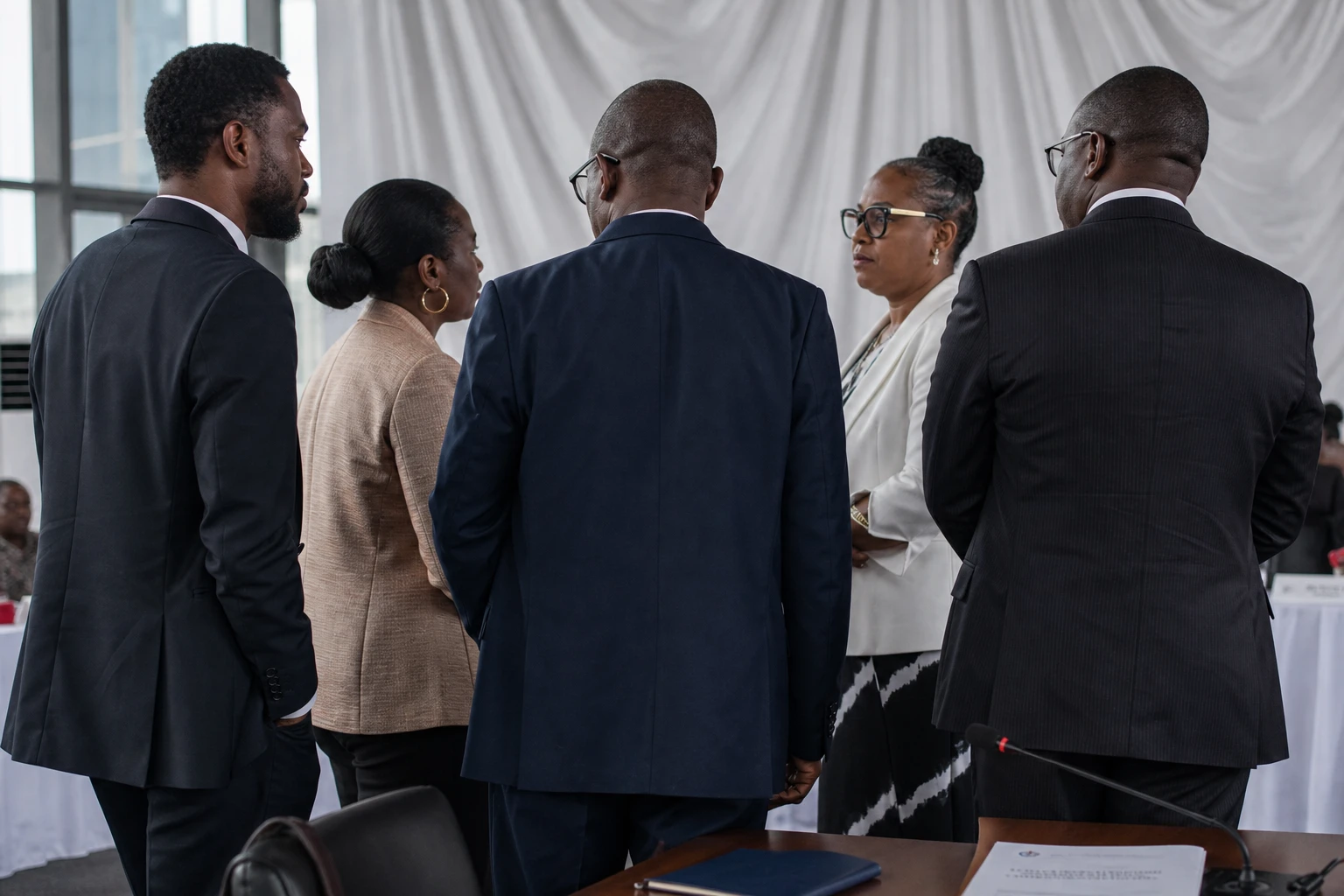
In Kinshasa, two marches held seven days apart produced two very different scenes. On 15 September 2026, a rally organised by the Coalition for the Defence of Article 64 of the Constitution, known as C64, was interrupted by clashes. On 22 September, a march by the UDPS and its allies took place without any major incidents reported in the capital. For Jean-Claude Katende, president of the African Association for the Defence of Human Rights, the difference requires an explanation.
Two demonstrations, two experiences on the streets
C64 had called for a protest on 15 September against any plan to amend the Constitution. In Kinshasa, the march was due to start at the Limete Interchange and proceed to the headquarters of ECIDé, Martin Fayulu’s party. Clashes nevertheless broke out in the Limete area. Police used tear gas and stopped the march before it reached its destination.
Several Congolese media outlets reported the presence of groups described as close to the government among those involved in the violence. This allegation remains contested and will have to be established by the judicial inquiry announced by the authorities. In Lubumbashi, the march planned for the same day had been banned by the provincial police, who cited the risk of public disorder.
C64 says one of its senior members, Manassé Lomboto Bomengola, died after being injured during the violence in Kinshasa. His party, ADD Congo, has called for an independent inquiry. However, his death was not confirmed in an initial official tally. It must therefore remain presented as an allegation by the coalition until the inquiry has established the exact circumstances.
A week later, the UDPS, the president’s party, and its allies held a march in Kinshasa. The procession set off from 11th Street in Limete before heading to the annex grounds of the Stade des Martyrs. The rally expressed support for the institutions of the Republic, the national dialogue announced by Félix Tshisekedi and the referendum process.
Kinshasa Governor Daniel Bumba had brought together the organisers, police, the National Human Rights Commission, the National Intelligence Agency and the Directorate General of Migration. The authorities had set a precise route and asked participants to preserve the peaceful nature of the gathering. The march ended without any major incidents reported in the capital, according to several local reports.
The question of ‘double standards’
The day after the rally, Jean-Claude Katende raised a series of questions about how demonstrations by the ruling majority and the opposition were treated. In particular, he asked why the march by parties close to the government had, according to available information, resulted in neither deaths nor arrests comparable to those reported during the C64 rally.
The president of ASADHO also questioned why no groups had arrived to disrupt the UDPS march. His questioning does not, in itself, prove that political groups were treated differently. It does, however, highlight a central concern: do the Congolese authorities apply the same rules to all political actors when they take to the streets?
The comparison between the two days should be made with caution. The routes, security arrangements, political context and make-up of the marches were not identical. The number of participants and the behaviour of groups present can also affect the level of tension. Nevertheless, the contrast has fuelled accusations of ‘double standards’ by several opposition leaders, including Delly Sesanga and Jean-Marc Kabund.
Congolese law recognises the right to demonstrate. Public gatherings must be notified to the relevant administrative authority so that they can be managed. This procedure should not turn permission into a privilege reserved for the governing camp. Rather, it should enable the protection of participants, local residents and other people using the city.
In a metropolis such as Kinshasa, the effects are immediate. A demonstration can slow transport, close shops and disrupt daily activities in the neighbourhoods along its route. But the authorities’ response also affects civic trust. When some gatherings receive a visible security presence while others are dispersed or prevented from going ahead, the sense of equality before the law is weakened.
Inquiry into the 15 September violence awaited
Justice Minister Guillaume Ngefa has ordered a judicial inquiry into the incidents linked to the C64 demonstration. The public prosecutor’s office at the Court of Cassation is to examine the violence, injuries, damage, arrests and allegations of deaths.
The National Human Rights Commission reported that people carrying bladed weapons had allegedly blocked the march in Limete. C64, for its part, accuses actors close to the government and some members of the security forces. The government rejects these accusations. At this stage, these competing accounts cannot be treated as facts established by a court.
The credibility of the inquiry will therefore depend on its ability to hear all sides. The march organisers, those injured, families, witnesses, police officers deployed and administrative officials must all be able to give evidence. Available footage, medical reports and arrest records must also be examined.
An inquiry limited to identifying the protesters who were arrested would address only part of the problem. It will also be necessary to establish whether unofficial groups took part in the violence, whether the security forces used proportionate force and whether the authorities fulfilled their duty to protect people. The alleged death of Manassé Lomboto Bomengola is particularly sensitive in this regard.
A test for DR Congo’s political trajectory
The controversy comes as the Democratic Republic of the Congo enters a political phase shaped by debate over the Constitution, a referendum and the prospect of a transfer of power in 2028. The UDPS is seeking to demonstrate its capacity to mobilise around Félix Tshisekedi. C64, meanwhile, wants to prevent any institutional change that it sees as undermining the constitutional order.
The dispute extends beyond Kinshasa. DR Congo is a member of the Southern African Development Community, SADC, which has for several years monitored political and security dynamics in the Great Lakes region. It also concerns the African Union, whose principles include protecting the constitutional order and rejecting institutional changes designed to extend a hold on power.
The next step will be judicial, but it will also be political. The findings of the inquiry into the 15 September violence will show whether the institutions are willing to distinguish responsibility from accusations made for political convenience. In the streets of Kinshasa, then, the issue is not simply rivalry between two crowds. It is whether both the majority and the opposition can exercise the same freedoms under the same conditions.



