Algeria
 Egypt
 Libya
 Morocco
 Sudan
 Tunisia
 Benin
 Burkina Faso
 Cabo Verde
 Côte d'Ivoire
 Ghana
 Guinea
 Guinea-Bissau
 Liberia
 Mali
 Mauritania
 Niger
 Nigeria
 Senegal
 Sierra Leone
 The Gambia
 Togo
 Cameroon
 Central African Republic
 Chad
 Equatorial Guinea
 Gabon
 Republic of the Congo
 São Tomé and Príncipe
 Burundi
 Comoros
 Djibouti
 Eritrea
 Ethiopia
 Kenya
 Madagascar
 Malawi
 Mauritius
 Mozambique
 Rwanda
 Seychelles
 Somalia
 South Sudan
 Tanzania
 Uganda
 Angola
 Botswana
 Eswatini
 Lesotho
 Namibia
 South Africa
 Zambia
 Zimbabwe
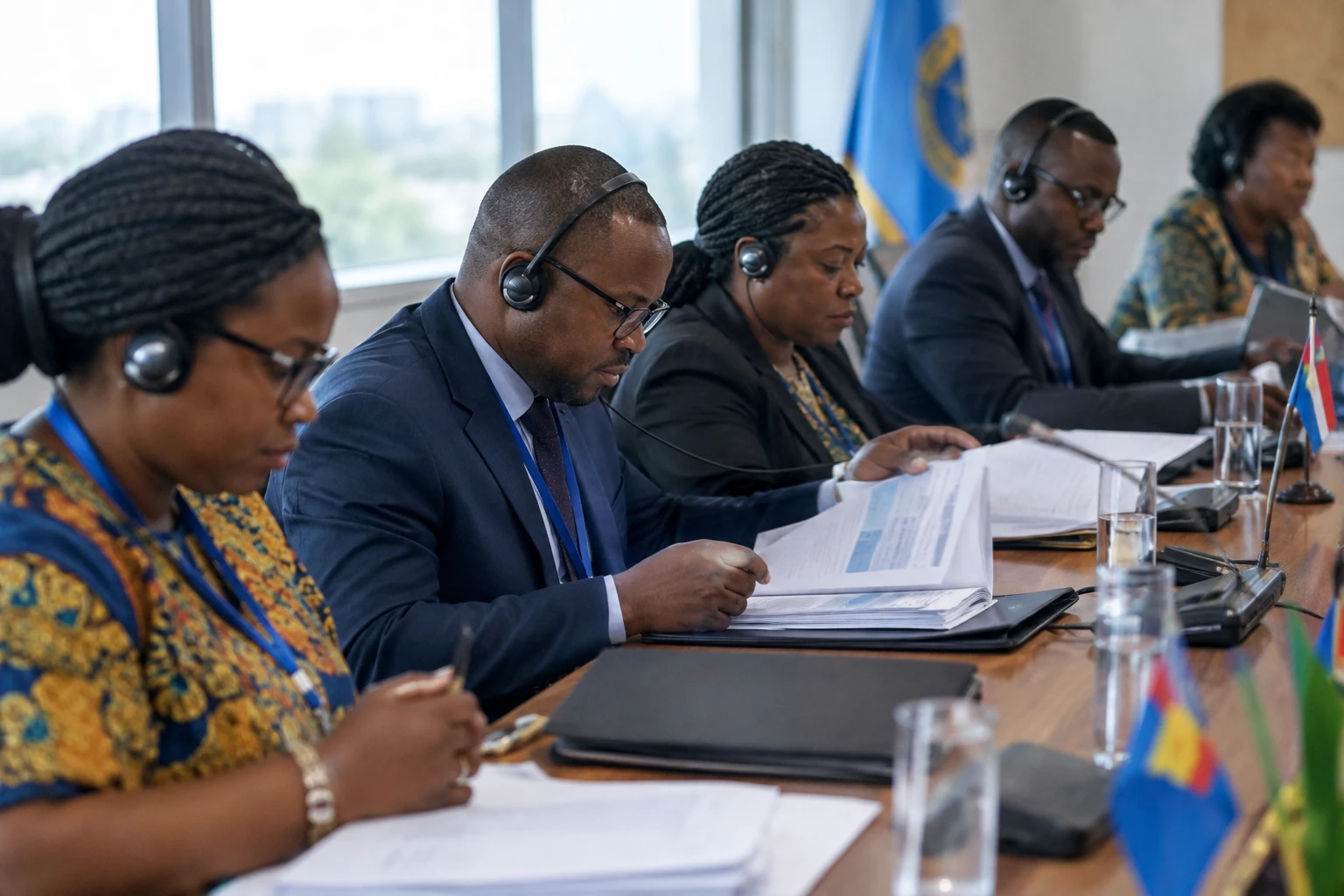
In Kinshasa, a passport case has brought a former Senate president face to face with a service attached to the presidency. But the day after he was detained, one question remains: where does an administrative or security investigation end, and where do the safeguards owed to anyone questioned begin?
The case concerns Alexis Thambwe Mwamba, a political figure in the Democratic Republic of the Congo and a former close associate of Joseph Kabila. It comes amid close scrutiny of proceedings involving political officials, while the east of the country remains affected by armed conflict. However, the available information establishes no link between this case and the fighting.
A passport at the centre of questioning
On Friday 23 October, the former Senate president was detained in Kinshasa by agents of the National Cyber Defence Council (CNC), then released that evening. Several Congolese media outlets report that he was summoned again on Saturday 24 October. The circumstances of his questioning and the outcome of that summons have not been detailed in an official statement, according to the information reviewed.
The stated reason concerns a passport. According to information attributed to his lawyer, Laurent Onyemba, investigators are seeking to clarify the issue of a passport being issued or renewed without prior approval from the National Intelligence Agency (ANR). The role of a former aide to Thambwe Mwamba, now a senior official at the Ministry of Foreign Affairs, is also reportedly under examination. These details describe a line of inquiry, not established guilt.
Accounts of the facts vary: some refer to obtaining a passport, others to an application for renewal. The lawyer is reported to have said that his client had requested the renewal from the foreign minister, citing his status as a former Senate president. The authorities have not publicly specified which rule was allegedly breached or which documents are concerned.
The 24 October summons also raises a procedural question. His lawyer has criticised the fact that his client was allegedly asked to appear without legal assistance. This criticism is attributed to him; the available information does not confirm the exact circumstances of the questioning or the CNC’s response.
The powers of a security service need clarification
The CNC is attached to the presidency. According to the National Human Rights Commission (CNDH), which outlined its remit during an institutional meeting in January 2026, it was established in August 2023 to anticipate threats in cyberspace, coordinate cybersecurity and cyberdefence activities, and provide technical support to the relevant judicial authorities. Passports, however, also fall within the responsibilities of the Ministry of Foreign Affairs and the ANR.
This division of responsibilities makes transparency particularly important. The existence of a service tasked with cyberdefence does not, in itself, answer questions about the legal basis for a detention, its duration or access to a lawyer. Establishing the facts will require knowing the alleged offences, the authority conducting the proceedings and the legal framework being applied.
Thambwe Mwamba served as Senate president from 2019 to 2021, under Joseph Kabila and then at the start of Félix Tshisekedi’s term. His career gives the case an obvious political dimension. That is not enough, however, to conclude that his detention was linked to his affiliation with the former government. Published information on the case points to the passport issue, while the authorities have not publicly confirmed any other grounds.
Consequences beyond the individual case
For citizens, the issue goes beyond the fate of a former senior official. Passports are essential documents for travelling, studying, working or joining family. An investigation into their issuance may be a legitimate form of oversight. But if the rules and the responsibilities of the services remain opaque, it could also create uncertainty for applicants and administrative staff alike.
The impact is not the same for everyone. A former leader has lawyers and a public profile. An ordinary applicant or a less well-known civil servant may have fewer means to challenge a decision or obtain explanations. Clear procedures and access to redress are therefore essential, beyond rivalries among political officials.
In its discussion of people detained, the CNDH recalled its role in monitoring and protecting human rights. Its involvement underlines the importance of institutional oversight when relatives, families or lawyers approach the body. It does not prejudge the legality of the actions in the Thambwe Mwamba case, which must be assessed on the basis of the facts and applicable laws.
A test of trust in institutions
The DRC is a member of the Southern African Development Community (SADC), which brings regional states together around cooperation and security. Within this grouping, the credibility of national institutions also matters: it affects citizens’ trust and cooperation between administrations. The African Union also upholds principles of governance and the rule of law, but that does not turn this domestic case into a regional one.
The next step is clear: will the authorities specify the legal basis for the investigation and what followed the 24 October summons? A documented response would help distinguish an inquiry into passport issuance from proceedings whose contours might remain political or security-related. For now, the public information establishes a detention, release on the same day and a line of inquiry linked to a passport; it does not allow any further conclusion.
Institutional background: the CNDH’s outline of the CNC’s remit; the DRC’s status within SADC.