Algeria
 Egypt
 Libya
 Morocco
 Sudan
 Tunisia
 Benin
 Burkina Faso
 Cabo Verde
 Côte d'Ivoire
 Ghana
 Guinea
 Guinea-Bissau
 Liberia
 Mali
 Mauritania
 Niger
 Nigeria
 Senegal
 Sierra Leone
 The Gambia
 Togo
 Cameroon
 Central African Republic
 Chad
 Equatorial Guinea
 Gabon
 Republic of the Congo
 São Tomé and Príncipe
 Burundi
 Comoros
 Djibouti
 Eritrea
 Ethiopia
 Kenya
 Madagascar
 Malawi
 Mauritius
 Mozambique
 Rwanda
 Seychelles
 Somalia
 South Sudan
 Tanzania
 Uganda
 Angola
 Botswana
 Eswatini
 Lesotho
 Namibia
 South Africa
 Zambia
 Zimbabwe
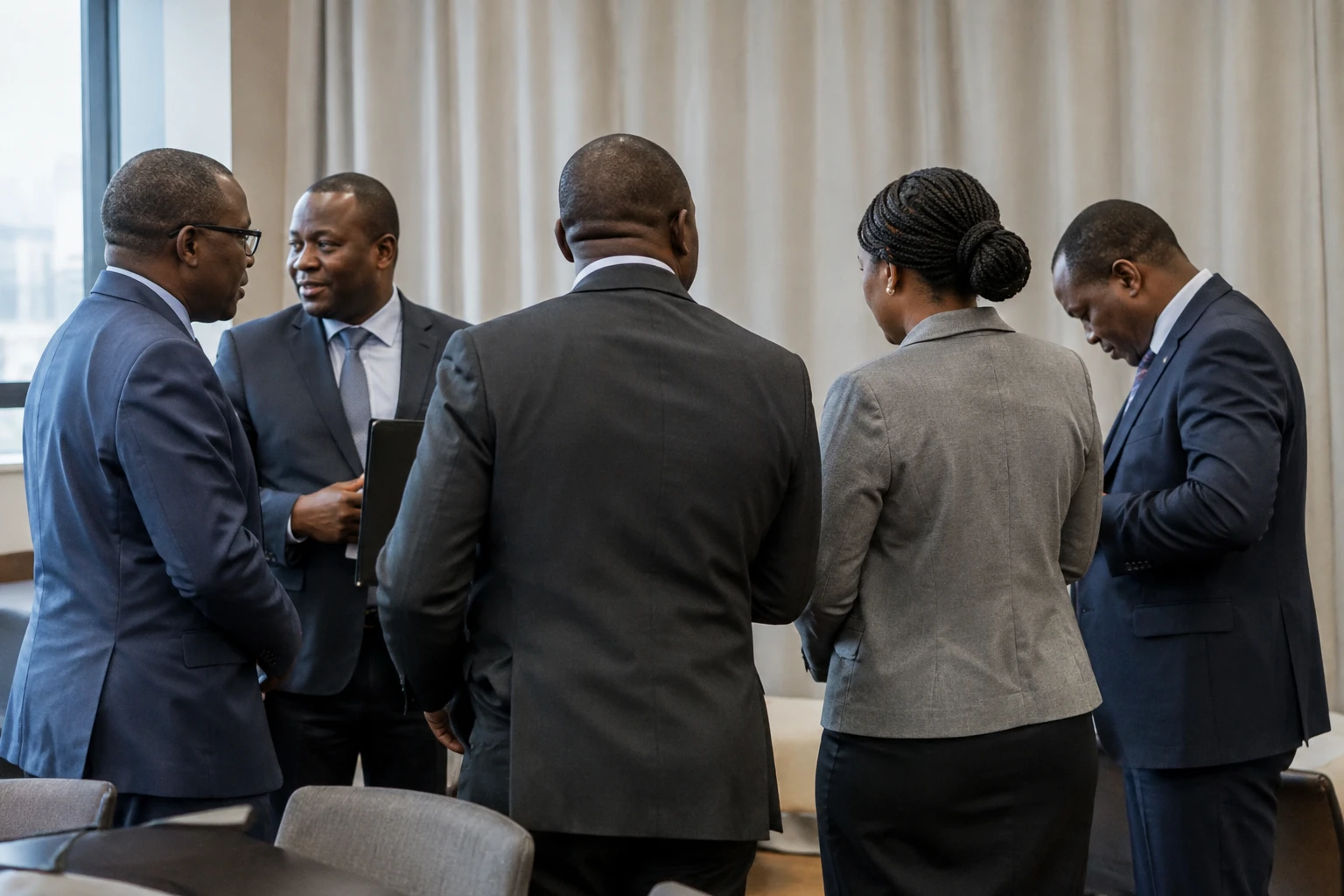
In the Democratic Republic of the Congo, the question is no longer only who will take part in a possible dialogue. It is also whether it can bring together political and armed actors without legitimising the seizure of power by force or circumventing constitutional rules.
An opposition caught between two red lines
Meeting in Rome from 26 to 27 October 2026, the Article 64 Coalition (C64) took a position on two fronts. The platform, which includes Martin Fayulu, Moïse Katumbi, Delly Sesanga, Jean-Marc Kabund and Augustin Matata, condemned the use of arms to gain power. At the same time, it called for an inclusive national dialogue and proposed separate meetings with President Félix Tshisekedi and his predecessor, Joseph Kabila.
The statement comes as Kabila has taken the lead of the Front for the Refoundation of the Nation (FRN), a political-military coalition associated with the AFC/M23 rebellion. The C64 says no military solution can durably resolve the crisis. It says it wants a political settlement while rejecting the seizure of power by force, whoever the perpetrator may be.
This position was reported by the Congolese Press Agency and corroborated by several Congolese media outlets, including UNE.CD and Enquête.cd. Reuters has also reported the call for talks and the refusal to support the rebellion. The proposed meetings remain, for now, an initiative announced by the coalition: no public timetable has been specified.
Dialogue is already a political issue
The C64’s move comes amid a crisis in which several processes are overlapping. Félix Tshisekedi announced in August a national dialogue to address peace and cohesion, but armed groups are to be excluded. The opposition coalition, by contrast, is advocating a broader format, with discussions on conflicts, governance and the conditions for a ceasefire.
This divergence raises a practical question: how can the actors needed to end the fighting be included without conflating political negotiations with recognition of a seizure of power by force? The C64 has yet to set out rules for representation, security guarantees or implementation arrangements. Without these details, the call remains a political position, not an operational peace mechanism.
The coalition also wants to link the dialogue to constitutional tensions. It rejects any revision that would amend the provisions protected by Article 220, particularly those concerning the number and length of presidential terms. It opposes a third term or a postponement of the election scheduled for 2028. These issues fuel mistrust between the government and opposition; they are not, however, the same as the causes of the conflict in the east.
Regional mediation to be co-ordinated
The C64 is calling for the revival of an African facilitation effort involving Angola and Togo, as well as mediation by the Catholic Church and the Church of Christ in Congo, brought together under the ECC-Cenco framework. It also calls for these efforts to be co-ordinated with the Doha talks and other international initiatives.
The region is directly affected. The DRC is a member of the Southern African Development Community (SADC) and the East African Community (EAC), two organisations involved in regional security issues. Diplomatic efforts therefore cannot be confined to Kinshasa: relations with neighbouring countries, population movements and cross-border trade also influence how the crisis develops.
The coalition is calling for the implementation of United Nations Security Council Resolution 2773, which addresses, among other things, the withdrawal of Rwandan forces and an end to their support for M23. It wants commitments to be accompanied by a timetable and verification mechanisms. This is essential: diplomatic announcements without concrete follow-up risk leaving civilians exposed to fighting and further undermining agreements.
Consequences that extend beyond negotiations
For people in areas affected by clashes, the immediate concern is security: an end to hostilities, the protection of civilians and humanitarian access. In Kinshasa, the debate also concerns political freedoms, trust in institutions and the holding of the next electoral cycle. The consequences are therefore not the same for people in the east, political actors in the capital and communities dependent on cross-border trade.
The C64 is also calling for an end to arrests and restrictions targeting peaceful political activities. It is seeking independent investigations into violence it associates with the demonstrations of 12 June and 15 September, as well as the death of a man named Lomboto. These allegations and demands come from the coalition; they must be examined through credible investigations before responsibility can be established.
The initiative’s reach will now depend on the responses of Tshisekedi and Kabila, as well as on the ability of African and international mediators to co-ordinate their efforts. The C64 is seeking to distinguish itself from both the government’s strategy and the armed option. It remains to be seen whether this common position can hold and lead to verifiable commitments, as constitutional discussions, the 2028 election and the security crisis proceed on different timetables.