Algeria
 Egypt
 Libya
 Morocco
 Sudan
 Tunisia
 Benin
 Burkina Faso
 Cabo Verde
 Côte d'Ivoire
 Ghana
 Guinea
 Guinea-Bissau
 Liberia
 Mali
 Mauritania
 Niger
 Nigeria
 Senegal
 Sierra Leone
 The Gambia
 Togo
 Cameroon
 Central African Republic
 Chad
 Equatorial Guinea
 Gabon
 Republic of the Congo
 São Tomé and Príncipe
 Burundi
 Comoros
 Djibouti
 Eritrea
 Ethiopia
 Kenya
 Madagascar
 Malawi
 Mauritius
 Mozambique
 Rwanda
 Seychelles
 Somalia
 South Sudan
 Tanzania
 Uganda
 Angola
 Botswana
 Eswatini
 Lesotho
 Namibia
 South Africa
 Zambia
 Zimbabwe
Political opening, but the ground is already polarised
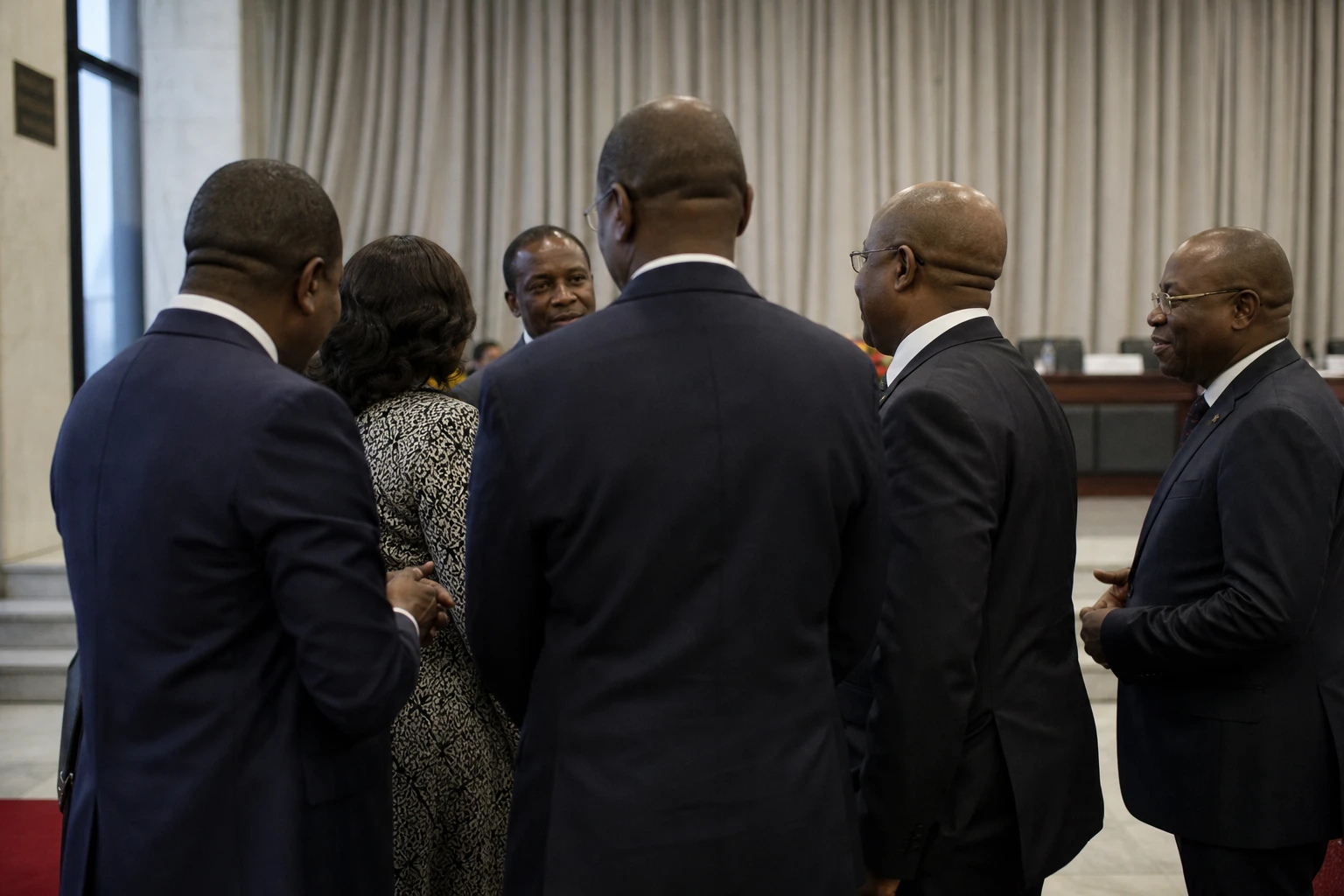
In the Democratic Republic of the Congo, every announcement of dialogue carries immense expectations. It often asks Congolese people the same question: can a political agreement still be reached while the east of the country remains under pressure, mistrust prevails and an institutional battle unfolds in parallel? Félix Tshisekedi’s announcement has revived this question at a time when Kinshasa is trying to combine domestic peace, national cohesion and a response to the war in the eastern provinces.
The context is fraught. The head of state has proposed a “national dialogue for peace, cohesion and the refoundation of the state”, beginning with consultations in all 26 provinces before a national conference in Kinshasa. The plan also provides for a presidential decree establishing an organising committee. At the same time, security remains central: the AFC/M23, an armed movement that Kinshasa links to the crisis in the east, remains outside the scope of political dialogue for as long as the guns are still speaking. The issue therefore goes beyond Kinshasa’s political scene alone. It touches on the balance of power in the Great Lakes region and on mediation frameworks already in operation, notably in Doha and under the auspices of regional and UN partners.
Row begins over the method, the participants and the very purpose of dialogue
The first rift concerns the rules of the game. The Article 64 Coalition, which brings together several opposition figures, rejects the provincial consultations and stands by its call for an “inclusive national dialogue” based on negotiated guarantees. It suspects the government of seeking to control the format, timetable and outcome of the discussions. This mistrust comes against an already tense backdrop stretching back several months, marked by opposition warnings against any constitutional reform and debates over the future of the Congolese institutional framework.
Within the opposition, several voices reject the idea of dialogue being led by the executive alone. They argue that a president cannot be a participant, organiser and arbiter all at once. The argument is political, but also symbolic: in a country where transitions have often been fragile, a dialogue’s credibility depends less on its announcement than on the trust placed in the person convening it and those who will set its rules. The opposition therefore links the issue to the 2006 Constitution, term limits and fears of a shift towards tailor-made reform.
The majority, for its part, takes a different view. Figures from the Sacred Union support the presidential initiative and frame it as part of the pursuit of national cohesion. The presidency has also signalled openness by receiving representatives of religious denominations, including CENCO and ECC, which have been calling for an inclusive and peaceful national framework for several months. The involvement of religious groups is not incidental. In the DRC, churches often serve as intermediaries between institutions, the opposition and civil society, especially when political trust is low.
Another issue is already dividing the players: the place of those still fighting with weapons. Félix Tshisekedi has said that armed groups would not take part in this political framework for as long as they remain committed to a military approach. This position is consistent with UN Security Council resolutions, which demand an end to hostilities, the M23’s withdrawal from several areas and a return to diplomatic dialogue. But it has a practical consequence: the national dialogue may clarify the Congolese political scene, but it cannot replace the negotiations in Doha, where the armed conflict is following its own course.
What is at stake in Kinshasa goes beyond the negotiating room
The debate extends beyond the capital. In Kinshasa, the battle is institutional. In the east of the country, it is about security. In the provinces, it is social, because people want more than a slogan: safer travel, a more accessible administration, open schools, stable markets, passable roads and an end to a war that weighs on displaced families and the local economy. The announced dialogue will be judged by that standard alone. If it remains trapped in factional calculations, it will fuel scepticism. If it helps clarify national priorities, it may at least reduce the scope for suspicion.
This sequence must also be viewed in a regional context. The Congolese crisis is not being played out among Congolese alone. It involves Central Africa, the ICGLR mechanisms, the African Union and overlapping mediation efforts in the Great Lakes region. Security Council Resolution 2773 also makes clear that resolving the crisis requires coordinated efforts, not an isolated face-off. That is why every announcement of dialogue in Kinshasa is watched beyond the country’s borders: it may either strengthen alignment between the processes or create a disconnect between domestic politics and the external security effort.
The US position, expressed by Massad Boulos, points in the same direction: “inclusive and constructive” dialogue is presented as a means of achieving peace, provided it is neither closed nor purely formal. This diplomatic pressure matters, but it does not erase the central issue for Congolese people: deciding who speaks for whom, in what framework and with what guarantees. The forthcoming presidential decrees will show whether the executive accepts a genuine sharing of control over the procedure or is merely seeking to steer a consultation whose outcome has already been settled. That is where the process’s credibility will be decided.
For now, one thing is clear: the battle over national dialogue has begun before the talks have even opened. It concerns the method, the participants and the hierarchy between domestic peace and resolving the crisis in the east. In the DRC, major political episodes often take shape this way: first through a dispute over the framework, and only then through negotiations on substance. The coming days will show whether Kinshasa is building a genuine structure for compromise or whether the country is entering another round of consultations without shared trust.