
 Algeria
 Egypt
 Libya
 Morocco
 Sudan
 Tunisia
 Benin
 Burkina Faso
 Cabo Verde
 Côte d'Ivoire
 Ghana
 Guinea
 Guinea-Bissau
 Liberia
 Mali
 Mauritania
 Niger
 Nigeria
 Senegal
 Sierra Leone
 The Gambia
 Togo
 Cameroon
 Central African Republic
 Chad
 Equatorial Guinea
 Gabon
 Republic of the Congo
 São Tomé and Príncipe
 Burundi
 Comoros
 Djibouti
 Eritrea
 Ethiopia
 Kenya
 Madagascar
 Malawi
 Mauritius
 Mozambique
 Rwanda
 Seychelles
 Somalia
 South Sudan
 Tanzania
 Uganda
 Angola
 Botswana
 Eswatini
 Lesotho
 Namibia
 South Africa
 Zambia
 Zimbabwe
A financing agreement for a still-narrow productive base
In the Democratic Republic of the Congo, the problem is not simply creating businesses. Above all, they need to be able to survive, invest and hire. That is where the difference lies between an economy dominated by imports and one that processes its resources locally.
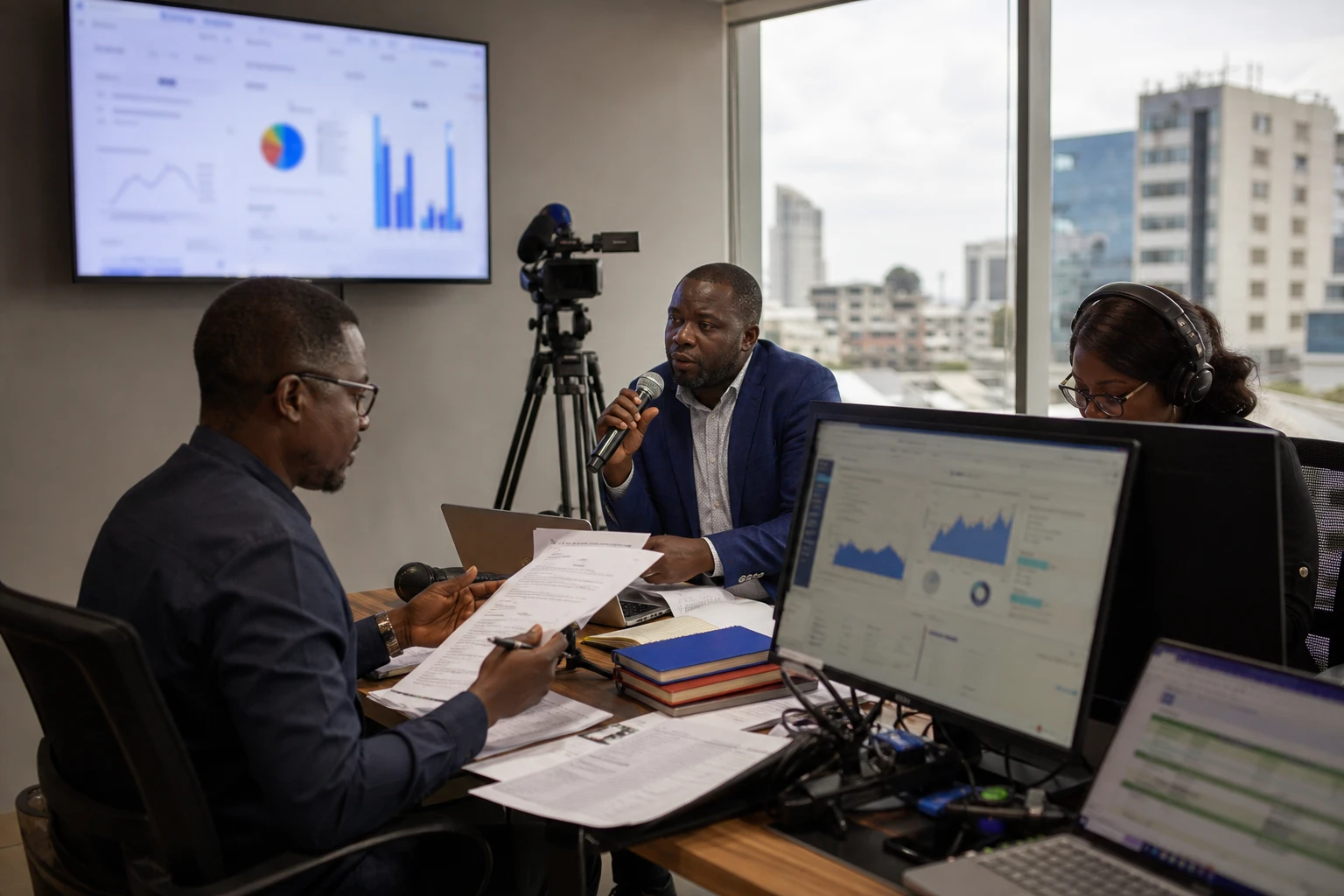
In Kinshasa, the Industry Promotion Fund and the United Nations Development Programme signed a two-year partnership on 11 July 2025 to strengthen financial inclusion and local entrepreneurship. The programme is part of the ACT initiative, for Action, Change and Transformation. The UNDP’s official statement says the aim is to support inclusive growth, build technical capacity and improve access to finance. The Congolese Press Agency confirmed the signing in Kinshasa the following day.
The target groups are clear: young people, women, farmers, artisanal miners and micro, small and medium-sized enterprises. The FPI says it wants to mobilise resources to support a competitive, inclusive and resilient industrial base. In public policy terms, this means financing projects capable of creating jobs, absorbing some local production and keeping more value added in the country.
Why this partnership is being launched now
The FPI is not a new institution. It was created by an ordinance dated 7 August 1989, then transformed into a public administrative and financial institution in 2009. Under the supervision of the Ministry of Industry, it is tasked with promoting local industry, financing projects linked to domestic production and managing revenue from the industry promotion tax. In other words, it is an old but still central instrument for productive financing in DR Congo.
The new agreement comes as the Congolese private sector continues to be held back by very tangible obstacles. The World Bank’s study of its 2024 Enterprise Survey identifies three major constraints for formal firms: access to finance, tax pressure and corruption. It adds that small and young firms remain far more exposed to credit constraints, and that unmet financing needs are deep and persistent.
The figures show the scale of the problem. In World Bank data cited in research analysed for DR Congo, fewer than 10% of medium-sized and large formal firms have a loan or line of credit. The study also notes that around 45% of firms report being credit-constrained. Similarly, credit to the private sector remains very low relative to the Congolese GDP, well below levels seen in many comparable African economies.
What the agreement could change, and what it does not yet address
The partnership therefore has political significance. It is not merely technical support. It is an attempt to lower the barriers to formal finance for actors who are often excluded because they lack collateral, a banking history or accounting records. The World Bank study also points out that young and small businesses are hardest hit by these information asymmetries and requirements for property collateral.
For women entrepreneurs and young project developers, the partnership could open a path to more suitable mechanisms. For farmers and rural value chains, it could help link production, processing and markets. For artisanal miners, who are often confined to the informal sector, the challenge is to gain access to financing tools that do not force them immediately into frameworks designed for large companies. The task, then, is to adapt credit to the realities of the Congolese economy, not the other way round.
This is crucial for Kinshasa, but also for the provinces. The World Bank study finds that financial constraints vary across regions. The capital concentrates businesses, banks and demand for credit, but this concentration can also make competition for financing fiercer. By contrast, some provinces face fewer constraints, but have a more dispersed supply of financial services. The right financing for MSMEs is therefore not just a matter for meeting rooms in the capital. It also depends on the ability to build a nationwide network.
At the regional level, DR Congo is moving forward in a Central Africa where development finance institutions and UN agencies are increasingly seeking to combine inclusion, industrialisation and employment. The African Development Bank is also promoting guarantee and trade finance mechanisms for Congolese SMEs, a sign that the issue extends beyond the national framework. The debate is thus linked to the priorities of the Economic Community of Central African States and the African Continental Free Trade Area, where the ability to produce locally determines the country’s place in African trade.
The real test will now be implementation. Financing pledges are common in DR Congo. What matters is the number of projects actually served, the quality of support, repayment levels and the ability to turn loans into productive activity. If the FPI-UNDP partnership meets its objectives, it could become a useful instrument for grassroots industrialisation in the Congo, starting with small-scale businesses, workshops, farms and local value chains. If it loses momentum, it will join the long list of programmes announced but rarely rolled out on the scale the Congolese economy requires.



