
 Algeria
 Egypt
 Libya
 Morocco
 Sudan
 Tunisia
 Benin
 Burkina Faso
 Cabo Verde
 Côte d'Ivoire
 Ghana
 Guinea
 Guinea-Bissau
 Liberia
 Mali
 Mauritania
 Niger
 Nigeria
 Senegal
 Sierra Leone
 The Gambia
 Togo
 Cameroon
 Central African Republic
 Chad
 Equatorial Guinea
 Gabon
 Republic of the Congo
 São Tomé and Príncipe
 Burundi
 Comoros
 Djibouti
 Eritrea
 Ethiopia
 Kenya
 Madagascar
 Malawi
 Mauritius
 Mozambique
 Rwanda
 Seychelles
 Somalia
 South Sudan
 Tanzania
 Uganda
 Angola
 Botswana
 Eswatini
 Lesotho
 Namibia
 South Africa
 Zambia
 Zimbabwe
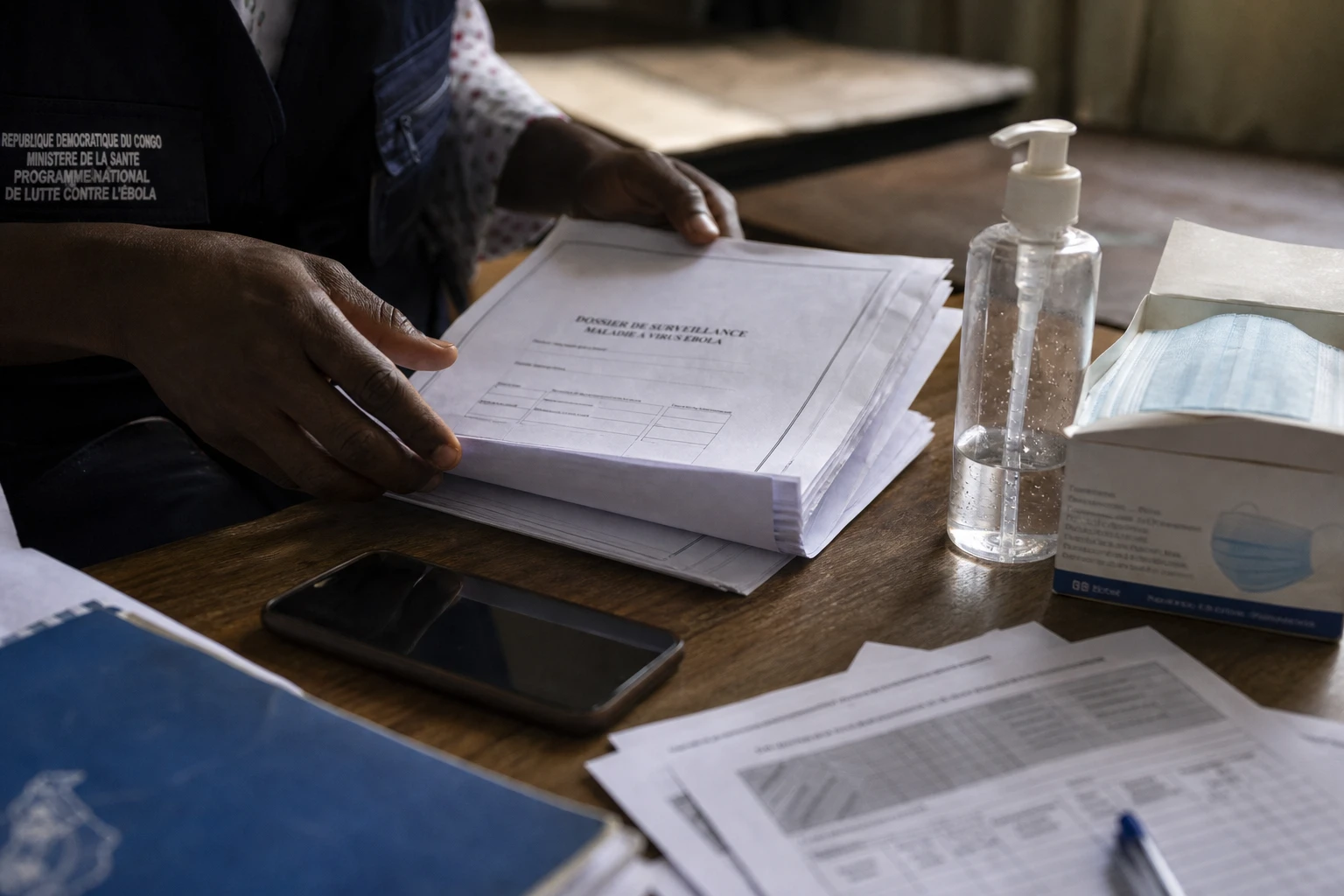
Kinshasa keeps watch without giving in to panic
Life goes on in the Congolese capital. Markets open, traffic jams remain familiar and commutes have not changed pace. Yet behind this apparent normality, the Democratic Republic of the Congo is closely monitoring an Ebola outbreak spreading mainly in the east of the country, as the World Health Organization describes it as the largest epidemic ever recorded in the country.
The contrast is striking. Kinshasa, the country’s political, administrative and health centre, remains unaffected for now, but the capital knows that an alert from the east can quickly become a national concern. In a vast country criss-crossed by numerous trade and transport routes, epidemiological surveillance is never confined to affected areas. It also takes place in major cities, where patients, healthcare workers, goods and rumours circulate.
What the health authorities say
The Congolese health ministry said that on Friday the country had recorded 3 674 confirmed cases and 1 621 deaths. These figures appear in the national bulletin and reflect a rapidly rising epidemic curve. The WHO, for its part, has confirmed that the current outbreak is now the largest ever observed in the DRC, surpassing the major 2018-2020 outbreak, which had already left a lasting mark on the country.
The key point is this: the outbreak remains concentrated in the east, particularly in Ituri, amid high mobility, insecurity and difficult humanitarian access. The WHO says the outbreak is affecting a densely populated area exposed to cross-border movements and constant pressure on health facilities. This is also why the response relies on several measures at once: screening, contact tracing, community engagement, clinical care and infection control in health facilities.
Scientifically, the current outbreak involves the Bundibugyo virus, an Ebola strain for which no vaccine or specific treatment has been approved for this outbreak so far, according to the WHO. This matters. It explains why the authorities are focusing first on early detection and the rapid isolation of cases. It also underlines how limited the options are when the response is delayed or people are reluctant to seek care at treatment centres.
Why Kinshasa remains on alert
No cases have been reported in Kinshasa so far. But the capital cannot afford to be complacent. The authorities coordinate part of the national health response there, and the National Institute of Biomedical Research, based in the city, played a central role in confirming the outbreak. In short, Kinshasa is both far from the front line of the health response and at the heart of it.
Residents are well aware of the situation. Some are already buying masks, disinfectant and preventive products. Others are avoiding crowded places. Caution is shaping behaviour without, for now, visibly disrupting daily life. This kind of response says a great deal about Africa’s major capitals: they remain economically active, but immediately absorb the fear generated by a disease with a high fatality rate.
For Kinshasa, the main risk is not only medical. It is logistical and social. In a city closely connected to the rest of the country, the slightest gap in screening could speed up the importation of the virus. The government is therefore stepping up awareness campaigns and checks at entry points. The strategy is less about shutting down the capital than slowing the virus’s entry, buying time and keeping essential services running.
A test for the Congolese health system
This outbreak highlights a familiar truth in the DRC: epidemics do not spread in isolation. They move with people, weaknesses in the hospital system, delays in seeking care and, at times, distrust of health facilities. The WHO has said the alert comes amid a humanitarian crisis, insecurity and high population mobility, complicating every stage of the response.
For healthcare workers, the challenge is immediate: protect health centres, reduce hospital-acquired infections and keep routine services running. For households, the task is to ensure that fear of Ebola does not deter patients from seeking ordinary care, such as antenatal appointments, paediatric emergency care or follow-up for chronic illnesses. In Congolese health crises, this silent shift often costs as much as the virus itself.
This is particularly acute in the east of the country, where violence and displacement are already affecting access to healthcare and food. The World Food Programme has also warned about the combined effects of the outbreak and food insecurity. When a health crisis is added to a subsistence crisis, the shock does not remain confined to hospitals. It affects incomes, local markets and families’ everyday decisions.
A Congolese issue, but also a regional one
The impact of this outbreak extends beyond the borders of the Democratic Republic of the Congo. Neighbouring Uganda has already reported imported cases, showing that surveillance must be coordinated across the border. The WHO and Africa CDC have launched a joint continental plan to strengthen preparedness, stressing that an outbreak in the Great Lakes region can quickly become a regional concern.
For Central Africa and neighbouring countries, the challenge is clear: strengthen checkpoints, align prevention messaging and avoid improvised responses that disrupt trade without improving health security. For the DRC, this episode is once again testing the state’s ability to protect its population while keeping the economy going. For the continent, it is a reminder that an effective response depends on strong health systems, reliable data and genuine African coordination, not just declarations.



