
 Algeria
 Egypt
 Libya
 Morocco
 Sudan
 Tunisia
 Benin
 Burkina Faso
 Cabo Verde
 Côte d'Ivoire
 Ghana
 Guinea
 Guinea-Bissau
 Liberia
 Mali
 Mauritania
 Niger
 Nigeria
 Senegal
 Sierra Leone
 The Gambia
 Togo
 Cameroon
 Central African Republic
 Chad
 Equatorial Guinea
 Gabon
 Republic of the Congo
 São Tomé and Príncipe
 Burundi
 Comoros
 Djibouti
 Eritrea
 Ethiopia
 Kenya
 Madagascar
 Malawi
 Mauritius
 Mozambique
 Rwanda
 Seychelles
 Somalia
 South Sudan
 Tanzania
 Uganda
 Angola
 Botswana
 Eswatini
 Lesotho
 Namibia
 South Africa
 Zambia
 Zimbabwe
A new tool to get stalled projects moving
In the Democratic Republic of the Congo, roads, water and electricity lack not only funding. They also lack the instruments needed to turn a political priority into a financeable project, and then into a completed asset. This is where the planned infrastructure bank aims to step in: not as another cashbox, but as a mechanism to prepare and structure projects and attract long-term capital.
The issue comes at a time when Kinshasa is seeking to speed up programmes already under way. In the energy sector, the DRC has joined Mission 300, the initiative led by the World Bank and the African Development Bank to expand access to electricity across the continent by 2030. The country is targeting 62% access to electricity by then, despite current levels remaining far short of that goal, while the World Bank says the DRC is among the countries with the largest numbers of people without electricity.
Huge needs, from primary networks to neighbourhoods
The starting point is well known, but remains stark. In the DRC, nearly 65% of the population lacks access to a basic drinking-water service, and 84% lacks access to basic sanitation. The gaps are even wider in rural areas. The World Bank also notes that these shortfalls directly affect growth, health and the continuity of public services.
Transport tells the same story. The Congolese road network extends for around 152,400 kilometres, but paved roads remain a small minority. A document from the International Monetary Fund cites a figure of 2% of roads being asphalted, illustrating the fragility of a vast territory where mobility remains costly for households and businesses alike. The FAO had already noted that the national network was widely degraded, with only a very small share of roads in good condition.
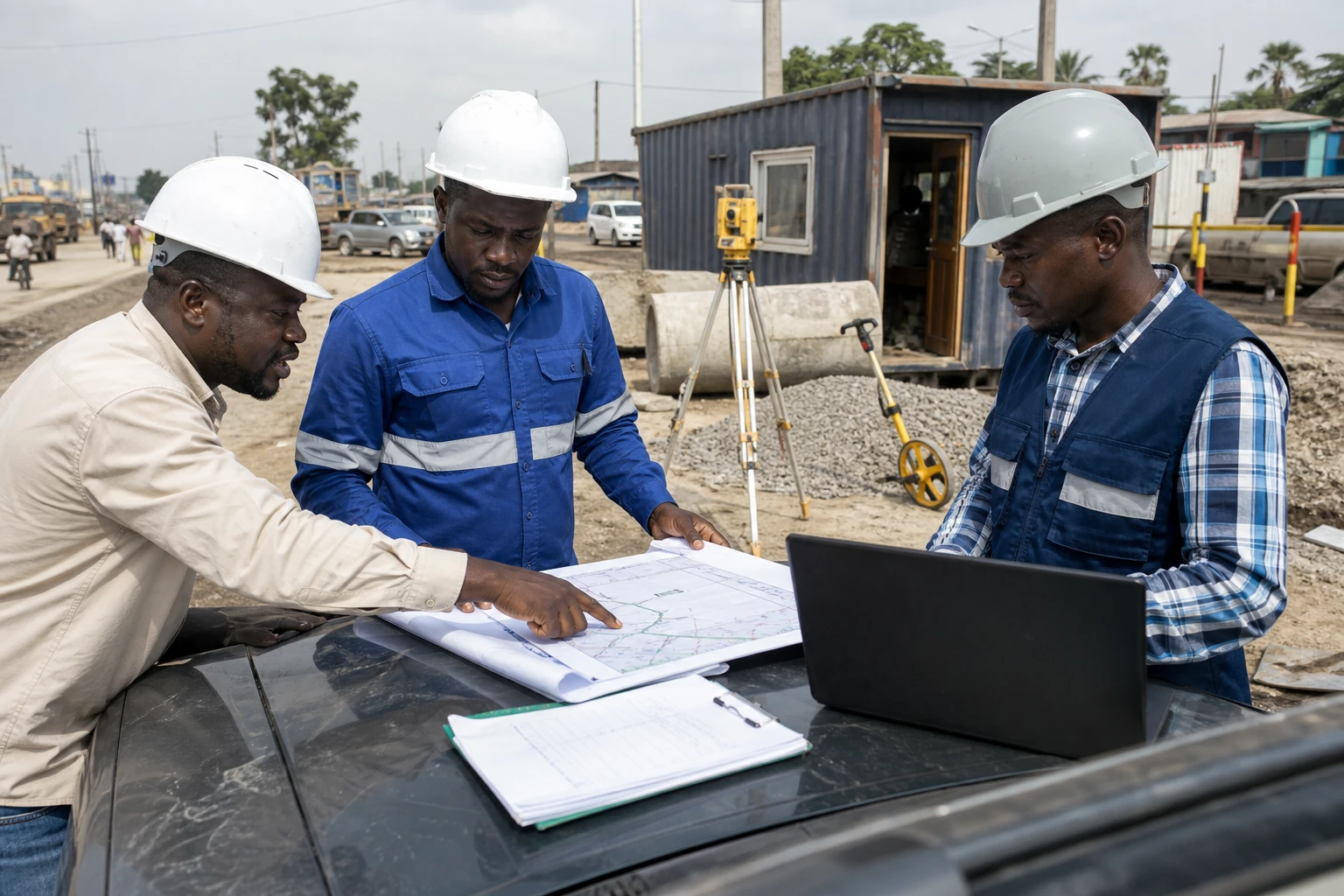
In this context, an infrastructure bank can play a specific role: select projects, prepare them technically, legally and financially, and then make them bankable. The term means that a proposal is structured well enough to interest investors, banks or public-sector partners. It is invisible work, but decisive. Without it, projects often remain stuck between an idea, a study and the first disbursement.
What the government wants to fix
The project was presented to the Council of Ministers by Infrastructure and Public Works Minister John Banza, who proposed setting up an interministerial and technical task force to prepare its operational launch. According to information published by the Prime Minister’s Office, the team is to define the institution’s legal framework, financial structure, governance and areas of activity. An initial portfolio of projects has reportedly already been presented to the government.
This move follows a course that has been evident in Kinshasa for several years: making infrastructure a central driver of development, on a par with macroeconomic reforms. The Prime Minister’s Office recently highlighted discussions with an international financial consortium to support major projects in energy, transport, and rail and port networks. The government is therefore seeking financing arrangements that bring together the state, donors and the private sector.
The idea is not new in Africa. Several countries have already established public or quasi-public bodies to prepare investments, secure concessional financing and reduce reliance on ordinary budgets. The difference lies in governance. If the future Congolese bank merely piles up promises and sovereign guarantees, it risks becoming another institution with no real impact. If it selects robust projects with clear rules for sharing risks, it could instead speed up useful works.
The real battle: credibility
That is the sensitive point. An infrastructure bank is not an ordinary counter service. It must balance profitability, public utility and debt sustainability. In the DRC, this balance will matter all the more because needs are immense in transport, electricity, water and sanitation. The government therefore wants to use public funds as leverage, to mobilise several times their value from private investors and financial institutions.
But leverage works only if projects are well prepared. A poorly designed road, a power plant without a reliable buyer, or a water network without a clear operating model will convince neither banks nor investment funds. The future institution will therefore have to do what many ministries struggle to manage alone: align studies, procurement, guarantees and implementation timetables.
For Congolese people, the stakes are tangible. In Kinshasa and the provinces alike, the state of basic networks means hours lost in traffic jams, power cuts, high logistics costs and water that is still too often difficult to access. Formal businesses lose competitiveness as a result. The informal economy pays in time, energy and health risks. An infrastructure bank will not improve everything, but it could narrow the gap between an identified need and funding actually being released.
A reach beyond Kinshasa
The project’s reach extends beyond the DRC alone. In Central Africa, where cross-border corridors, energy networks and logistics chains remain fragmented, the ability to structure large-scale projects is also of interest to regional partners. It matters to the Southern African Development Community, of which the DRC is a member, as well as to continental institutions pushing for greater economic integration and private financing of infrastructure.
At a pan-African level, the issue feeds into a broader debate: how to finance infrastructure without locking states into permanent reliance on public budgets and external aid. Mission 300, World Bank water programmes and transport projects supported in the DRC all reflect the same logic. The continent does not lack priorities. It often lacks vehicles capable of turning those priorities into durable assets. The future Congolese bank will be judged on one question alone: can it make projects credible quickly enough for the money to follow?



