Algeria
 Egypt
 Libya
 Morocco
 Sudan
 Tunisia
 Benin
 Burkina Faso
 Cabo Verde
 Côte d'Ivoire
 Ghana
 Guinea
 Guinea-Bissau
 Liberia
 Mali
 Mauritania
 Niger
 Nigeria
 Senegal
 Sierra Leone
 The Gambia
 Togo
 Cameroon
 Central African Republic
 Chad
 Equatorial Guinea
 Gabon
 Republic of the Congo
 São Tomé and Príncipe
 Burundi
 Comoros
 Djibouti
 Eritrea
 Ethiopia
 Kenya
 Madagascar
 Malawi
 Mauritius
 Mozambique
 Rwanda
 Seychelles
 Somalia
 South Sudan
 Tanzania
 Uganda
 Angola
 Botswana
 Eswatini
 Lesotho
 Namibia
 South Africa
 Zambia
 Zimbabwe
The river, a backbone for health and the economy
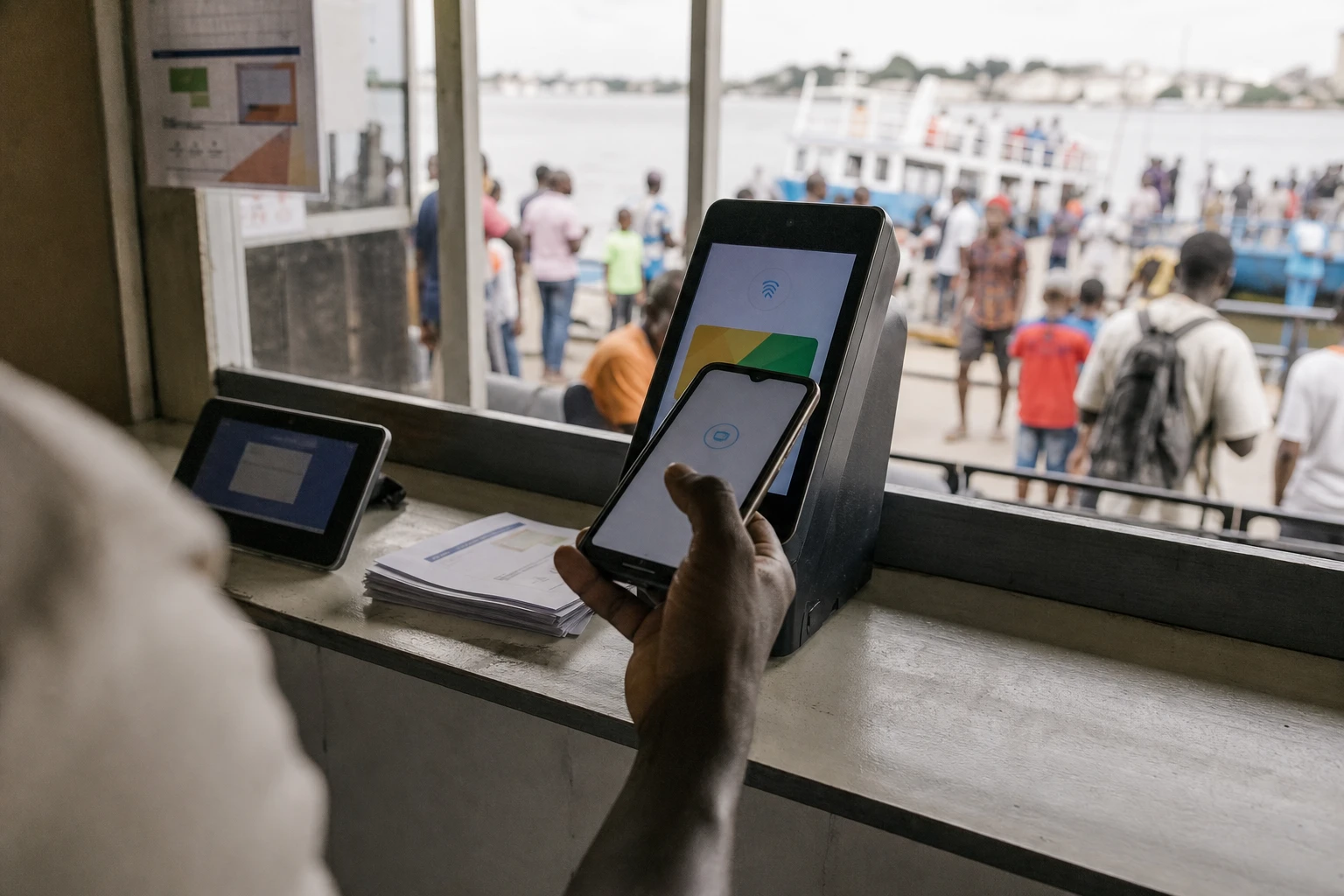
In the Democratic Republic of the Congo, a virus never travels alone. It moves on dugout canoes, barges, riverside markets, river stations and roads that extend the Congo River into Kinshasa’s neighbourhoods. That is where a decisive part of the response is now being played out: not only in treatment centres, but also at crossing points where the disease can be detected before reaching denser, more exposed cities. The new surveillance system is designed to address this shifting reality, shaped by daily mobility, trade and family journeys.
The choice of the river is no coincidence. This artery connects millions of people and carries a significant share of the country’s domestic trade. It passes through areas where official ports, informal landing sites and uneven checks coexist. In a country as vast as DR Congo, where Kinshasa remains the main administrative and commercial hub, a weakness at a single crossing point can have very rapid effects across the entire river corridor. The situation is all the more sensitive because the current outbreak affects several provinces and requires the authorities to consider surveillance well beyond conventional health boundaries.
Stronger measures between Kisangani and Kinshasa
The Congolese government has launched the “Congo River Ebola-Free” initiative to step up surveillance along the river corridor, with support from an inter-agency mechanism bringing together the WHO, IOM, UNICEF and WFP. The programme is backed by catalytic funding of US$9 million and is intended to secure the main route between Kisangani, Mbandaka and Kinshasa, while reducing the risk of spread to the Republic of the Congo and the Central African Republic. Its stated aims are practical: detect cases sooner, temporarily isolate people if necessary, protect frontline workers and improve the sharing of alerts between services.
The system centres on 40 strategic points along the river and other major transport routes. These points will be used to screen travellers, record alerts, refer suspected cases and, where necessary, set up temporary isolation areas. The project also provides for protective equipment, handwashing stations, staff training and better links between checkpoints and nearby health facilities. In Kinshasa, screening corridors and hygiene stations were already being prepared at Ndolo and Beach Onatra, two locations heavily exposed to the movement of passengers and goods.
This structure addresses a weakness documented over several weeks: surveillance remains more robust at some official points than at informal ports and secondary landing sites, where a share of actual movement takes place. Yet on a river more than 4,700 kilometres long and connected to numerous stopping points, mapping flows matters as much as conducting checks. Without reliable information on the routes being used, the authorities cannot anticipate risks or deploy teams effectively. This is precisely the gap the new system is intended to fill.
Results already visible, but the chain remains incomplete
DR Congo did not wait for this announcement to establish epidemiological surveillance. By mid-July, operational support already covered 27 points of entry and 76 checkpoints, with more than 1.6 million screenings carried out. These checks had led to 74 alerts being raised, 61 of which were verified and referred. More recently, more than 7,000 travellers were screened in two weeks at Bende-Bende port, near Kinshasa, after an incident that underlined the need for constant vigilance along riverbanks and at ports.
The screening of the Yingfeng 2 vessel also demonstrated the value of this surveillance chain. The ship had raised suspicions of cases on board before its arrival in Kinshasa. Passengers were checked and no cases of Ebola were detected. The incident confirmed that a well-managed alert can prevent panic while reducing health risks. It also served as a reminder that, during an epidemic, the absence of a confirmed case is no reason to lower vigilance. On the contrary, this is often when a system’s resilience is put to the test.
On the ground, the response has to contend with several constraints at once. Surveillance must go hand in hand with rapid treatment. People must be isolated without unnecessarily disrupting the movement of essential goods. The public must be reassured without downplaying the risks. And staff, sometimes a long way from hospitals, must be trained in areas where the alert chain may depend on a radio, a charged phone or a passing boat. That is why the quality of coordination between river posts, health centres and local authorities is becoming as important as the availability of tests.
A health response, but also a test of governance
The situation in DR Congo goes beyond the medical question. It tests the state’s ability to manage mobility, share information between central and provincial levels, and work with neighbouring countries in a shared transit area. The Congo River is not a closed border: it is a regional passageway. When Kinshasa strengthens a health corridor, Brazzaville, Bangui and riverside cities immediately see the effects on their own systems. This is a matter of interdependence, not separation.
Within this framework, the consequences are not the same for everyone. For the authorities, the challenge is to prevent the outbreak from spreading to major urban centres and overburdening already stretched health facilities. For traders, boat operators and travellers, the challenge is twofold: to keep moving while facing more frequent checks. For riverside communities, the system’s quality will depend on whether it can be visible without being humiliating, and effective without causing blockages. Well-run surveillance should not turn riverbanks into places of endless waiting; it should become a public prevention service.
The epidemic situation remains serious. The WHO says the Democratic Republic of the Congo is facing an outbreak of Bundibugyo virus disease, a type of Ebola for which there is currently no approved vaccine or specific treatment. On 24 August 2026, the Health Emergency Committee recommended further strengthening surveillance, detection, infection prevention, and the management of gatherings and internal mobility. This means the country is entering a phase in which every journey could become a critical link in the response.
What this choice says about DR Congo and Central Africa
At regional level, the “Congo River Ebola-Free” initiative points to something broader: Africa’s major transport corridors are no longer only economic routes; they are also public health infrastructure. In Central Africa, where river trade remains essential, prevention can no longer be viewed as strictly a hospital matter. It must be embedded at ports, landing sites, stations, land borders and within community alert systems. That is where the speed of response is determined.
For DR Congo, the immediate challenge will be to sustain the effort. The announced strategic points will have to remain operational after the initial announcement, with trained staff, available stocks and smooth data flows. Otherwise, the surveillance chain will weaken in the same places as before: secondary ports, informal crossings, reporting delays and imperfect coordination. If, by contrast, the system holds, it could become a model for corridor surveillance, useful well beyond the current outbreak and adaptable to other health threats across the continent.