
 Algeria
 Egypt
 Libya
 Morocco
 Sudan
 Tunisia
 Benin
 Burkina Faso
 Cabo Verde
 Côte d'Ivoire
 Ghana
 Guinea
 Guinea-Bissau
 Liberia
 Mali
 Mauritania
 Niger
 Nigeria
 Senegal
 Sierra Leone
 The Gambia
 Togo
 Cameroon
 Central African Republic
 Chad
 Equatorial Guinea
 Gabon
 Republic of the Congo
 São Tomé and Príncipe
 Burundi
 Comoros
 Djibouti
 Eritrea
 Ethiopia
 Kenya
 Madagascar
 Malawi
 Mauritius
 Mozambique
 Rwanda
 Seychelles
 Somalia
 South Sudan
 Tanzania
 Uganda
 Angola
 Botswana
 Eswatini
 Lesotho
 Namibia
 South Africa
 Zambia
 Zimbabwe
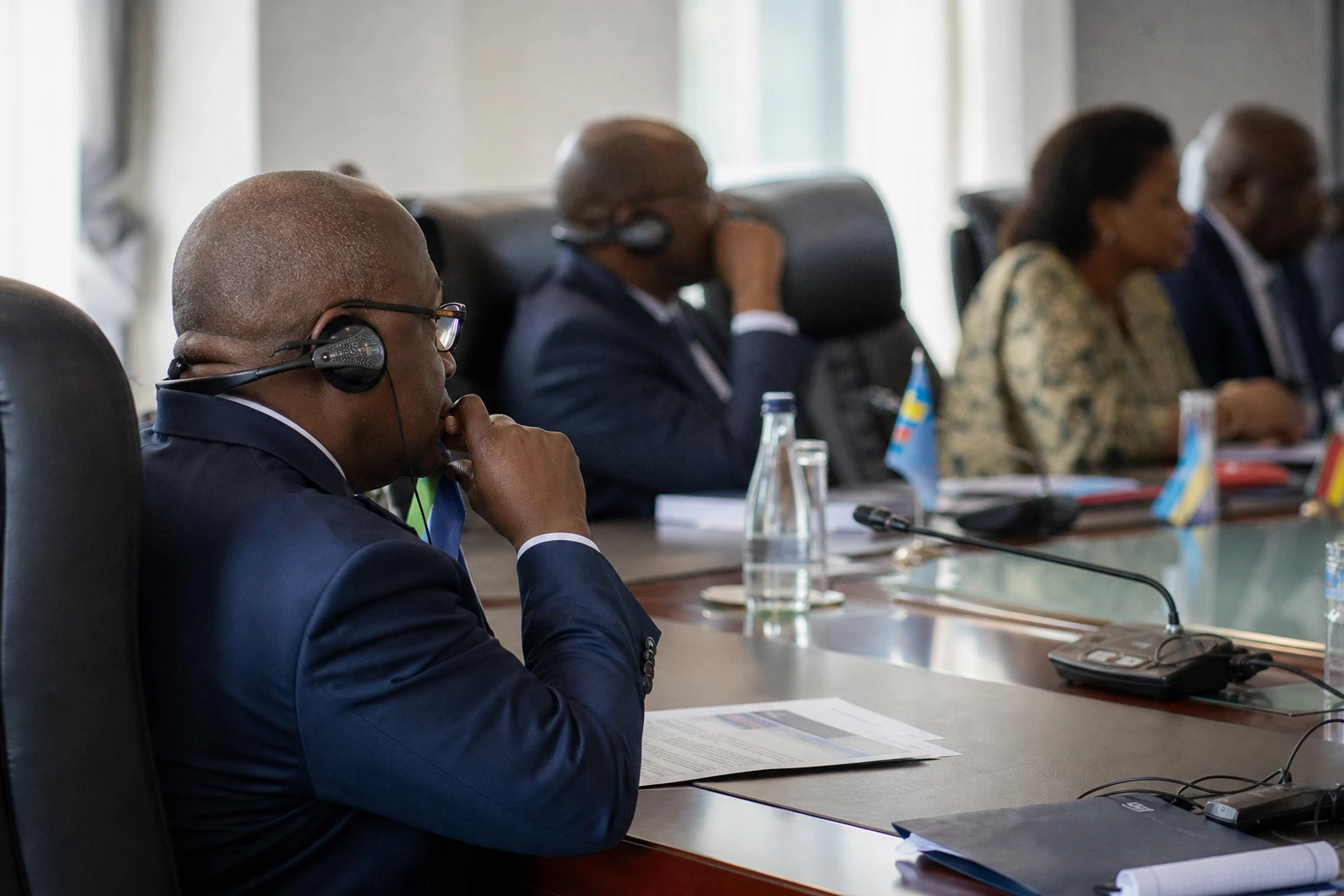
In Kinshasa, the response is not confined to treatment centres
In the Democratic Republic of the Congo, Ebola is never an isolated health crisis. It is also a test of surveillance, public trust and coordination between Kinshasa, the eastern provinces and neighbouring countries. In the case of the Bundibugyo virus outbreak, the challenge is even clearer: the virus is spreading fast, many health zones are affected, and early signs show that community detection is still coming too late.
The term IHR refers to the International Health Regulations, the WHO instrument that sets out surveillance and alert obligations between states. When the UN agency updates its temporary recommendations, it is not speaking only to the Congolese authorities. It is also addressing countries in the Great Lakes region, where border crossings, markets, conflict-related movements and trade routes make any outbreak potentially cross-border.
What the WHO is asking member states to do
On 18 August 2026, the WHO Director-General kept the outbreak classified as a public health emergency of international concern. Two days later, the Emergency Committee updated its temporary recommendations. The focus is on surveillance, the rapid detection and investigation of suspected cases, infection prevention, community engagement and cooperation between neighbouring countries. At the same time, the WHO classified the Democratic Republic of the Congo as being at «very high» risk, while several neighbours, including Burundi and the Central African Republic, remain at high risk.
This risk ranking says a great deal about the structure of the response. Its centre of gravity is in the DRC, but the alert extends to Angola, Rwanda, Uganda, South Sudan, Tanzania, Zambia, the Republic of the Congo, Burundi and the Central African Republic. The WHO stresses preparedness at borders, alert systems and coordination between states, because a virus moving through areas with high mobility does not stop at administrative boundaries.
Figures that point to an exceptional outbreak
The latest figures available at the end of August 2026 confirm the scale of the crisis. The Congolese health ministry reported 5,514 confirmed cases and 2,642 deaths, a case fatality rate of 47.9%. In its most recent updates, the WHO published slightly different figures, reflecting the dates on which data were consolidated: 4,665 cases and 2,184 deaths as of 12 August, followed by 5,290 cases and 2,516 deaths as of 21 August. These discrepancies do not contradict the trend; above all, they show an outbreak expanding rapidly, with confirmed cases rising almost continuously.
The central issue, then, is not just the absolute number of patients. It is the speed of spread. The WHO and Africa CDC describe sustained transmission, now extending across several provinces, with new health zones affected week by week. The initial outbreak is no longer confined to one area. It is spreading into a wider health region, where chains of infection have become harder to trace.
This dynamic is putting direct pressure on local hospitals, field teams and families. In urban neighbourhoods as in rural areas, every delay in seeking care increases the risk. Health workers face a double challenge: providing care quickly while avoiding infection. For households, the disease brings additional costs for transport, isolation and sometimes safe burials. In a country where access to healthcare remains unequal, the Ebola response first exposes the fragility of ordinary health services.
Why the crisis extends beyond the DRC
The regional perspective is essential. Eastern Congo continues to see population movements linked to armed conflict, mining, trade and urban gatherings. This complicates contact tracing and makes public health measures harder to implement over time. The WHO has also said that very high mobility, combined with distrust of medical facilities, continues to fuel the spread of the virus.
At continental level, the outbreak also highlights the importance of joint preparedness between the African Union, Africa CDC and subregional organisations. When the WHO places some states at high risk, it is doing more than issuing a technical alert. It is signalling a political necessity: share data, harmonise health checks at points of entry and act before imported cases take hold. In the Great Lakes region, this approach matters as much as treatment itself.
The other lesson is more structural. Successive Ebola outbreaks in the DRC show that success depends not only on vaccines or specialised centres. It also depends on local trust, community engagement, rapid reporting and the authorities’ ability to work with local networks. The WHO and Africa CDC have recently stressed a response «led by communities», precisely because delays in detection weigh heavily in a disease with a high fatality rate.
For the Democratic Republic of the Congo, the immediate priority is clear: break the chains of transmission before the outbreak spreads further. For the region, the task is to strengthen shared health surveillance that does not rely on emergencies alone. And for the continent, this latest outbreak confirms that no health system is fully protected while epidemiological borders remain more porous than coordination mechanisms.



