Algeria
 Egypt
 Libya
 Morocco
 Sudan
 Tunisia
 Benin
 Burkina Faso
 Cabo Verde
 Côte d'Ivoire
 Ghana
 Guinea
 Guinea-Bissau
 Liberia
 Mali
 Mauritania
 Niger
 Nigeria
 Senegal
 Sierra Leone
 The Gambia
 Togo
 Cameroon
 Central African Republic
 Chad
 Equatorial Guinea
 Gabon
 Republic of the Congo
 São Tomé and Príncipe
 Burundi
 Comoros
 Djibouti
 Eritrea
 Ethiopia
 Kenya
 Madagascar
 Malawi
 Mauritius
 Mozambique
 Rwanda
 Seychelles
 Somalia
 South Sudan
 Tanzania
 Uganda
 Angola
 Botswana
 Eswatini
 Lesotho
 Namibia
 South Africa
 Zambia
 Zimbabwe
A health crisis that goes beyond Ebola
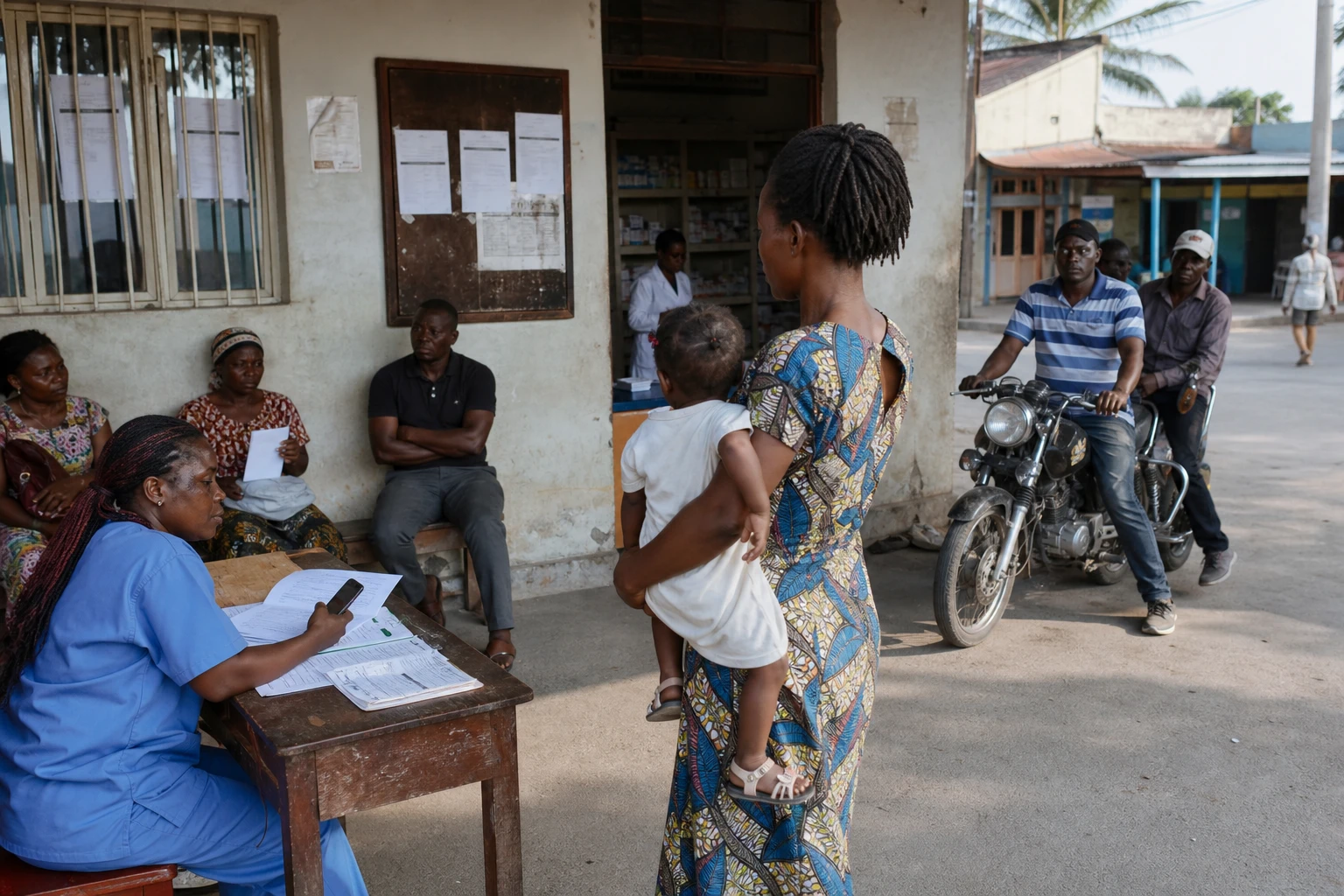
In eastern Democratic Republic of the Congo, an epidemic is measured not only in numbers. It is also seen in blocked roads, overwhelmed health centres and families’ mistrust, when the warning arrives faster than medical teams. Since 15 May 2026, the DRC has been facing a new outbreak of Ebola virus disease caused by the Bundibugyo variant, already declared a public health emergency of international concern by the WHO.
The latest toll made public by the Congolese authorities puts this outbreak above the 2018–2020 one, long considered the deadliest in the country. According to data cited by several sources supporting the response, more than 2,300 deaths have been recorded, while confirmed cases have now exceeded 4,900. These figures place the epidemic among the most severe ever recorded in Central Africa.
Ituri, Kinshasa and the health decision-making chain
The outbreak began in Ituri, in the north-east, before spreading to North Kivu, South Kivu, Tshopo, Haut-Uélé and Bas-Uélé. This progression says much about the fragility of Congolese territory: difficult transport, remote health zones, incomplete surveillance and an uneven state presence across provinces. The World Health Organization notes that the outbreak is the 17th Ebola outbreak declared in the DRC since 1976.
The government declared the epidemic on 15 May 2026, after initial signs emerged several weeks earlier. On 17 May, the WHO then assessed that the event met the criteria for an international health emergency. In Kinshasa, the National Institute of Biomedical Research confirmed the Bundibugyo strain, a rare subtype of the Ebola virus. This matters because it guides the entire medical and scientific response.
The response has been placed under the authority of the Prime Minister’s Office, a sign that the authorities want multisectoral coordination. Prime Minister Judith Suminwa Tuluka has monitored the response alongside health and humanitarian teams, as logistical needs, community surveillance and clinical care require a clear chain of command.
Why this outbreak is killing so quickly
The Bundibugyo strain complicates the response. The WHO says no approved vaccine or validated specific treatment is available for this variant, although several vaccines are being tested. This does not mean that nothing can be done, but that prevention relies primarily on rapid detection, isolation, contact tracing and safe and dignified burials.
The problem is also one of timing. The WHO and the Congolese authorities have noted a delay between the first suspected cases and laboratory confirmation. This delay allowed the virus to gain ground. Added to this are damaged roads, insecurity in some areas of the east and the difficulty of tracking population movements that largely evade monitoring systems.
Health workers are also paying a heavy price. UN sources reported infections and deaths among healthcare workers early in the response, undermining both community trust and local facilities’ ability to absorb the shock. In an Ebola epidemic, losing medical staff often also means losing eyes, hands and vital local contacts.
What this means for the Congolese and the region
For residents, the stakes are not abstract. In the affected provinces, families must contend with the fear of infection, the temporary closure of some services and the difficulty of accessing quality care. For traders, travellers and households dependent on small-scale transport or border markets, each health alert can also slow trade and raise the cost of living.
Regionally, the DRC lies at the heart of a busy transit area linking it with Uganda and, more broadly, the African Great Lakes region. The WHO has said the epidemic has already crossed borders in terms of risk management, with cases exported and precautionary measures taken as far away as Europe and Canada. In other words, a crisis that began in Ituri can quickly become a health security issue well beyond Kinshasa.
This dynamic also highlights a central point for Central Africa: public health depends as much on laboratories as on social trust. Without listening to communities, clear communication and rapid access to care, technical measures are not enough. The Congolese authorities, the WHO and their partners say they hope to reverse the trend within three months. This period will be decisive in determining whether the DRC can contain the epidemic before it further increases an already historic toll.