
 Algeria
 Egypt
 Libya
 Morocco
 Sudan
 Tunisia
 Benin
 Burkina Faso
 Cabo Verde
 Côte d'Ivoire
 Ghana
 Guinea
 Guinea-Bissau
 Liberia
 Mali
 Mauritania
 Niger
 Nigeria
 Senegal
 Sierra Leone
 The Gambia
 Togo
 Cameroon
 Central African Republic
 Chad
 Equatorial Guinea
 Gabon
 Republic of the Congo
 São Tomé and Príncipe
 Burundi
 Comoros
 Djibouti
 Eritrea
 Ethiopia
 Kenya
 Madagascar
 Malawi
 Mauritius
 Mozambique
 Rwanda
 Seychelles
 Somalia
 South Sudan
 Tanzania
 Uganda
 Angola
 Botswana
 Eswatini
 Lesotho
 Namibia
 South Africa
 Zambia
 Zimbabwe
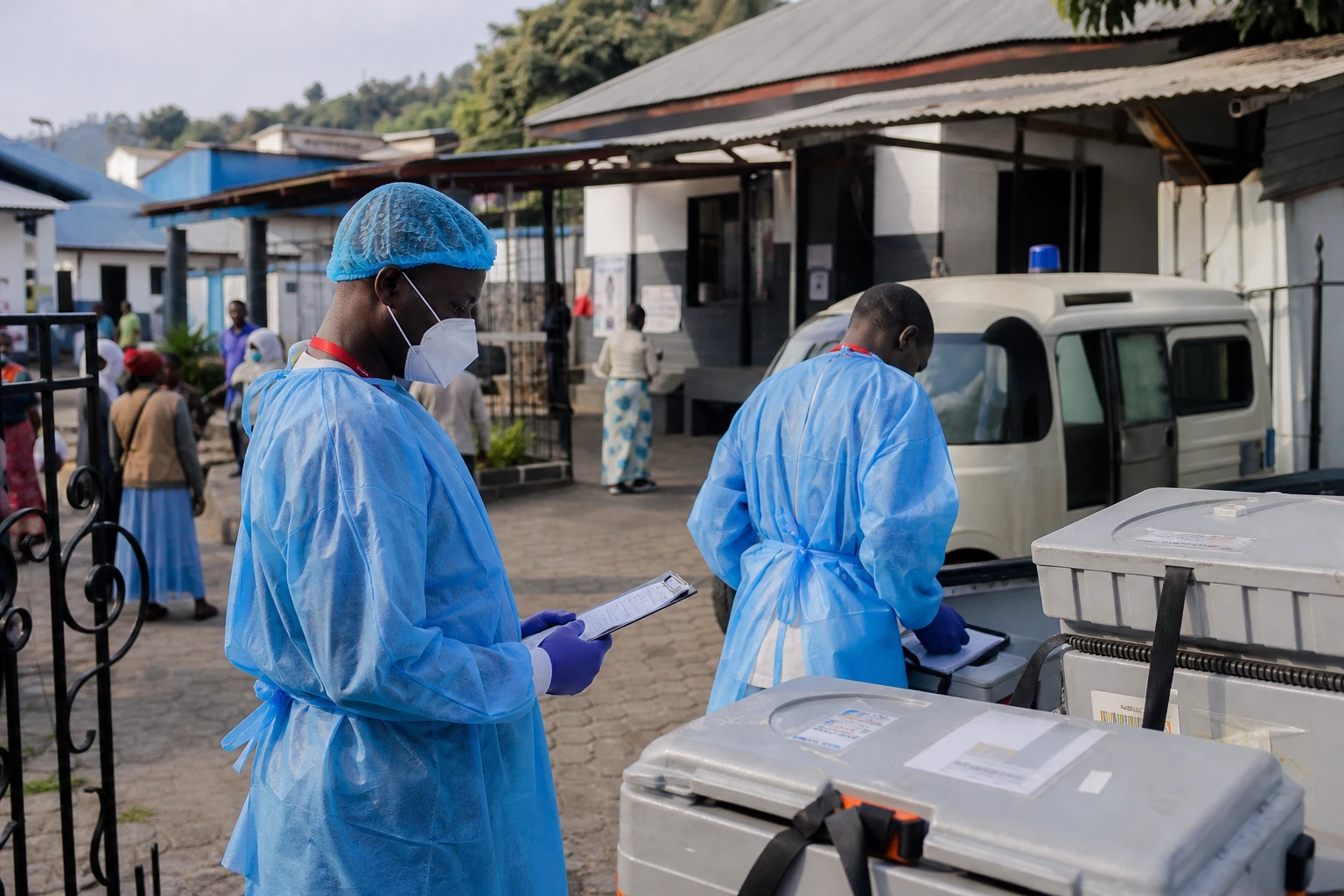
In Beni, North Kivu, the Ebola response also depends on protecting those carrying it out. The infection of a Médecins Sans Frontières (MSF) worker in the field is a reminder that equipment and protocols reduce the risk but cannot eliminate it.
The case comes as the Democratic Republic of the Congo faces an outbreak of Bundibugyo virus disease, a strain distinct from Zaire ebolavirus. As of 29 September 2026, the World Health Organization had recorded 8,224 confirmed cases and 3,982 deaths in DR Congo, a case fatality rate of 48%. The figures come from the Congolese health ministry and remain subject to revision.
Evacuation organised from Beni
MSF confirmed on Thursday 1 October 2026 that one of its staff had tested positive for Bundibugyo virus. The person was involved in Ebola response operations in eastern DR Congo. Their nationality has not been disclosed.
According to information provided by the medical organisation, the patient was evacuated to the Netherlands under a strict medical protocol. They are to be treated in a specialised unit at Leiden University Hospital in the Netherlands. The transfer was co-ordinated with Congolese and Dutch health authorities.
Congolese Health Minister Roger Kamba said the infection had occurred in the Beni area. The evacuation was carried out directly from the city, without going through Kinshasa, on a special flight authorised by the Congolese authorities.
The decision was driven by medical necessity. Every additional step increases handling, contact and logistical demands. A direct transfer therefore helps limit risks while bringing the patient quickly to a facility equipped to deal with highly contagious infections.
MSF said the operation followed the safety measures prescribed for this type of transport. The organisation has not provided detailed information about the patient’s clinical condition. No conclusions should therefore be drawn about their prognosis.
Frontline teams remain at risk
The infection of a medical worker does not necessarily indicate a widespread failure in the response. Rather, it highlights the difficulties of working in treatment centres, health facilities and affected communities.
Teams must identify suspected cases, organise isolation, support families, monitor contacts and ensure safe burials. They often work in areas where travel is difficult. In North Kivu, insecurity further hampers access to patients and continuity of care.
MSF says training, personal protective equipment and infection-control procedures have greatly reduced occupational exposure during previous outbreaks. However, no measures can eliminate the danger entirely, particularly when teams are under pressure and patients are sometimes treated late.
Minister Roger Kamba also said the infected person had not yet been vaccinated. The authorities were preparing to begin vaccination in Beni, while teams had already been deployed. In Ituri, another heavily affected province, the campaign had begun with MSF’s support.
The situation illustrates the complexity of the response to Bundibugyo. Tools developed during previous outbreaks remain useful, but their effectiveness must be assessed against this strain. According to available data, no widely established vaccine or specific treatment for Bundibugyo virus is yet available. Care therefore relies mainly on rapid diagnosis, isolation, supportive care and contact tracing.
An outbreak extending beyond North Kivu
The case in Beni is part of a health crisis that has now spread more widely. The WHO says the outbreak is affecting several Congolese provinces and that the authorities are also monitoring situations linked to cross-border movements. Uganda has recorded cases imported from DR Congo, while a case linked to the outbreak was reported in France before the WHO’s latest situation report.
The regional dimension is significant. North Kivu shares active borders with Uganda and Rwanda. Trade, family visits and workers’ movements make it difficult to limit any response to a single territory. Border surveillance must therefore be co-ordinated without penalising people who rely on daily crossings for their livelihoods and access to services.
This co-ordination primarily involves DR Congo and its immediate neighbours. It also concerns continental institutions, notably the Africa Centres for Disease Control and Prevention, which are tracking the outbreak and warning of its geographical spread. A general border closure is not an automatic response. The priority remains rapid case identification, dignified care for patients and the reliable flow of information.
In urban areas such as Beni and Bunia, the outbreak is disrupting markets, transport and health services. In rural areas, the distance to treatment centres can delay diagnosis. Families sometimes have to choose between seeking care quickly and safeguarding their daily income. This reality directly affects the effectiveness of the response.
Trust is a medical and social concern
Protecting healthcare workers depends on more than protective suits and masks. It also rests on trust between teams, authorities and communities. When families are reluctant to report a sick person or accept a transfer, the virus has more time to spread.
Health authorities and partners must therefore explain protocols in languages understood locally. They must also ensure respectful burials, inform relatives and address concerns about vaccines. Community organisations, religious leaders and Congolese health workers all play a central role.
The infection of an MSF worker is also a reminder that the response cannot rely solely on international staff. Congolese workers remain at the heart of surveillance, care and public awareness. Their safety, pay and access to equipment are essential to maintaining the response.
In the coming days, developments in Beni, vaccination coverage in North Kivu and the spread of the outbreak to other provinces will be closely monitored. The transfer to the Netherlands is an individual protective measure. The collective challenge remains in DR Congo: detect cases earlier, provide treatment faster and maintain trust in the areas most exposed.



