
 Algeria
 Egypt
 Libya
 Morocco
 Sudan
 Tunisia
 Benin
 Burkina Faso
 Cabo Verde
 Côte d'Ivoire
 Ghana
 Guinea
 Guinea-Bissau
 Liberia
 Mali
 Mauritania
 Niger
 Nigeria
 Senegal
 Sierra Leone
 The Gambia
 Togo
 Cameroon
 Central African Republic
 Chad
 Equatorial Guinea
 Gabon
 Republic of the Congo
 São Tomé and Príncipe
 Burundi
 Comoros
 Djibouti
 Eritrea
 Ethiopia
 Kenya
 Madagascar
 Malawi
 Mauritius
 Mozambique
 Rwanda
 Seychelles
 Somalia
 South Sudan
 Tanzania
 Uganda
 Angola
 Botswana
 Eswatini
 Lesotho
 Namibia
 South Africa
 Zambia
 Zimbabwe
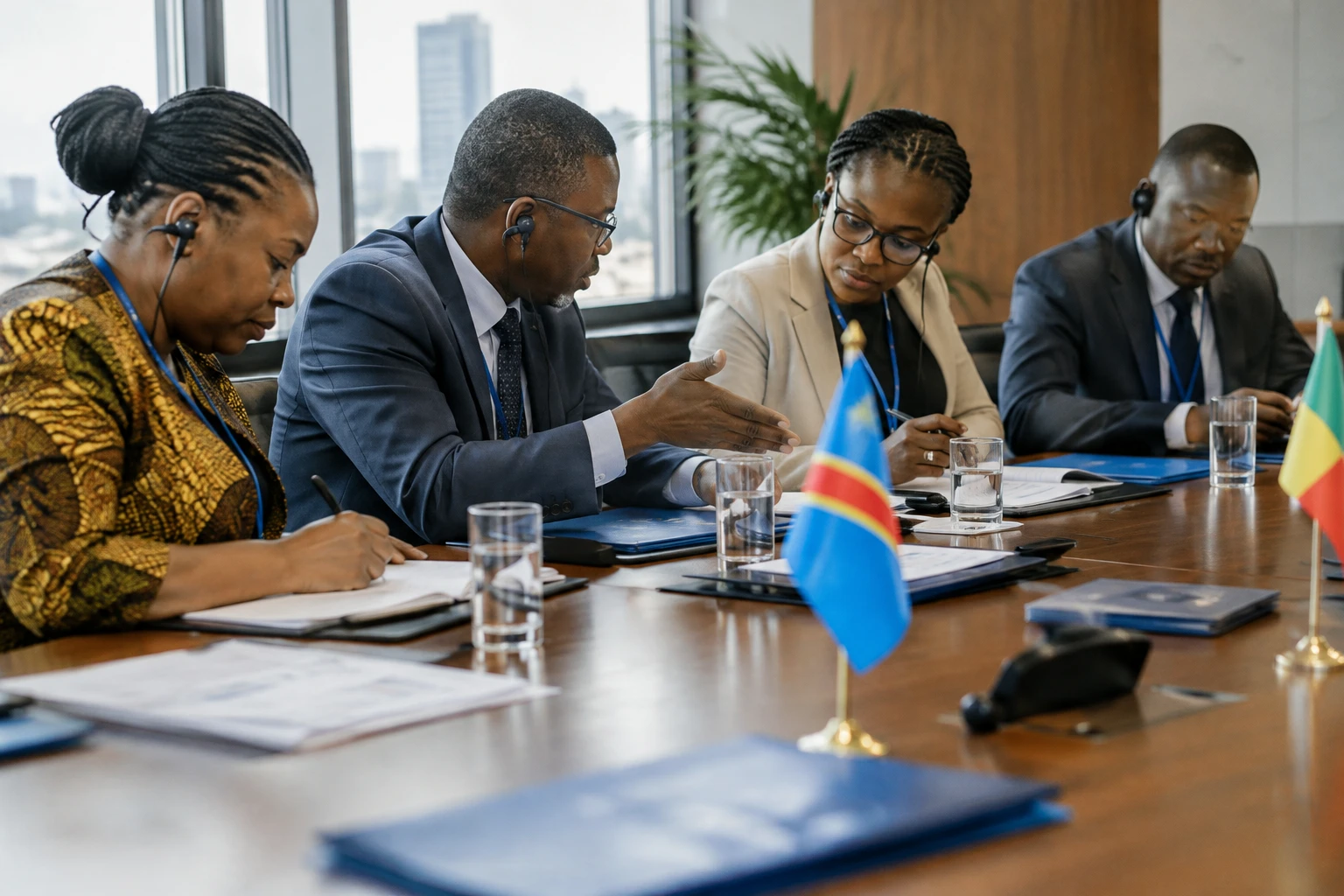
Hundreds of millions of dollars have been announced to fight Ebola in the Democratic Republic of the Congo. But an essential question remains: how much of this money can be linked to organisations and field activities? In Kinshasa, Africa CDC is now calling for more precise tracking of funding.
Announcements do not yet show where the money is going
The DRC is facing a new Ebola outbreak, in a context where the response depends on national authorities, local health teams and external partners. Not all announced funding corresponds to money already spent: a pledge, a disbursement to an organisation and verified spending on the ground are three different stages.
This distinction lies at the heart of the debate. On 4 October, Africa CDC, the African Union’s public health agency, had already publicly supported the Congolese authorities’ call to strengthen transparency and the traceability of resources. The organisation linked this issue to the priorities set at a high-level meeting held on 5 August under the chairmanship of Félix Tshisekedi. Africa CDC’s statement on financial accountability says resources must reach communities, health facilities and frontline teams.
The regional dimension is immediate. The movement of people and cross-border exchanges require coordination with neighbouring countries. On 13 October, the World Bank Group announced an additional $80 million for the national response in the DRC and $13 million to support regional preparedness and the institutions concerned. This announcement relates to funding separate from the $962 million cited by Africa CDC. Details of the World Bank’s new support clearly distinguish the Congolese component from the regional one.
What the checks have established
On Wednesday 14 October 2026 in Kinshasa, Africa CDC director-general Jean Kaseya said donors had provided him with information indicating that $962 million had already been disbursed to partners tasked with implementing the response. At this stage, these are amounts reported by donors, not a public audit confirming every expenditure.
According to information reported by several Congolese media outlets, a verification meeting organised with the National Institute of Public Health (INSP) was attended by only some of the partners invited. Those who took part enabled just over $200 million to be linked to organisations involved in the response. Jean Kaseya therefore puts the gap still to be clarified at more than $700 million. Radio Okapi and the Congolese Press Agency report the same order of magnitude.
These figures do not prove that the money was misappropriated. “Untraced” means the checks described have not yet established the path of the missing sum. The explanation could be incomplete data, reporting delays or difficulties consolidating the accounts of several organisations. The available information does not make it possible to choose between these possibilities.
The Africa CDC chief also referred to about $100 million that had been identified but, according to remarks attributed to him, had not yet been spent and remained held by some partners. This amount should be distinguished from the gap of more than $700 million. It is not proof of misuse, and published information does not give details of the organisations or accounts concerned.
Traceability matters to teams on the ground too
Clearer financial tracking is not an issue reserved for donors and administrative officials. It makes it possible to check whether announced resources are actually funding case surveillance, laboratory testing, care, infection prevention and community information. In affected areas, local teams and patients depend on these services continuing.
The effects of a delay or lack of clarity are not the same everywhere. Facilities in Kinshasa may be closer to central administrations and partner headquarters. Teams in affected provinces, meanwhile, need rapid access to resources and equipment. Organisations working on the ground, whether national or international, must also account for their spending under comparable rules.
Verification therefore requires disaggregated information: amounts received, transfer dates, funded activities, locations of intervention and amounts actually spent. Such a presentation would help distinguish funds still available, unfulfilled commitments and spending that has taken place. It would also prevent money announced by a donor from being confused with money that has reached a health service.
A test of trust beyond the DRC
For Kinshasa, the challenge is to coordinate the authorities, partners and health facilities while making accounts accessible. For Africa CDC, the issue also concerns the capacity of African institutions to track a health response funded by several actors. Responsibilities nevertheless remain distinct: donors must document their disbursements, and partners must explain how they use the funds received.
The World Bank also says its new support is intended, among other things, for surveillance, laboratories, care and community engagement. Its regional component is to help neighbouring countries and institutions improve their preparedness and coordination. This arrangement is a reminder that an epidemic does not stop at borders, while budgets and lines of accountability remain divided among several administrations and organisations.
The next step will be to see whether the partners asked to do so submit their supporting documents and whether the authorities publish a consolidated overview of the funds. For now, the $962 million remains an amount declared by donors, the sums traced are a partial result of the meeting, and the gap of more than $700 million remains an open question — not a conclusion that funds were misappropriated.



