Algeria
 Egypt
 Libya
 Morocco
 Sudan
 Tunisia
 Benin
 Burkina Faso
 Cabo Verde
 Côte d'Ivoire
 Ghana
 Guinea
 Guinea-Bissau
 Liberia
 Mali
 Mauritania
 Niger
 Nigeria
 Senegal
 Sierra Leone
 The Gambia
 Togo
 Cameroon
 Central African Republic
 Chad
 Equatorial Guinea
 Gabon
 Republic of the Congo
 São Tomé and Príncipe
 Burundi
 Comoros
 Djibouti
 Eritrea
 Ethiopia
 Kenya
 Madagascar
 Malawi
 Mauritius
 Mozambique
 Rwanda
 Seychelles
 Somalia
 South Sudan
 Tanzania
 Uganda
 Angola
 Botswana
 Eswatini
 Lesotho
 Namibia
 South Africa
 Zambia
 Zimbabwe
A sector with great promise, but already bearing too much
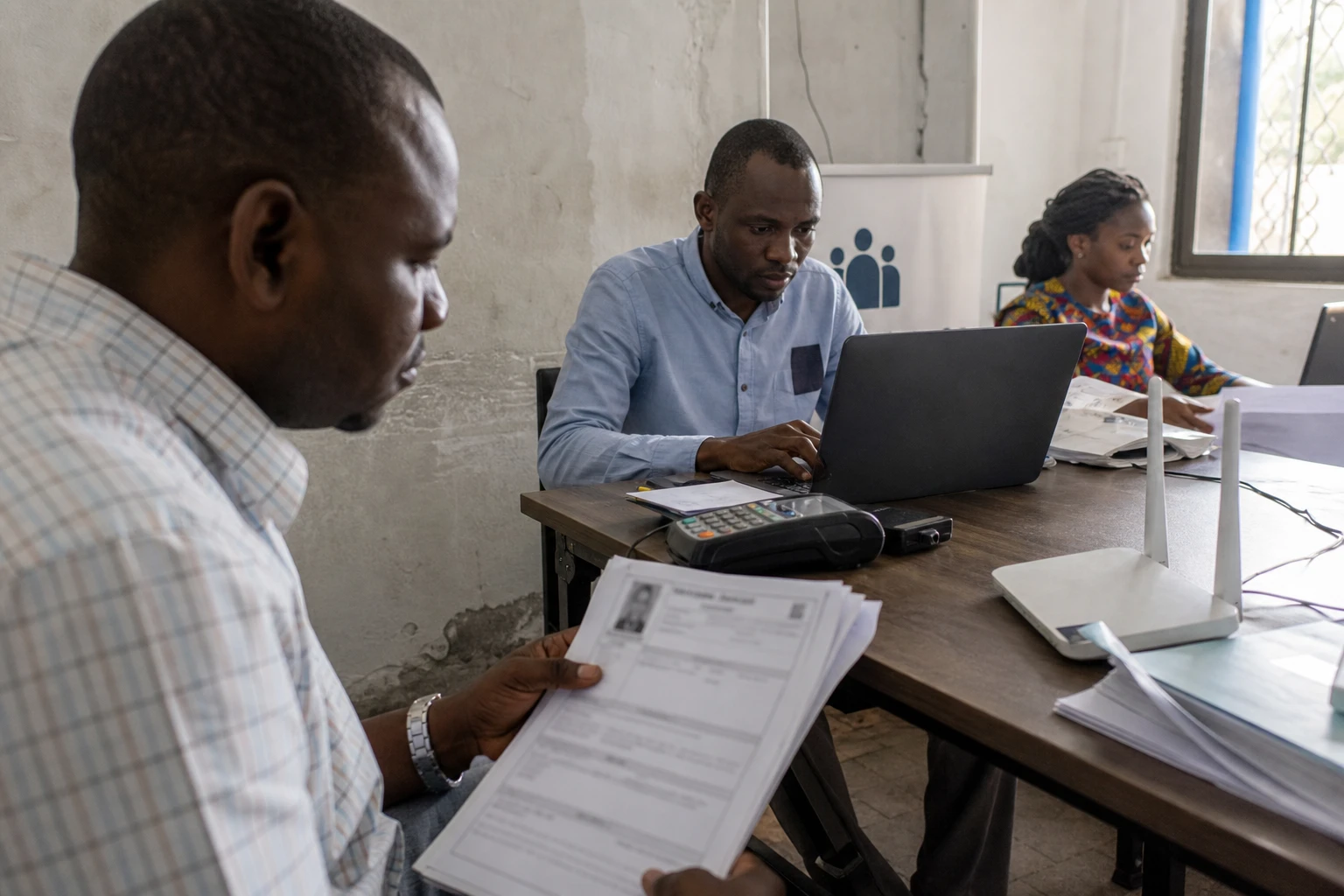
In Kinshasa, the tax debate around digital services is about more than budget lines. It also says something deeper: DR Congo wants to make digital technology an engine of growth while seeking immediate revenue from an ecosystem that is still young. Yet when rules change quickly and clarity is lacking, smaller businesses are often the first to take the hit.
The Congolese government has nevertheless set out a clear position in recent months. The Ministry of Digital Economy presents digital transformation as a pillar of state modernisation, job creation and technological sovereignty. At the same time, the authorities have issued a raft of measures to regulate digital activities and services, signalling a determination to organise the market, but also to regain control of economic flows that have long been hard to see.
Kinshasa retreats on form, not substance
According to information made public about the interministerial order signed on 20 July 2026, the text set out fees, taxes and charges linked to digital activities, with a broad tax base covering both operators based in DR Congo and services targeting the Congolese market. The measure was suspended on 1 August for clarification after strong opposition from the sector. The executive sought to avoid “any confusion, any misinterpretation or any tendentious exploitation”, a sign that this was not a definitive abandonment but a political and technical pause.
This episode is part of a broader timetable. In March 2026, the same ministry had already signed orders on authorisations and declarations for digital activities. In May, it again stressed the need to build a useful, inclusive and sustainable digital identity ecosystem. In other words, DR Congo is not starting from scratch: it is seeking to build a comprehensive framework, from regulation to digital public services, while retaining control over taxation.
Augustin Kibassa Maliba remains central to this issue. The Minister of Digital Economy, in office since August 2025 according to his ministry’s official website, advocates digital sovereignty and an organised market. He has also recalled that Article 384 of the Digital Code provides tax, parafiscal, customs and foreign-exchange benefits for digital start-ups with the status of an “entreprenant” (sole trader). The current disagreement is therefore not about whether a framework should exist, but how to apply it without stifling the most vulnerable players.
A delicate balance between public revenue and breathing space for the ecosystem
The hostile reaction is hardly surprising. In a country where access to capital remains difficult and margins for online media, start-ups and freelancers are often tight, the piling on of levies can quickly become a deterrent. Opponents also pointed out that the 2022 ordinance-law on entrepreneurship and start-ups provides several benefits for accredited companies, including easier access to certain public schemes and an incentive regime. The new tax measure therefore appeared to run counter to the case for incentives put forward over the past two years.
The issue extends beyond DR Congo. GSMA research on mobile taxation in Central Africa has long shown that excessive pressure on the sector ultimately holds back service adoption, and therefore digital and financial inclusion. In the Congolese case, GSMA had already flagged a build-up of levies, including VAT, an excise duty on mobile services and sector-specific contributions, with potential effects on the final cost to users. The message is clear: taxing digital services can raise revenue in the short term, but if poorly calibrated, it reduces the number of users and data consumption, ultimately shrinking the tax base itself.
This tension is also apparent in other reforms under way. With support from the World Bank, the government has embarked on accelerating digital transformation, with a timetable targeting several projects by September 2026. Digital technology has therefore become a public policy issue in its own right, rather than simply a sector of economic activity. But the more the state seeks to structure, regulate and monetise it, the more it must explain its approach, particularly when measures affect very different players: major platforms, telecoms operators, start-ups, digital media, independent developers and informal traders who use digital tools in their daily work.
What the episode says about DR Congo and Central Africa
Ultimately, the case highlights two legitimate imperatives facing DR Congo. On the one hand, the state is seeking to broaden its revenue base in an increasingly digital economy, where transactions move quickly and sometimes outside the administrative radar. On the other, it must protect a sector that the government itself presents as strategic for youth employment, modernising services and digital sovereignty. The suspension of the measure, even if temporary, reflects less a weakness than a test of institutional maturity.
For Central Africa, the stakes go beyond DR Congo. In several countries in the sub-region, the question is no longer whether to tax digital services, but how to do so without undermining inclusion. With its vast domestic market and capital Kinshasa as a decision-making centre, DR Congo could become a testing ground for better-calibrated digital taxation, or repeat mistakes already seen elsewhere: complexity, excessive burdens and legal uncertainty. The next step will therefore be decisive, showing whether the government opts for a clear, consultative and proportionate framework, or for an accumulation of levies that the Congolese ecosystem will struggle to sustain.
In a country where digital technology is now linked to standardised invoicing, administrative digitisation, cybersecurity and electronic payments, every tax decision has effects far beyond the revenue line itself. It affects investment, entrepreneurs’ confidence, service prices and, ultimately, DR Congo’s place in Africa’s digital transformation. That is where the real trade-off will be decided in the coming months.