Algeria
 Egypt
 Libya
 Morocco
 Sudan
 Tunisia
 Benin
 Burkina Faso
 Cabo Verde
 Côte d'Ivoire
 Ghana
 Guinea
 Guinea-Bissau
 Liberia
 Mali
 Mauritania
 Niger
 Nigeria
 Senegal
 Sierra Leone
 The Gambia
 Togo
 Cameroon
 Central African Republic
 Chad
 Equatorial Guinea
 Gabon
 Republic of the Congo
 São Tomé and Príncipe
 Burundi
 Comoros
 Djibouti
 Eritrea
 Ethiopia
 Kenya
 Madagascar
 Malawi
 Mauritius
 Mozambique
 Rwanda
 Seychelles
 Somalia
 South Sudan
 Tanzania
 Uganda
 Angola
 Botswana
 Eswatini
 Lesotho
 Namibia
 South Africa
 Zambia
 Zimbabwe
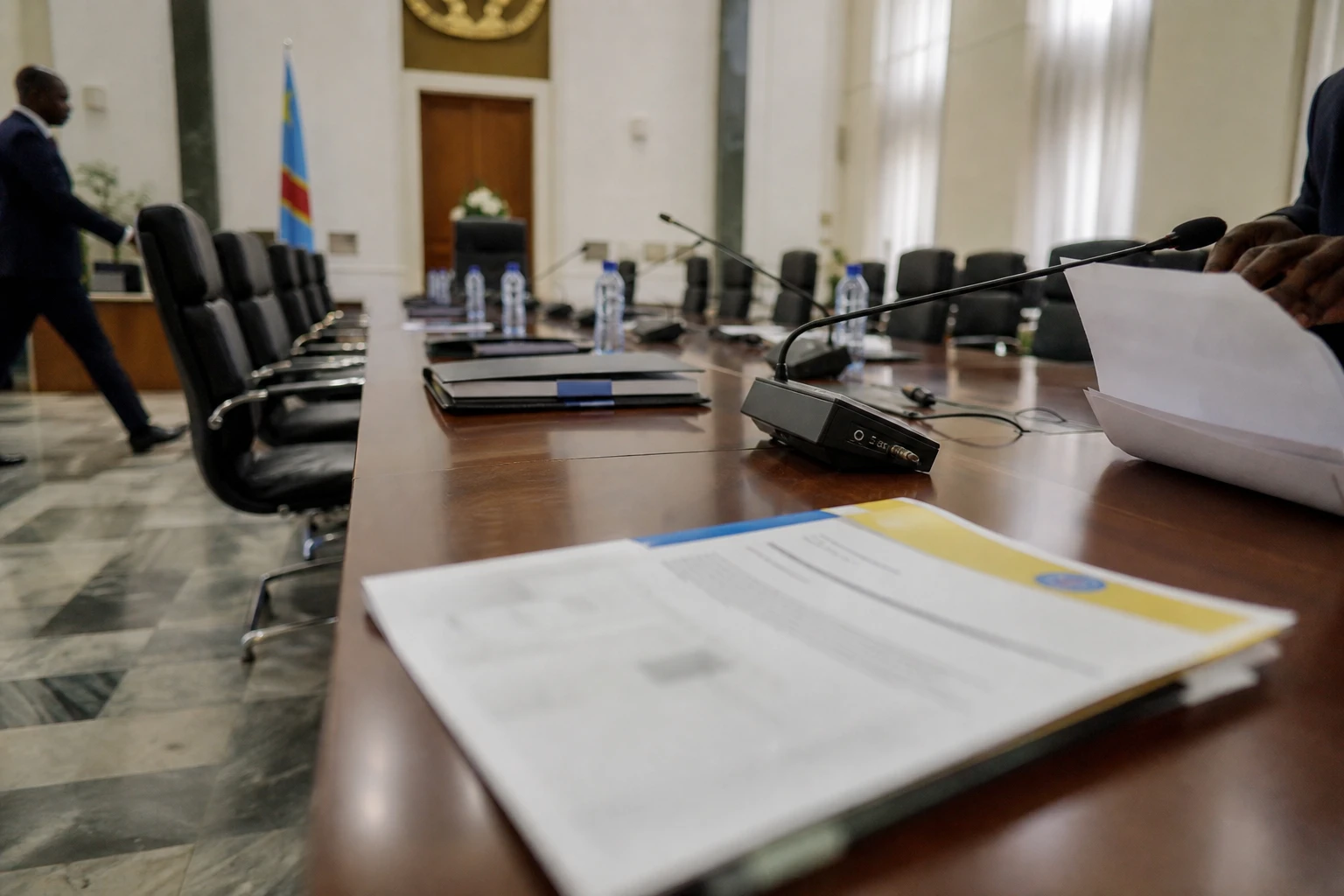
In Kinshasa, the debate is no longer just about whether to hold talks, but about their boundaries
In the Democratic Republic of the Congo, the question is no longer whether talks should be held. It is who should take part, what should be discussed and what guarantees should be in place. In a country facing a security crisis in the east, political tensions in Kinshasa and long-standing mistrust of crisis-resolution forums, the word “dialogue” is no longer enough to reassure. It must now be given credible substance, or it will remain just another slogan.
President Félix-Antoine Tshisekedi Tshilombo announced at the Cité de l’Union africaine that an inclusive national dialogue would be organised, following a meeting with religious groups, including CENCO, the Church of Christ in Congo and the Muslim community. The presidency says it wants a framework different from those used before, focused on national cohesion, peace and institutional stability. But the format has not yet been made public in terms of its rules, guest list or timetable.
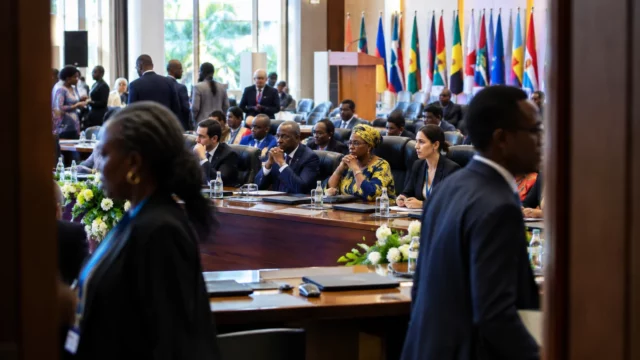
At the same time, regional mediation efforts are advancing on another front. The African Union, SADC, the EAC and other partners recently worked on a harmonised peace roadmap for eastern Congo. In other words, Kinshasa is talking about internal dialogue while a broader diplomatic architecture is also taking shape around DR Congo. The two levels intersect. They do not replace one another.
Fayulu wants a broad table, but the government is already setting red lines
Martin Fayulu wants to widen the circle. During an exchange in Brussels on 12 August 2026, the opposition leader said Joseph Kabila and Corneille Nangaa should not be excluded from discussions. In his view, they are among the actors who must explain their role in the current crisis. He presents dialogue as a moment of truth, not simply a division of posts.
His approach is as much political as strategic. Fayulu knows that a closed dialogue, reserved for government supporters or a handful of tolerated parties, would quickly be seen as a staged exercise. In DR Congo, the memory of previous forums weighs heavily. Every meeting intended to “pacify” the country has left behind suspicions of institutional manoeuvring, postponed elections or shaky compromises. The credibility of the next format therefore depends less on its name than on its method.
But Kinshasa does not want to open the process without screening participants. The debate is made more sensitive by the status of Joseph Kabila and Corneille Nangaa. In August 2026, Congolese media reported that the government and several figures close to the ruling majority believe some people linked to the AFC/M23 cannot be invited without precautions, on national security grounds. Corneille Nangaa, for his part, rejected any prospect of dialogue with Kinshasa in July, while leaving the door open to other negotiation frameworks.
Joseph Kabila, meanwhile, remains at the centre of a political and legal dispute. The Congolese parliament and military justice system have put him in an extremely difficult position, and the Associated Press reported that a military court in Kinshasa sentenced him to death in September 2026 for treason and other charges linked to the insurgency, relying in particular on the testimony of an associate of Corneille Nangaa. This context is fuelling the government’s caution, as it seeks to prevent a national dialogue from becoming a platform for political whitewashing.
What this debate really means for Congolese people
For Congolese people, the challenge is easy to put into words but difficult to resolve: how can trust in the state be restored when one part of the political class accuses another of destabilisation, and the east of the country remains under armed pressure? In Kinshasa, the debate is first and foremost about the legitimacy of the process. In provinces scarred by violence, it concerns everyday security, displacement, markets, schools and the movement of goods. Dialogue does not carry the same weight for a minister, a trader in Goma or a displaced family from North Kivu.
CENCO and the ECC, which had already called for a social pact for peace and peaceful coexistence, regularly stress that useful dialogue should not be confused with negotiations over the sharing of power. This distinction matters. It reflects the exhaustion of a society that has seen too many forums produce institutional compromises without lasting effects on security or governance. The question is therefore not only who takes a seat. It is also what is put on the table: insecurity, state reform, justice, citizenship, resource management and the role of armed actors.
Politically, Fayulu is seeking to prevent the dialogue from being reduced to a public-relations exercise. Institutionally, Tshisekedi wants to frame the process to prevent it from undermining the constitutional order. Between them, the churches, civil society and opposition parties are trying to preserve space for mediation. That is where the real battle is being fought: not over the declaration of intent, but over the ability to produce a framework accepted by forces that do not trust one another.
A Congolese process that extends beyond Kinshasa
This issue goes beyond DR Congo alone because the Congolese crisis has a direct regional impact. SADC, the EAC, the African Union and the Great Lakes mechanisms are following it closely, particularly because fighting in the east affects borders, refugees, cross-border trade and diplomatic relations between Kigali, Kinshasa and neighbouring capitals. An internal dialogue lacking credibility would complicate regional mediation efforts. An inclusive and well-structured dialogue could, by contrast, provide a political foundation for external processes.
The continental implications are clear: DR Congo is too vast, too central and too closely tied to the balance of power in Central and Southern Africa for an internal standoff to remain confined to Kinshasa. The African Union, too, is promoting dialogue and regional cooperation. In this context, the real test for the Congolese government will be to show that a national dialogue can clarify responsibilities without obscuring the facts or turning the crisis into a mere political ceremony. The next step announced by the presidency should therefore be seen as a test of method as much as of the balance of power.